Why Homeowners Are Choosing Metal Roofs Over Traditional Shingles
Residential metal roofing is changing how homeowners protect and upgrade their properties. If you’re researching metal roofing options, here’s what you need to know:
Quick Overview: Residential Metal Roofing Benefits
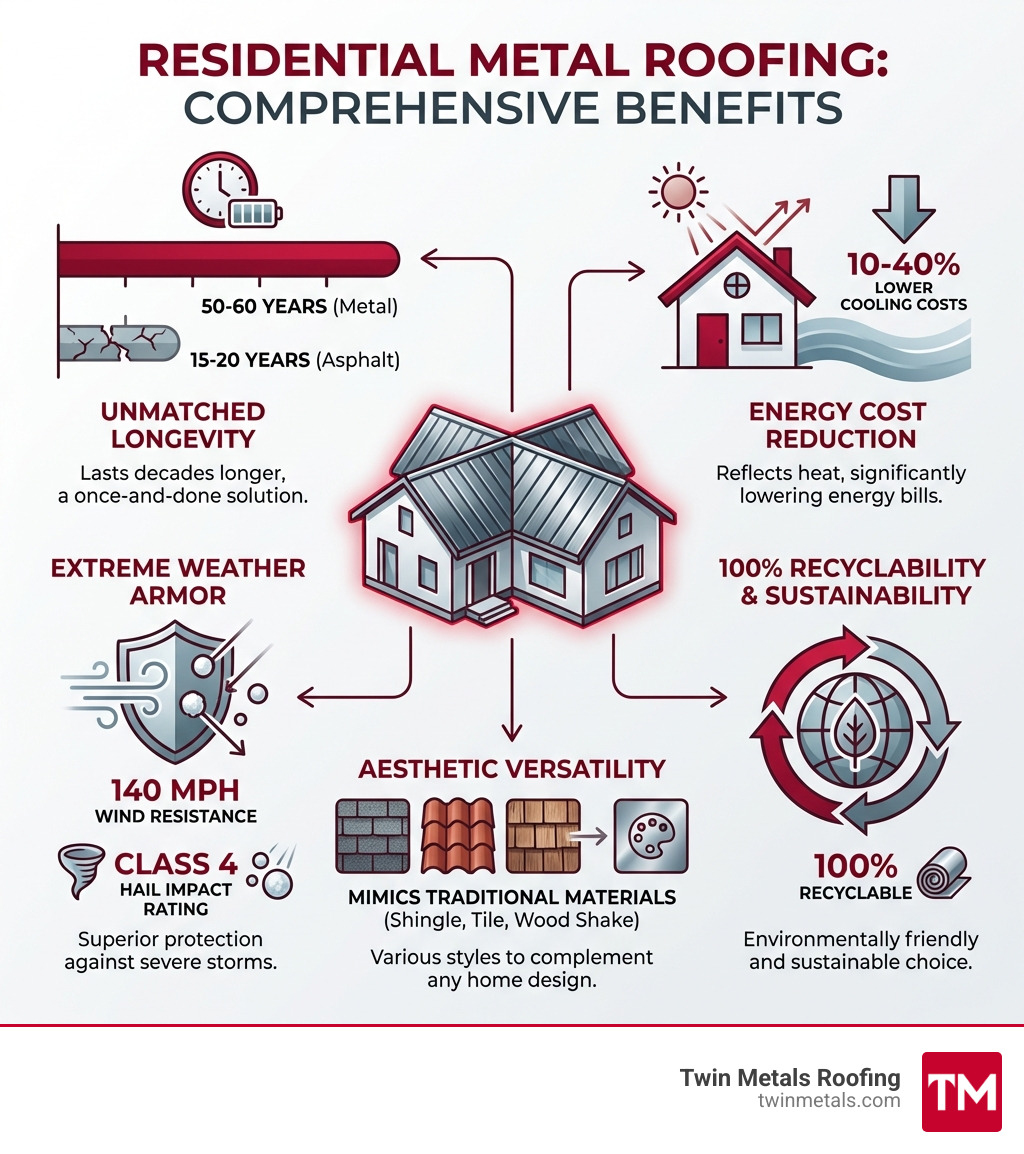
- Longevity: Lasts 50-60 years vs. 15-20 years for asphalt shingles
- Energy Savings: Reduces cooling costs by 10-40% through heat reflection
- Weather Protection: Withstands winds up to 140 mph, hail, and fire
- Low Maintenance: Minimal repairs needed over the roof’s lifetime
- Style Options: Available in designs that mimic shingles, tile, or wood shake
- ROI: Homeowners recoup 85-95% of costs, with up to 6% increase in home value
Many homeowners reach a breaking point with traditional roofing. As one industry expert notes, “the never-ending saga of shingle replacement is simply wearing many homeowners out.” If you’ve replaced your roof once or twice already, you know the frustration of watching your investment deteriorate after just 12-20 years.
Metal roofing offers a different path. It’s not just a roof—it’s a once-and-done solution that protects your home for decades while saving you money on energy bills and maintenance. Whether you’re building new or replacing an aging roof, understanding your residential metal roofing options helps you make a smart investment in your home’s future.
The technology has evolved dramatically. Today’s metal roofs combine industrial strength with architectural beauty, available in colors and styles that complement any home design. Twin Metals Roofing specializes in both metal roofing and traditional asphalt shingle installation throughout Massachusetts and New Hampshire, giving homeowners the expertise to choose the right solution.
Why Metal Roofing is a Superior Long-Term Investment
A metal roof is more than just a covering; it’s a comprehensive upgrade for your home that pays dividends over its entire lifespan through durability, savings, and increased property value. For homeowners in Massachusetts and Southern New Hampshire, where weather can be unpredictable, investing in a robust and reliable roof is paramount.
Unbeatable Lifespan and Low Maintenance
One of the most compelling reasons to choose residential metal roofing is its incredible longevity. While a standard shingle roof will typically need to be replaced every 15-20 years, metal roofing can last 50 or even 60 or more years with minimal maintenance or repairs. This means that for many homeowners, a metal roof is truly the last roof they’ll ever need to install. Imagine the peace of mind knowing you won’t have to deal with the disruption and expense of frequent roof replacements!
Beyond its impressive lifespan, metal roofing requires significantly less upkeep than other materials. It naturally resists common roofing nuisances like moss and fungus, which can be a problem in damp climates. This inherent resistance means fewer chemical treatments or strenuous cleanings are needed, saving you time and money over the decades. It’s a “once-and-done” solution that simplifies homeownership. For more information on how we can help upgrade your home, explore our residential roofing services.
Significant Energy Efficiency and Cost Savings
In our region, keeping homes comfortable year-round can lead to substantial energy bills. This is where residential metal roofing shines. Metal roofs are highly reflective, meaning they bounce a significant portion of the sun’s radiant heat away from your home. This “cool roof” technology can dramatically reduce the amount of heat absorbed into your attic and living spaces.
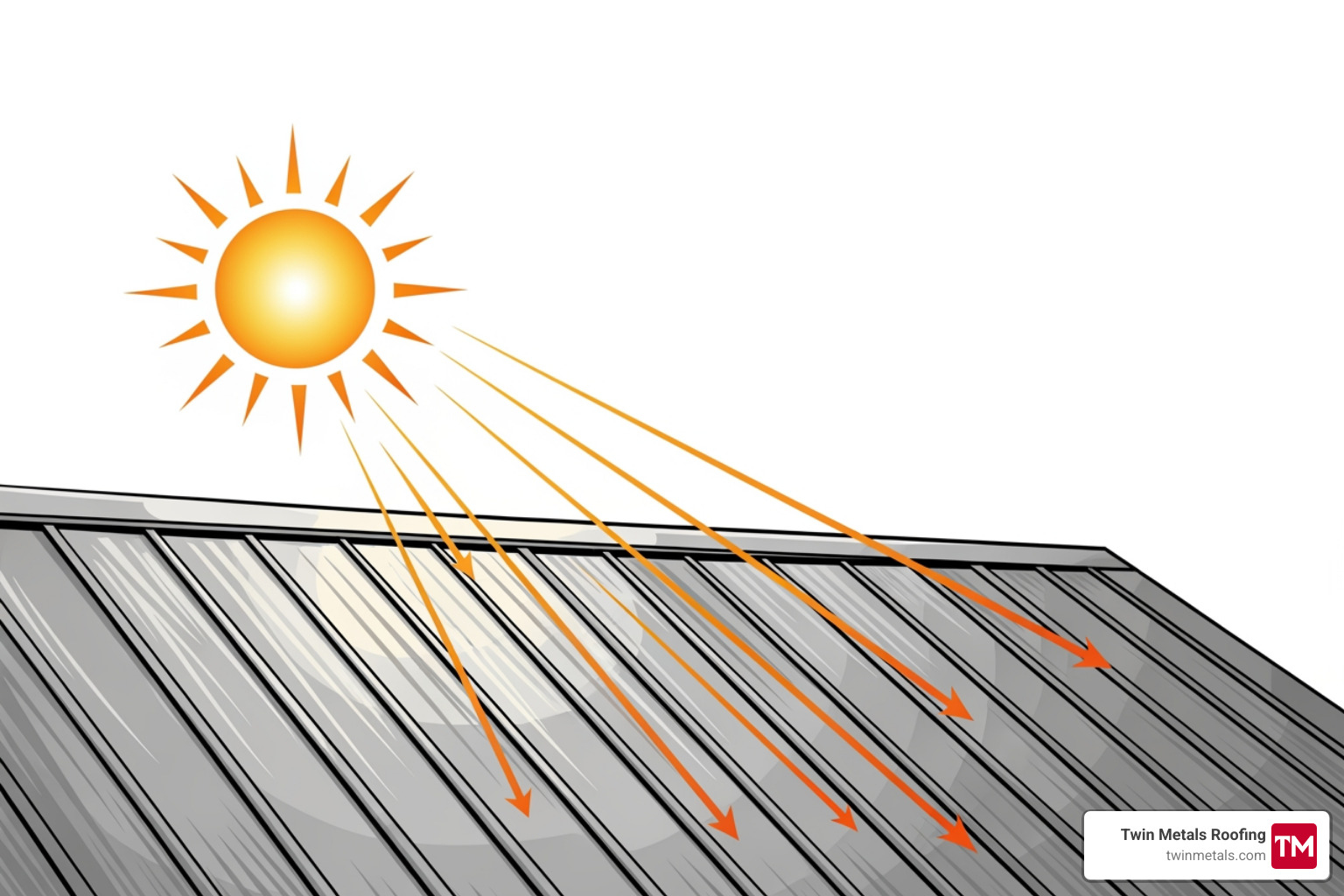
Studies have shown that metal roofs can reduce cooling costs by 10-25%, and in some regions, even up to 40%. This is achieved through their high Solar Reflectance Index (SRI), which measures how well a roof reflects solar energy and emits absorbed heat. For optimal cooling energy savings in hot climates, it’s recommended to select metal roofs with an SRI equal to or greater than 78 for low-slope roofs and 29 for steep-sloped roofs. Both the EPA and the U.S. Department of Energy have verified the superior energy efficiency of metal roofing. This isn’t just a comfort perk; it translates directly into lower utility bills month after month, year after year.
Calculating the Excellent Return on Investment (ROI)
While the upfront cost of a metal roof is typically higher than that of traditional asphalt shingles, it’s crucial to look at the bigger picture: the life cycle cost and return on investment (ROI). Because metal roofs last two to three times longer than asphalt, your initial investment is spread out over a much longer period, often making it the more economical choice in the long run. You avoid multiple tear-offs, disposal fees, and reinstallation costs associated with shorter-lived roofing materials.
The financial benefits don’t stop there. A new metal roof can significantly increase your home’s value, with some estimates showing an increase of up to 6%. This added value is a strong selling point if you ever decide to move. Furthermore, many insurance providers recognize the superior durability and protective qualities of metal roofs, offering potential insurance discounts in many states, including Massachusetts and New Hampshire. Homeowners are typically able to recoup a substantial portion of their investment, between 85.9% and 95.5% of the cost of a new metal roof, at resale. This makes residential metal roofing a smart financial decision for any homeowner.
Exploring the Diverse Styles and Materials of Residential Metal Roofing
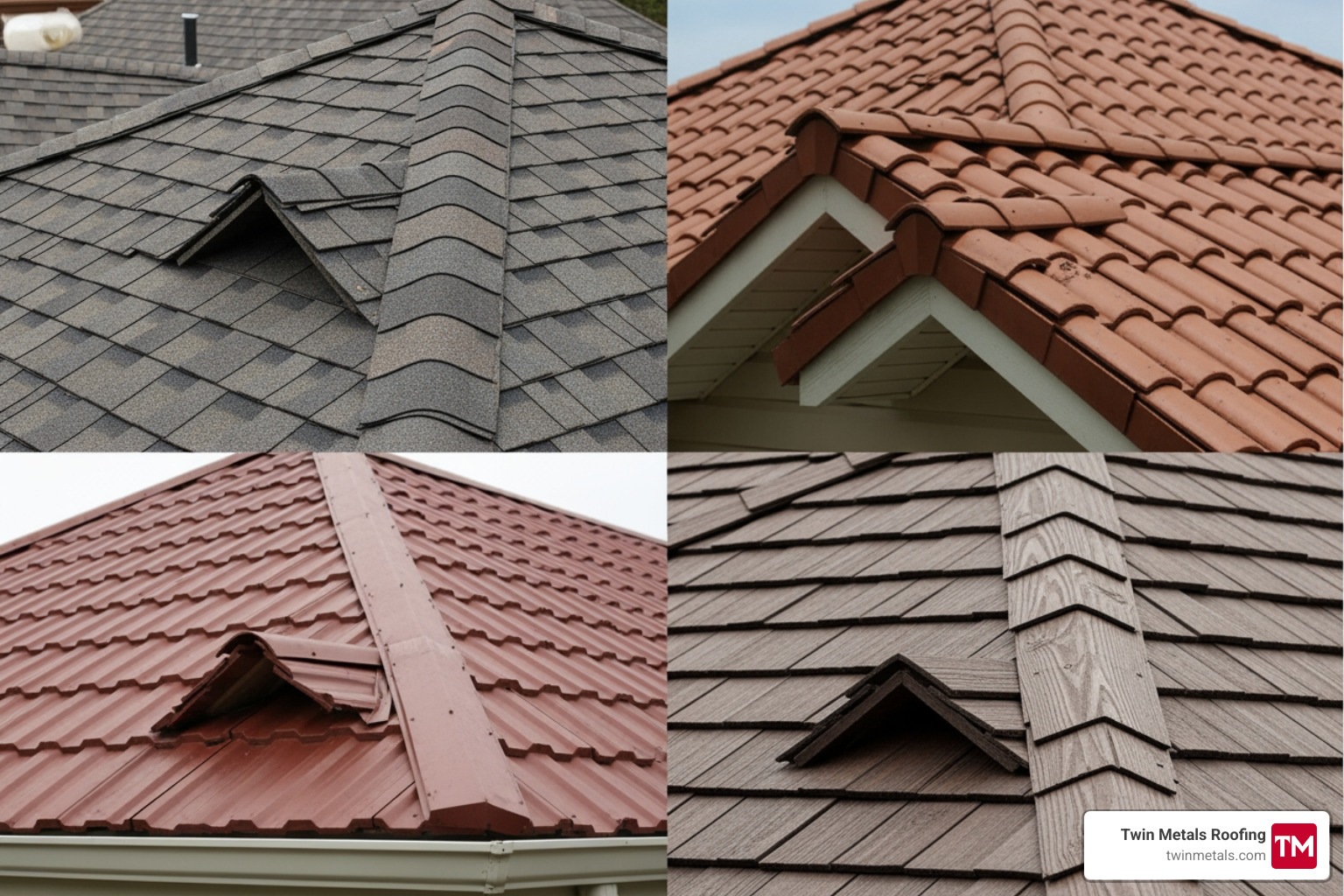
Gone are the days of plain, industrial-looking metal. Today’s options offer a vast range of materials, colors, and styles to perfectly match any architectural design, from classic to contemporary. Whether your home is a historic New England colonial or a modern coastal retreat, there’s a metal roofing solution that will improve its curb appeal.
A Guide to Metal Roofing Materials
The world of residential metal roofing offers a variety of materials, each with its unique properties, costs, and aesthetic appeal. Understanding these differences is key to choosing the right roof for your home.
| Material | Cost (Average per sq ft) | Lifespan | Corrosion Resistance | Best Use Case |
|---|---|---|---|---|
| Steel | $10.00 – $30.00 | 40-70 years | Good (with coatings) | Most common, versatile, affordable, wide range of styles |
| Aluminum | $14.50 – $45.00 | 50-100+ years | Excellent | Coastal areas (resistance to rust/corrosion), energy-efficient |
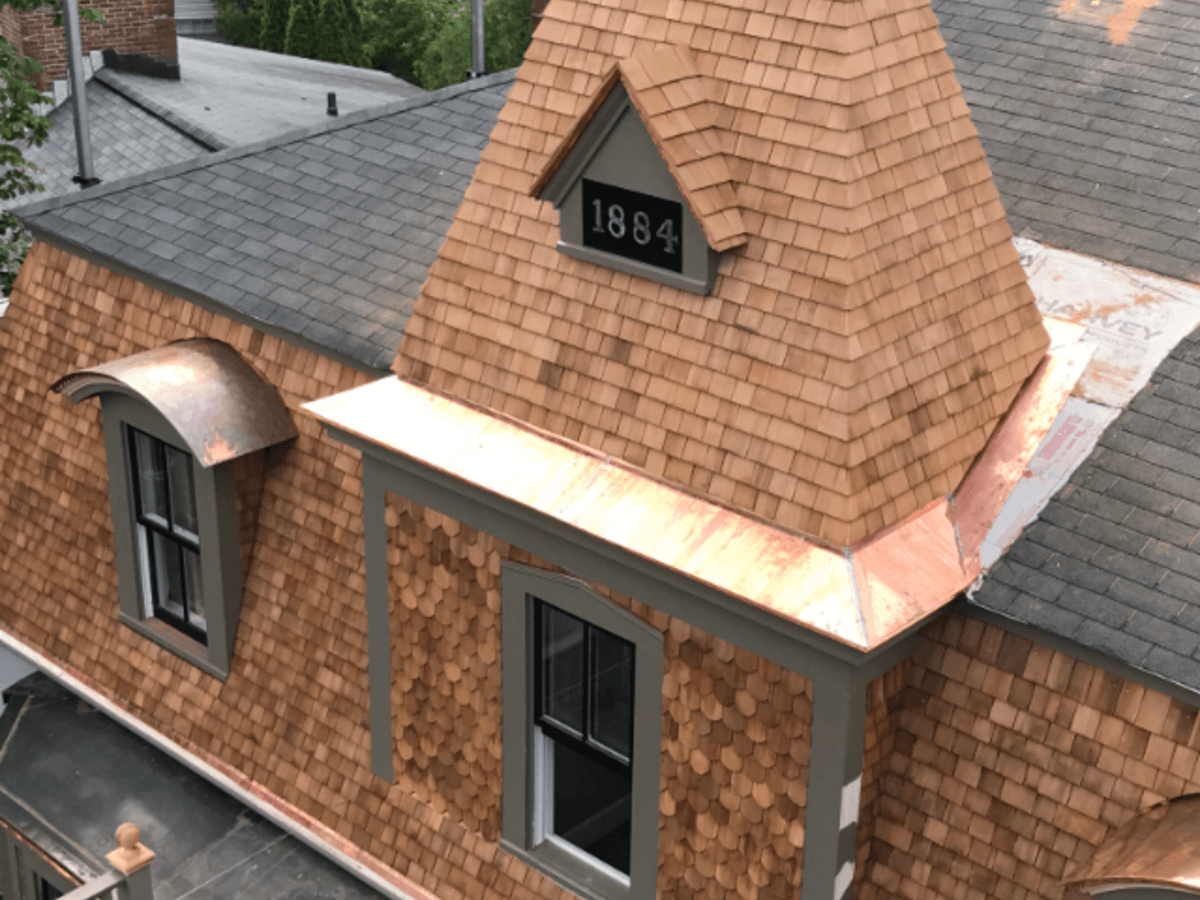
| Copper | $22.50 – $70.00 | 100+ years | Excellent | Luxury, distinctive patina, historic homes, extreme longevity |
| Zinc | $19.00 – $60.00 | 80-100+ years | Excellent | Modern architectural designs, self-healing properties, longevity |
Steel is the most commonly used metal for roofing due to its strength, affordability, and wide availability. It comes in various profiles and finishes, offering extensive options for homeowners. Steel is often coated with zinc (galvanized) or a combination of aluminum and zinc (Galvalume) for improved corrosion resistance. Galvalume, in particular, is an excellent choice for homes near saltwater environments, combining steel’s strength with aluminum’s protective qualities.
Aluminum is a lightweight, durable, and naturally non-corrosive material, making it ideal for coastal areas in Massachusetts and New Hampshire where salt air can be a concern. Its resistance to rust and energy-efficient properties make it a versatile choice.
Copper is a high-end metal roofing material renowned for its incredible longevity (lasting over 100 years with proper care) and its distinctive ability to develop a beautiful, protective patina over time. It’s highly resistant to corrosion and adds a touch of luxury and timeless elegance to any home.
Zinc is another premium option known for its extreme durability and longevity. It has a unique self-healing property, where minor scratches and imperfections repair themselves over time as the metal oxidizes. Zinc is fire-resistant and particularly well-suited for modern architectural designs, offering a sophisticated, understated aesthetic.
Please note: The average costs provided are based on publicly available internet data and represent a wide range. These figures are not the actual pricing of Twin Metals Roofing and should be used for general informational purposes only.
Panel Systems: Exposed vs. Concealed Fasteners
The way your metal roof panels are installed greatly influences both their appearance and performance. The two primary systems are exposed fastener and concealed fastener.
Exposed fastener panels are typically wider, ribbed panels that are directly screwed down through the face of the panel into the roof deck. The fasteners are visible, and while this system is often more affordable and easier to install, it requires high-quality, gasketed screws to prevent leaks over time. These panels are a popular choice for their cost-effectiveness and are excellent for a more utilitarian or rustic aesthetic. You can Learn More Exposed Fastener Panels.
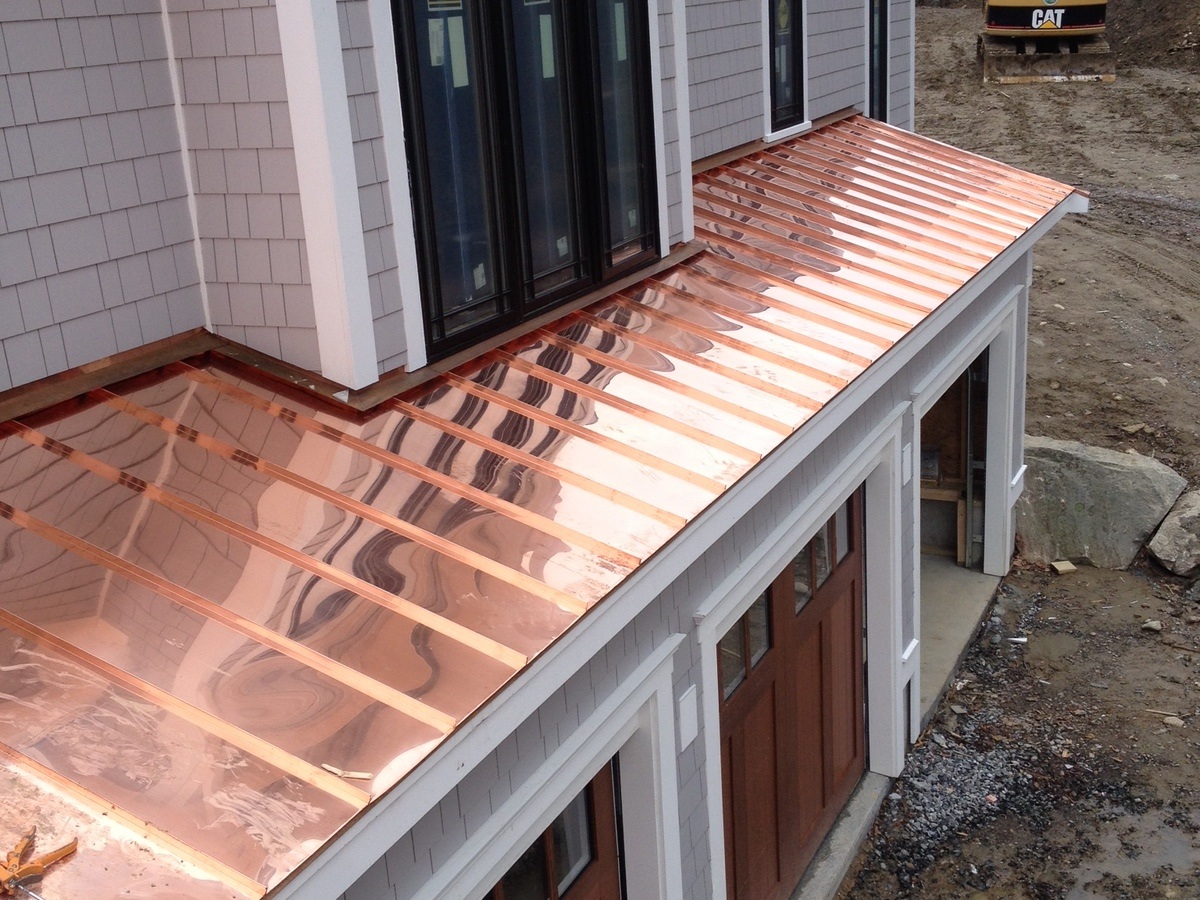
Concealed fastener panels, often referred to as standing seam systems, offer a cleaner, more refined look. These panels are attached to the roof deck with clips that are hidden beneath the raised seams between panels. This method protects the fasteners from exposure to the elements, reducing the risk of leaks and minimizing maintenance. Standing seam systems are highly resistant to wind and rain, making them a premium choice for residential metal roofing where aesthetics and long-term performance are top priorities. Learn More Standing Seam Panels.
Mimicking Tradition: Stone-Coated and Stamped Profiles
One of the most exciting advancements in residential metal roofing is its ability to replicate the look of traditional materials without sacrificing the benefits of metal. This is largely achieved through stone-coated metal and stamped profiles.
Stone-coated metal roofing was introduced to bridge the gap between industrial durability and architectural beauty. During the manufacturing process, natural stone granules are adhered to high-grade sheets of steel. These granules allow for a wide range of vivid colors and distinct textures that can perfectly mimic the appearance of traditional asphalt shingles, classic clay tiles, or even hand-split wood shakes. This means you can achieve the desired aesthetic for your home—whether it’s a Mediterranean villa, a rustic cabin, or a classic colonial—while benefiting from the strength, longevity, and energy efficiency of steel.
Beyond stone-coating, stamped metal panels can be formed to create patterns that replicate the look of individual shingles or tiles. This aesthetic versatility ensures that homeowners in Massachusetts and Southern New Hampshire can find a metal roof that not only performs exceptionally but also beautifully complements their home’s architectural style and their personal taste. It’s a fantastic solution for those who love the classic look but demand modern performance. Of course, we also understand the enduring appeal of traditional materials, which is why we also install traditional shingle roofing for those who prefer it.
Best Performance in Extreme Weather
Engineered for resilience, metal roofing provides superior protection against the harshest weather conditions, giving homeowners in Massachusetts and New Hampshire peace of mind. From coastal storms to heavy snowfalls, a metal roof is built to endure.
Superior Resistance to High Winds and Hurricanes
Our region is no stranger to severe weather, including powerful windstorms and, occasionally, hurricane-force gusts. Residential metal roofing is exceptionally well-suited to withstand these challenges. Many metal roofing systems are engineered with interlocking panels that provide superior wind uplift resistance. These systems are rigorously tested and can be warrantied for winds up to 120 miles per hour, with some designs capable of withstanding gusts up to 140 mph.
Some metal roofing products even meet stringent High-Velocity Hurricane Zone (HVHZ) standards and are tested to meet the TAS-100 wind-driven rain standard. This level of performance ensures that your roof remains securely attached and watertight, even in extreme conditions. For homeowners in our coastal towns, a metal roof offers an invaluable layer of protection against the elements. We proudly serve many coastal towns in our service area, providing robust roofing solutions.
Protection Against Hail and Fire
Beyond wind, metal roofs offer outstanding protection against other common threats: hail and fire.
Hailstorms, though less frequent in some parts of our service area, can cause significant damage to traditional roofing materials. However, most residential metal roofing products have achieved the highest UL2218 Class 4 Impact rating. This means they are designed to withstand the impact of large hailstones—some even up to 2.5 inches in diameter—with minimal to no structural damage. Studies by the Insurance Institute for Business & Home Safety (IBHS) have found that metal roofing is far less likely to be punctured by hail than conventional asphalt shingles.
Fire resistance is another critical advantage. Metal is a non-combustible material, and metal roofing products carry the highest possible Class A fire rating. This provides superior protection against external fire sources, such as airborne embers from wildfires or nearby fires. In the unlikely event of a lightning strike, a metal roof will not ignite and catch fire, offering an additional layer of safety for your home and family.
Key Considerations for Your Metal Roof Project
A successful metal roof installation depends on understanding the key variables, from cost factors to choosing the right team for the job. Making an informed decision ensures you get the most out of your investment.
Factors Influencing the Cost of a Residential Metal Roofing Installation
The cost of a residential metal roofing installation can vary widely, influenced by several key factors. While the initial investment is often higher than asphalt shingles, remember to consider the long-term value.
- Material Choice: As we’ve seen, different metals like steel, aluminum, copper, and zinc have distinct price points. Steel is generally the most affordable, while copper and zinc represent higher-end luxury options. The specific gauge (thickness) and finish (e.g., stone-coated, specialized paint) of the metal also play a role.
- Roof Size and Complexity: Larger roofs naturally require more material and labor. More complex roof designs with multiple valleys, hips, dormers, and penetrations (like chimneys or skylights) will increase installation time and, consequently, cost.
- Roof Pitch: A steeper roof pitch (slope) makes installation more challenging and requires additional safety measures, leading to higher labor costs.
- Labor Costs: The expertise required for metal roof installation is specialized. Choosing an experienced contractor, while potentially costing more upfront, ensures a proper, long-lasting installation.
- Tear-off of Old Roof: If an existing roof needs to be removed, this adds labor, disposal fees, and time to the project. In some cases, metal can be installed over an existing shingle roof, which can save on tear-off expenses.
Please note: The average costs discussed in this guide are based on publicly available internet data and represent a wide range. These figures are not the actual pricing of Twin Metals Roofing and should be used for general informational purposes only.
Choosing a Qualified Residential Metal Roofing Contractor
Selecting the right contractor for your residential metal roofing project is perhaps the most crucial decision you’ll make. Metal roof installation requires specialized skills and experience that differ significantly from traditional asphalt shingle installation.
When choosing a contractor, look for a team with:
- Specialized Experience: Ensure they have a proven track record specifically with metal roofing, not just general roofing. Ask about their experience with the particular type of metal and panel system you’re considering.
- Proper Licensing and Insurance: Verify that the contractor is fully licensed and insured in Massachusetts or New Hampshire. This protects you from liability in case of accidents or issues during the project.
- References and Past Work: Ask for references and examples of their previous metal roofing projects. A reputable contractor will be proud to showcase their work.
- Clear Understanding of the Process: A good contractor will clearly explain the installation process, from sub-surface preparation to flashing details, and address any concerns you have.
We believe in expert guidance and transparent communication throughout the entire process. For more detailed advice, you can Learn More How to choose a residential metal roofing contractor.
Understanding Metal Roofing Warranties
Warranties are a critical aspect of any major home improvement, and residential metal roofing is no exception. A comprehensive warranty package typically includes several components:
- Substrate Warranty: This covers the metal material itself (e.g., steel, aluminum) against defects, corrosion, and structural integrity.
- Paint and Finish Warranty: For painted metal roofs, this warranty covers the coating against issues like chipping, peeling, cracking, and excessive fading or chalking. High-quality coatings like Kynar 500® (PVDF) often come with longer and more robust paint warranties.
- Workmanship Warranty: This is provided by the installer and covers the quality of the installation. It’s a testament to the contractor’s confidence in their work.
It’s essential to read and understand the details of all warranties, including any limitations or conditions. A long warranty period is great, but what it actually covers is even more important. Don’t hesitate to ask your contractor to explain the terms clearly. You can gain further insight into understanding paint warranties to ensure your investment is protected.
Common Myths About Metal Roofing: Fact vs. Fiction
Despite its growing popularity, several misconceptions about residential metal roofing persist. Let’s separate the facts from the fiction to help you make an informed decision.
- Myth: Metal roofs are noisy when it rains.
Fact: This is one of the most common myths, likely stemming from the sound of rain on uninsulated metal sheds or barns. On a residential home, a metal roof is installed over a solid roof deck, underlayment, and often insulation. These layers effectively dampen sound, making a metal roof no louder than a traditional asphalt shingle roof during a rain or hail storm. Need proof? Check out Is a metal roof noisy when it rains or hails?. - Myth: Metal roofs attract lightning.
Fact: The odds of a lightning strike hitting a metal roof are precisely the same as any other roof, regardless of material. Metal does not attract lightning. However, if your home is struck by lightning, a metal roof offers an advantage: it’s non-combustible, meaning it won’t ignite or catch fire, providing an extra layer of safety. Learn more at Do metal roofs attract lightning?. - Myth: Metal roofs rust easily.
Fact: Modern residential metal roofing materials are designed with advanced coatings and alloys to prevent rust and corrosion. For example, Galvalume steel (a common choice) combines steel with aluminum and zinc for superior protection. Aluminum roofing is naturally rust-proof. While steel can rust, choosing the right substrate and coatings minimizes this risk significantly, ensuring decades of rust-free performance. For more details, read Does a steel roof rust?. - Myth: Metal roofs dent easily from walking or hail.
Fact: While extreme impacts could potentially cause cosmetic dents, modern metal roofs are incredibly durable. They are engineered to withstand significant force, including hail (as evidenced by their Class 4 impact rating) and can certainly be walked on safely for maintenance or cleaning, provided proper precautions are taken and the roof is designed for foot traffic. - Myth: Metal roofs make homes hotter in summer.
Fact: Quite the opposite! As discussed, metal roofs are highly reflective and boast excellent energy efficiency. They reflect solar radiant heat away from your home, actually reducing heat gain and lowering cooling costs. This makes them a “cool roof” solution, especially beneficial during warm Massachusetts and New Hampshire summers.
By understanding the facts, it’s clear that residential metal roofing offers a sophisticated, durable, and energy-efficient solution for your home, dispelling common misconceptions along the way.
Your Home’s Ultimate Upgrade
Choosing a metal roof is a smart, sustainable decision that provides decades of worry-free protection, improved curb appeal, and long-term financial benefits. It is a premium investment that secures your home against the elements while reducing energy costs and maintenance hassles. With a lifespan that can exceed 50 years, superior resistance to wind, hail, and fire, and the ability to improve your home’s energy efficiency, residential metal roofing truly stands out as a top-tier option.
As specialists in both Residential Metal Roofing and asphalt shingle installation in Massachusetts and Southern New Hampshire, the team at Twin Metals Roofing can help you find the perfect solution for your home. We’re committed to superior performance, quality materials, and exceptional customer service, ensuring your roofing project is handled with expertise and care. Ready to upgrade your home’s protection and curb appeal? Contact us for a free estimate on your residential metal roofing project.
Twin Metals Roofing is proud to serve homeowners throughout Berkshire County, Eastern Massachusetts, and Southern New Hampshire.
Follow us on Facebook — https://www.facebook.com/twinmetalsroofing
Follow us on Instagram – https://www.instagram.com/twinmetals/