Why Ice in Your Gutters Is a Bigger Problem Than You Think
Remove ice from gutters before it removes your gutters for you — that’s the short version. Here’s how to do it safely:
Quick answer: How to remove ice from gutters
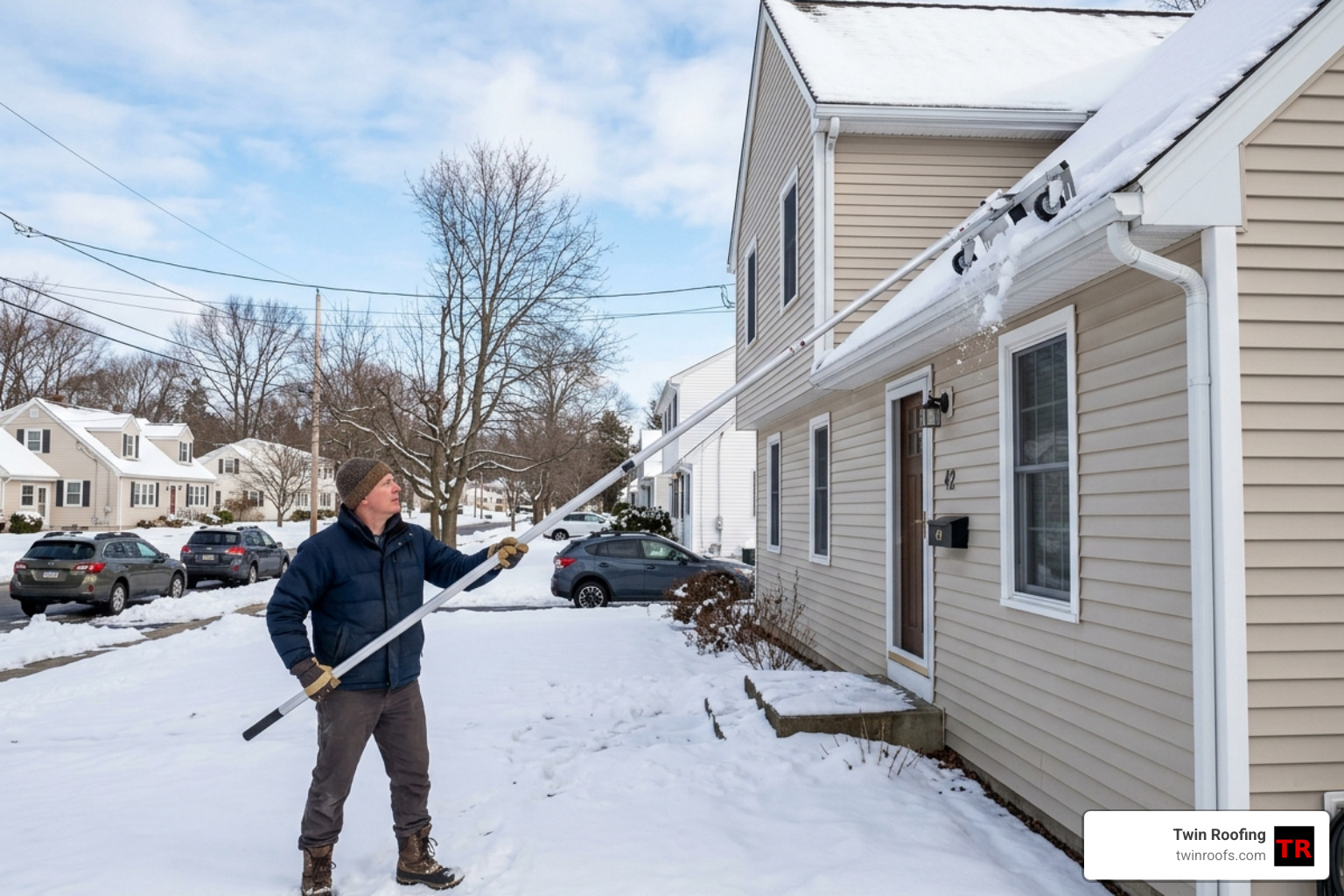
- Rake first — use a long-handled roof rake to clear snow from the roof edge (3–4 feet back)
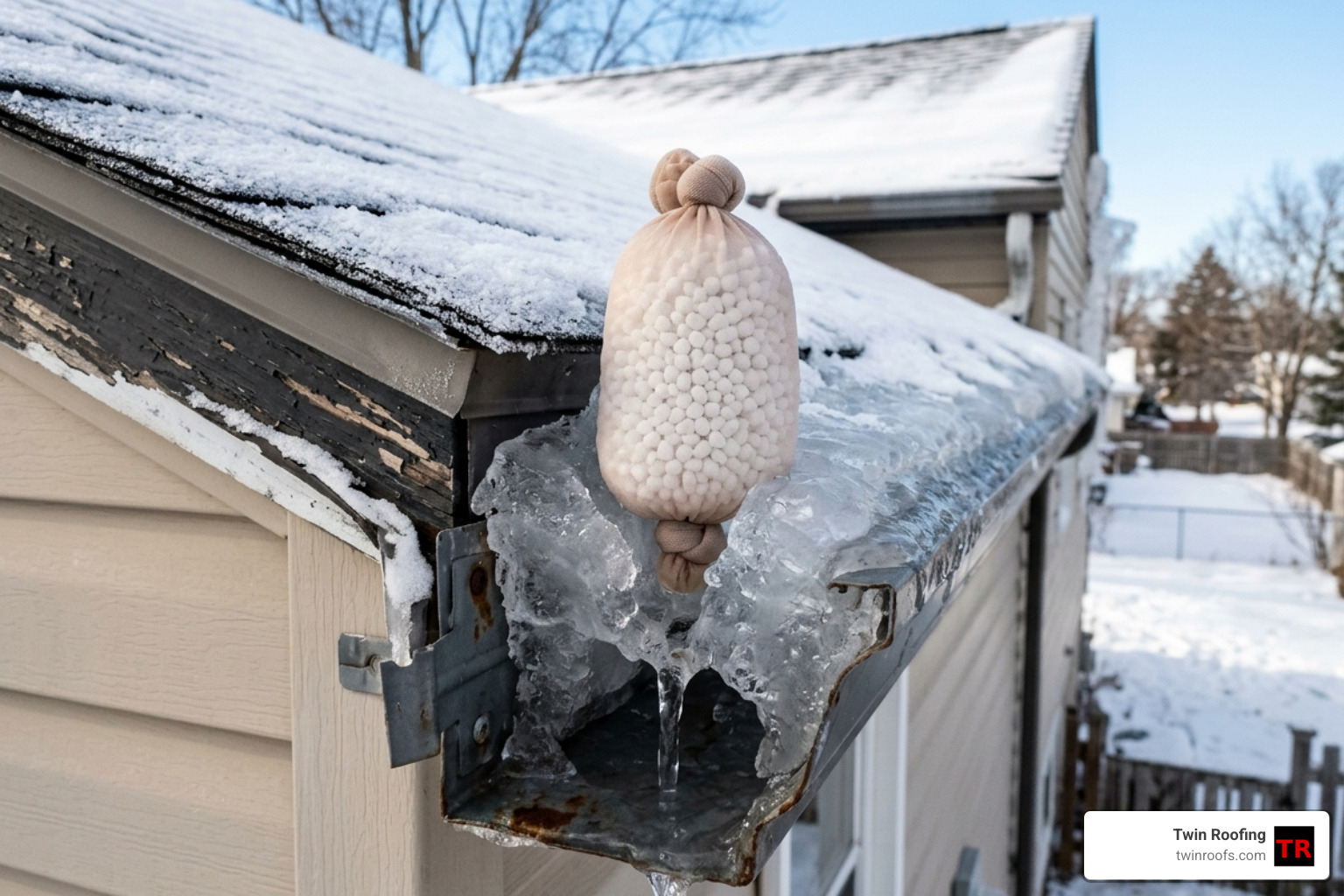
- Apply calcium chloride — fill nylon stockings with calcium chloride ice melt and lay them vertically across the ice
- Use warm water — run warm (not boiling) water through a garden hose into the gutter to melt buildup
- Tap gently — use a rubber mallet to loosen ice chunks; never use axes or sharp tools
- Call a pro — for thick ice dams or signs of interior water damage, hire a professional
Winter is hard on gutters. When snow melts on a warm roof and refreezes at the cold eaves, ice builds up fast. That ice is heavy — heavy enough to pull gutters away from your home, bend brackets, or bring the whole system crashing down.
And it’s not just a structural problem. Ice buildup can force water under your shingles, leading to leaks inside your home — sometimes showing up on walls or ceilings far from the roof edge.
The good news: there are safe, practical ways to deal with it.
I’m Tom Gordon, owner of Twin Roofing, and with nearly two decades of hands-on roofing experience across Massachusetts and New Hampshire, I’ve seen how quickly gutter ice can turn from a minor nuisance into a costly repair — knowing how to remove ice from gutters safely is something every New England homeowner should understand.
What Causes Ice to Build Up in Gutters?
In the depths of a New England winter, your gutters are often the frontline in a battle against the elements. But why does that ice form there in the first place? It usually boils down to a combination of temperature fluctuations and home efficiency.
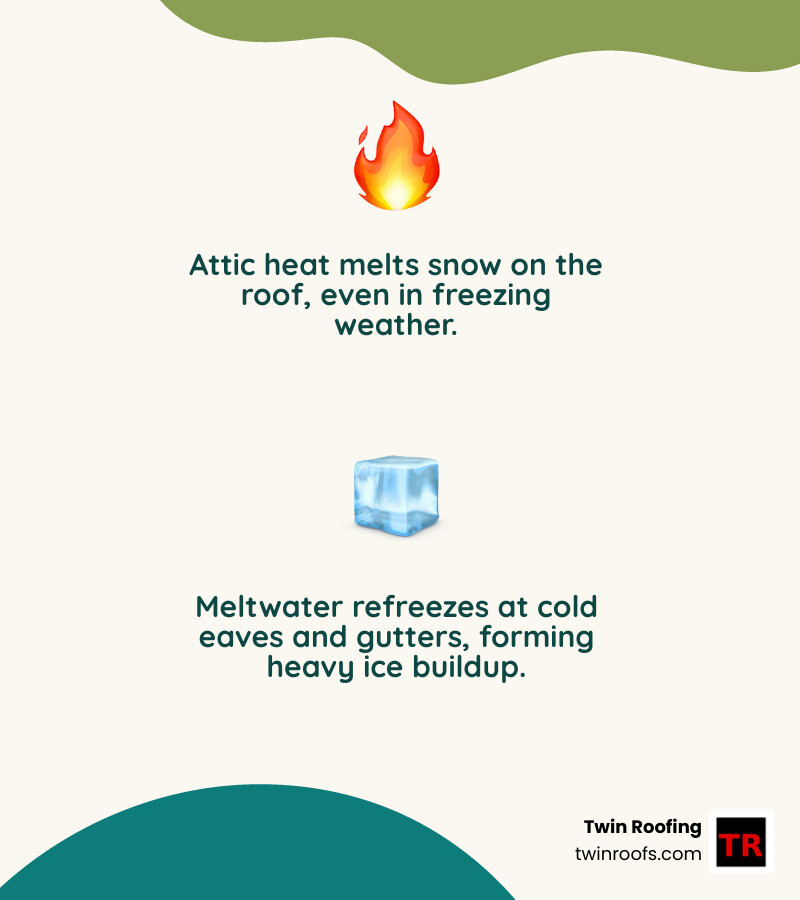
The primary culprit is often escaping attic heat. When your attic isn’t properly insulated or ventilated, heat from your living space rises and warms the roof deck. This causes the bottom layer of snow to melt, even when the outside temperature is well below freezing. As that meltwater trickles down to the eaves and gutters—which are not over the heated part of the house—it hits the cold air and refreezes instantly.
This cycle is the foundation of both frozen gutters and dangerous ice dams. To understand how to keep your drainage system flowing, we often point homeowners to The Sudbury Guide to Gutters That Dont Quit, which highlights the importance of a holistic approach to roof health.
Beyond heat loss, poor drainage is a major factor. If your gutters are clogged with autumn leaves and debris, water has nowhere to go. It sits in the trough, freezes, and creates a solid block of ice. Furthermore, the physical pitch of your system matters. According to industry standards, gutters should slope downward 1/2 inch (1.3 cm) for every 10 feet (3.0 m) to ensure water reaches the downspouts before it has a chance to turn into a popsicle. If the slope is off, you’re essentially inviting ice to move in for the season.
Safe DIY Methods to remove ice from gutters
If you wake up in April 2026 and see a “wall of glass” hanging from your roofline, don’t panic. There are several ways to remove ice from gutters without calling in a helicopter. However, safety is paramount. Every year, we hear stories of homeowners in places like Andover or Nashua who ended up in the emergency room because they tried to play “ice explorer” on a slippery ladder.
The Ground-First Approach
The safest way to handle ice is to prevent it from getting worse. Use a long-handled aluminum roof rake to pull snow off the first 3 to 4 feet of your roof. By removing the “fuel” (the snow), you stop the melting and refreezing cycle. Always stay on the ground and look up for overhead power lines.
The Warm Water Flush
One of the most effective “no-tool” solutions involves using your home’s own resources. You can hook a garden hose up to a hot water spigot (often found in laundry rooms or near water heaters) and run warm water into the gutter. As noted in The No-Tool Solution For Removing Ice From Gutters, warm water can melt through ice channels relatively quickly.
Pro-Tip: Do not use boiling water. The extreme temperature difference can cause “thermal shock,” potentially warping your gutters or damaging the seals. Stick to “bathwater warm.”
Ladder Safety and Gear
If you must use a ladder, ensure it is on stable, non-icy ground. Wear insulated, waterproof gloves and eye protection. Small shards of ice can be sharp and fly in unexpected directions when you’re working. For more on how your gutters interact with the rest of your home’s exterior, check out our guide on Gutters Siding Soffits.
Using Calcium Chloride to remove ice from gutters
When the ice is too thick for a simple water flush, it’s time to bring in the chemistry. But be careful: not all “salt” is created equal.
Why Calcium Chloride?
Never use rock salt (sodium chloride) on your roof or in your gutters. Rock salt is highly corrosive; it can eat through aluminum gutters, damage your shingles, and kill the expensive landscaping around your foundation once it melts and runs off. Instead, use calcium chloride. It is effective at much lower temperatures and is significantly safer for your roofing materials and plants.
The Pantyhose Method
This is a classic New England DIY trick that actually works.
- Take a pair of nylon stockings or pantyhose.
- Fill them with calcium chloride pellets.
- Tie off the end so you have a long “sausage” of ice melt.
- Carefully place the stocking vertically across the ice buildup in the gutter, with one end dangling slightly over the edge.
The chemical will react with the ice, melting a vertical channel through the block. This “drainage chimney” allows trapped water behind the ice to flow out through the gutter and downspout rather than backing up under your shingles. This is a key step in how to remove ice from gutters when an ice dam has already started to form.
Manual Tools to remove ice from gutters
Sometimes you just want to knock the ice out. While satisfying, this is where most homeowners accidentally damage their homes.
The Right Tools
- Rubber Mallet: This is your best friend. A gentle tap on the bottom or side of the gutter can often vibrate the ice enough to break its bond with the metal, allowing you to lift out large chunks.
- Plastic Gutter Scoop: Use a plastic scoop rather than a metal trowel to avoid scratching the gutter’s protective coating.
- Roof Rake with Wheels: If you’re raking the roof, look for models with small wheels that keep the blade slightly above the shingles to prevent damage to the granules.
What to Avoid
Do not use axes, hatchets, ice picks, or hammers. It is incredibly easy to miss the ice and put a hole straight through your gutter or, worse, your roof deck. We’ve seen many cases of New Hampshire Gutter Installation Why Your Roof is Crying for Help where the primary cause of damage wasn’t the ice itself, but the homeowner’s attempt to “rescue” the gutter with a sharp tool.
Long-Term Prevention: Beyond the Quick Fix
While knowing how to remove ice from gutters is important, the goal should be to stop the ice from forming in the first place. This requires looking into your attic.
Insulation and Ventilation
In the roofing world, we say “a cold roof is a happy roof.” To keep your roof cold, you need to trap your home’s heat inside the living space.
- Insulation: The current recommendation for our region (MA and NH) is a minimum of R-50 insulation in the attic.
- Air Sealing: Use expanding foam or caulk to seal “bypass” leaks around chimneys, vent pipes, and light fixtures where warm air sneaks into the attic.
- Ventilation: Ensure your soffit vents are not blocked by insulation. You need a steady flow of cold air coming in the bottom and exiting through a ridge vent at the top to keep the roof deck at the same temperature as the outdoors.
For residents in the Burlington area, we often discuss these upgrades during a Professional Installation in Burlington, as it’s the best time to address the root cause of ice dams.
Maintenance Schedule
Don’t wait for the first blizzard. Inspect and clean your gutters every 4–6 weeks during the winter, especially after heavy storms. Removing debris in late autumn is the single most effective “free” way to prevent ice buildup.
Preventing Gutter Ice with Heat Cables
Heat cables (or heat tape) can be a great localized solution for “trouble spots” where ice always seems to form, such as north-facing valleys or over unheated porches.
How they work: You install these cables in a zigzag pattern along the roof edge and inside the gutters and downspouts. They are self-regulating, meaning they adjust their heat output based on the outside temperature.
Average Costs: Based on publicly available internet data, the average cost for heated roof cables can range from $50 to $1,500 or more. For example, a DIY kit for a small area might be on the lower end, while a professionally installed, perimeter-wide system with dedicated electrical circuits can easily exceed the higher end of that range. (Note: These are average market ranges and do not reflect Twin Roofing’s specific pricing).
If you’re considering this for your home, especially in areas like Braintree, it’s worth looking into Gutter Installation Braintree MA to see how integrated systems can protect your investment.
The Role of Professional Maintenance
Sometimes, the ice is simply too much for a DIY approach. If you have ice that is 12–16 inches thick or if water is already dripping from your interior ceiling, it’s time to call in the pros.
Professional crews use low-pressure steam. This is the “gold standard” for ice removal. Steam melts the ice quickly without the physical impact of a hammer or the chemical risks of salts. It’s safe for asphalt shingles and metal roofs alike. We take a deep dive into these professional considerations in our article on The Ins and Outs of Gutters Siding Soffits.
Frequently Asked Questions About Gutter Ice
Is it safe to use rock salt in gutters?
No. As mentioned earlier, rock salt is the enemy of your home’s exterior. It causes corrosion in aluminum and steel gutters, makes asphalt shingles brittle, and can poison the soil around your home. Always reach for calcium chloride instead.
How do I identify an ice dam versus frozen gutters?
Frozen gutters are simply gutters filled with ice. An ice dam is a ridge of ice that forms at the edge of the roof and prevents melting snow from draining off. The biggest red flag for an ice dam is “back-up”—if you see water staining on your interior walls or ceiling, or if you see ice forming under the soffit or behind the gutter, you likely have an ice dam.
Can I use boiling water to melt gutter ice?
We strongly advise against it. The extreme temperature jump from 20°F (gutter temperature) to 212°F (boiling water) can cause metal gutters to warp and can crack plastic or PVC components. Stick to warm water from your tap.
Conclusion
Living in Massachusetts and New Hampshire means accepting that winter will eventually try to turn your gutters into ice sculptures. However, by understanding how to remove ice from gutters safely—using tools like roof rakes, calcium chloride, and warm water—you can protect your home from structural damage and interior leaks.
At Twin Roofing, we specialize in both asphalt shingle and metal roofing systems designed to withstand the toughest New England winters. Whether you need an emergency ice removal or a long-term solution like improved attic ventilation and R-50 insulation, we emphasize superior performance and quality materials in every job we do.
Don’t let the ice win this season. If you’re concerned about your roof’s health or need a professional eye to inspect your gutter system, we are here to help.
Request an Estimate from Twin Roofing
Twin Roofing services Berkshire County in Eastern Massachusetts and Southern New Hampshire.
Follow us on Facebook — https://www.facebook.com/twinmetalsroofing Follow us on Instagram – https://www.instagram.com/twinmetals/