Why Smart Commercial Skylight Replacement Matters
Commercial skylight replacement is a crucial decision for building owners and managers. Old, damaged skylights can cause many problems. It’s not just about fixing a leak; it’s about upgrading your building’s performance and safety.
So, when should you consider commercial skylight replacement?
- Leaks or Moisture: If you see drips, stains, or condensation. The research shows skylights can start leaking after about a decade.
- Visible Damage: Look for cracks, yellowing, or fogging between the glass panes.
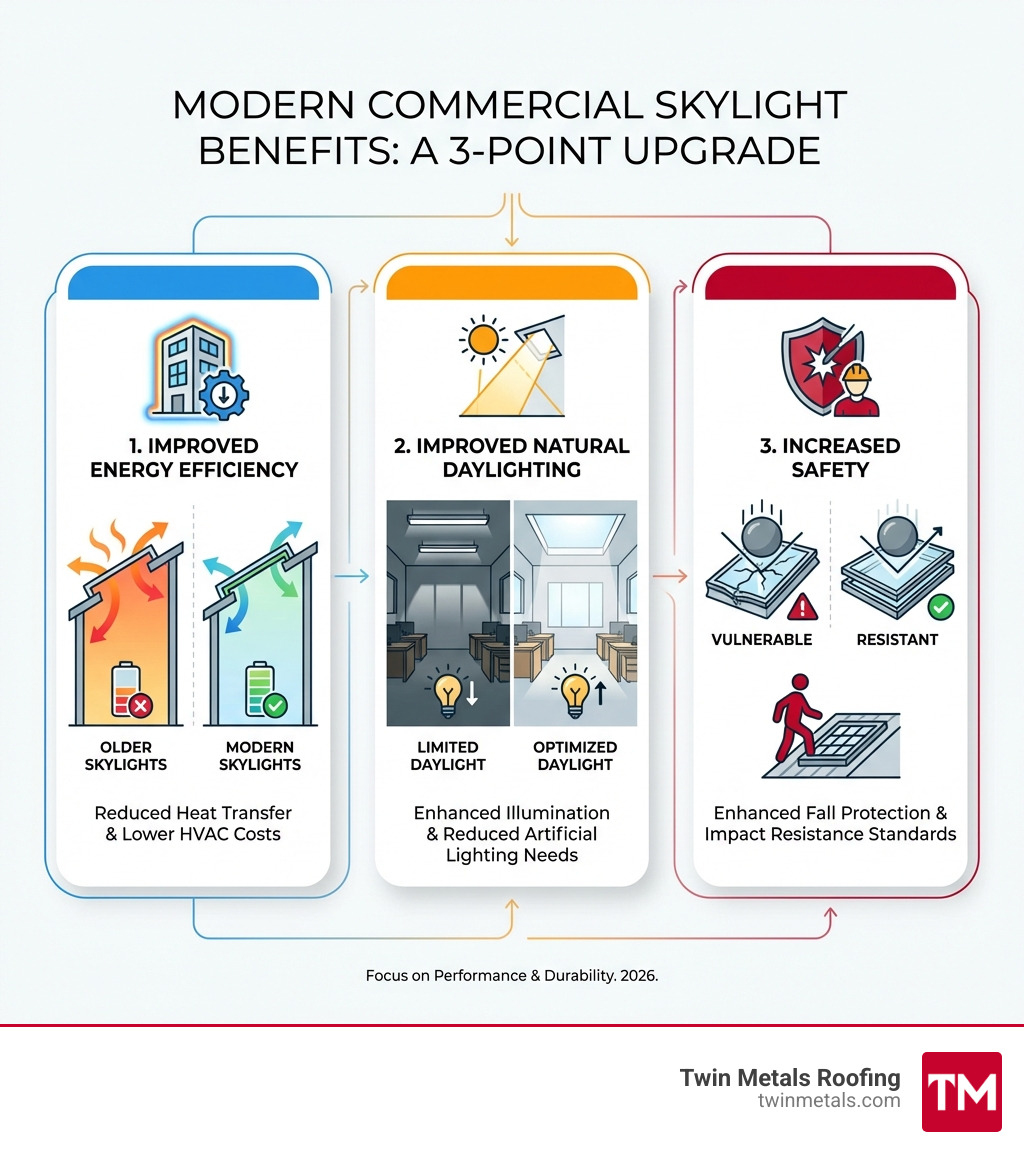
- Outdated Safety: Older skylights might not meet today’s safety standards for fall protection or impact resistance.
- High Energy Bills: Poorly insulated or older models can let too much heat escape or enter, wasting energy.
- During Re-roofing: This is often the most efficient time to replace skylights, saving time and money in the long run.
Newer skylights, like those from VELUX, are engineered to last 20 to 30 years. They are also built to resist harsh weather like snow, wind, and debris. Upgrading means a better building.
Signs It’s Time for a Commercial Skylight Replacement
Knowing when to replace your commercial skylights can save your business from costly repairs and potential safety hazards. While some issues are obvious, others can be subtle indicators that your skylights are past their prime. Ignoring these signs can lead to significant problems for your commercial building in Massachusetts and Southern New Hampshire.
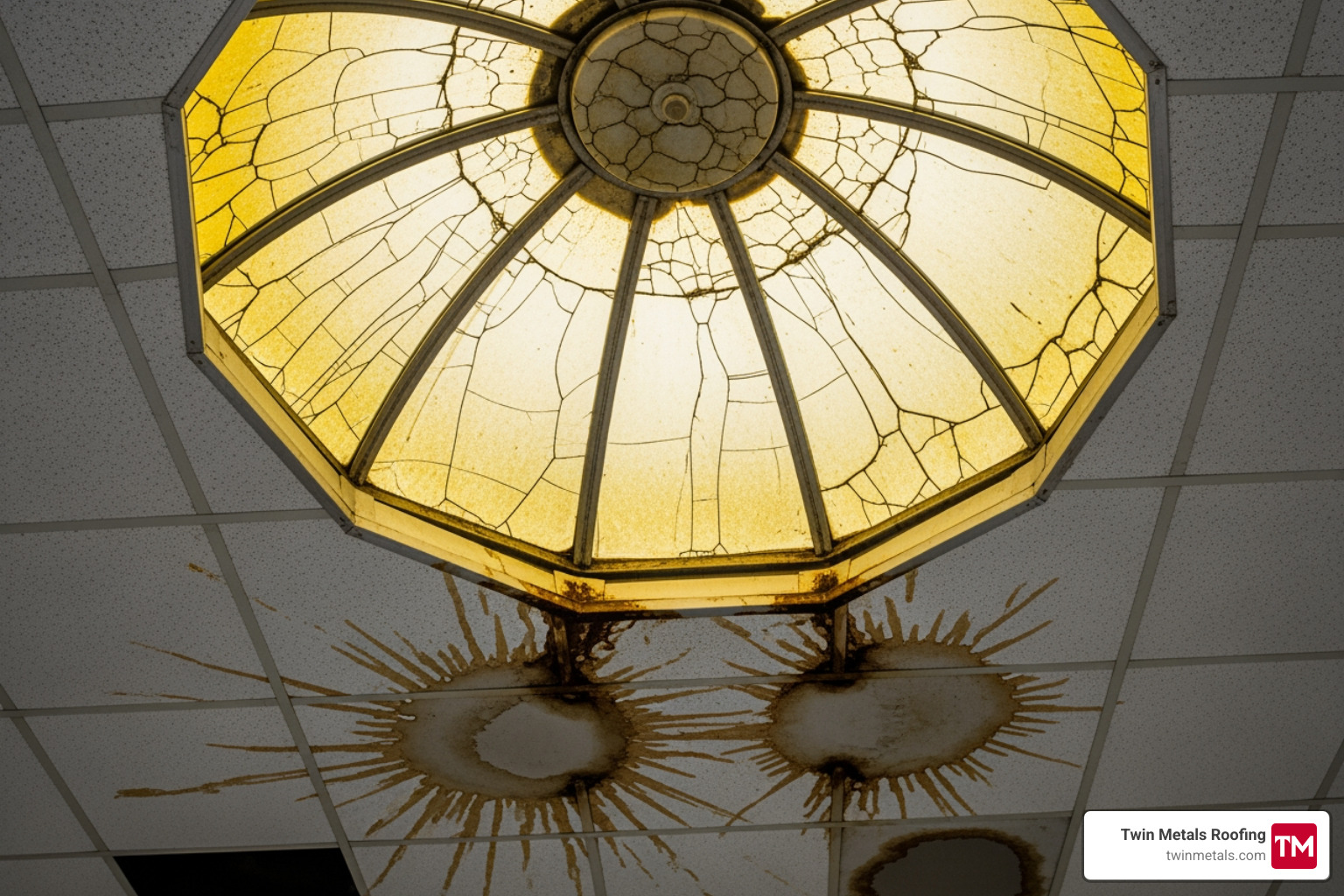
Here are the primary reasons commercial buildings often need commercial skylight replacement:
- Leaks and Moisture: This is perhaps the most common and urgent sign. If you notice water stains on ceilings or walls below skylights, active drips, or excessive condensation between the panes of glass, it’s a clear indication of a compromised seal or flashing. Our research suggests that skylights can begin to leak after about a decade, making regular checks essential.
- Visible Cracks or Crazing: Over time, acrylic or polycarbonate domes can develop hairline cracks, known as crazing, due to UV exposure and thermal expansion. Glass skylights can chip or crack from impact. These damages compromise the structural integrity and weatherproofing of the unit.
- Discoloration and Yellowing: Older plastic skylight domes often yellow or become opaque due to prolonged sun exposure. This discoloration reduces the amount and quality of natural light entering your building, defeating the purpose of having a skylight in the first place.
- Condensation Between Panes: Modern skylights are typically insulated with two or more panes of glass, creating a sealed unit. If you see fog or moisture trapped between these panes, it means the seal has failed. This drastically reduces thermal performance and clarity.
- Drafts or Whistling Sounds: If you can feel a draft near your skylights or hear whistling on windy days, it indicates poor sealing or improper installation. This allows conditioned air to escape, leading to increased energy consumption.
- Increased Energy Bills: Even without obvious leaks, an old, poorly insulated skylight can be a major source of heat loss in winter and heat gain in summer. If your energy bills are creeping up, your skylights might be silently contributing to the problem.
- Outdated Safety Standards: Older skylights may not meet current building codes for fall protection or impact resistance. This poses a significant risk to anyone working on your roof. Upgrading during a commercial skylight replacement ensures compliance and improved safety.
- Exceeding Typical Lifespan (15-20 years): While some high-quality skylights can last 20-30 years, many older models begin to show significant degradation after 15-20 years. Proactive replacement before a catastrophic failure occurs is often the most cost-effective approach. As we’ve learned, VELUX skylights, for example, are designed to last 20 to 30 years with normal wear and tear.
The Safety Implications of Failing Skylights
The safety implications of outdated or damaged commercial skylights are profound and often overlooked until an incident occurs.
- Fall Protection Risks: Perhaps the most critical safety concern is the risk of falls. Older skylights, especially those made from brittle plastics or single-pane glass, may not be designed to withstand the weight of a person. A worker or maintenance personnel stepping on a compromised skylight could fall through, leading to serious injury or even fatalities. Modern skylights are engineered with improved safety features and often require fall protection screens.
- Structural Integrity Failure: Beyond direct falls, a severely deteriorated skylight can compromise the structural integrity of your roof. High winds, heavy snow loads, or accumulating debris can cause an old unit to collapse, creating large openings that expose your building’s interior to the elements.
- Debris Hazards: Cracked or broken skylights can become unstable, allowing glass shards or plastic pieces to fall into the occupied spaces below. This is especially dangerous in commercial settings like retail stores, offices, or manufacturing facilities.
- Water Damage to Interior: While not a direct physical injury, persistent leaks from failing skylights can cause extensive damage to your building’s interior, including equipment, inventory, and structural components. This can lead to costly repairs and business interruptions.
- Mold Growth Potential: Consistent moisture intrusion creates an ideal environment for mold and mildew growth. This can compromise indoor air quality, posing health risks to employees and occupants, and potentially leading to expensive remediation efforts.
Assessing the Age and Condition
Regular assessment is key to preventing these issues. We recommend:
- Professional Inspection: A qualified roofing professional specializing in skylights can perform a thorough inspection, identifying subtle signs of wear, compromised seals, or structural weaknesses that might not be visible to the untrained eye.
- Material Degradation: Understanding the materials of your existing skylights (e.g., acrylic, polycarbonate, glass) helps predict their lifespan and common failure points. Different materials degrade in different ways.
- Seal Failure: The seals around the glass or dome, and where the skylight meets the roof, are critical. Degraded seals are a primary cause of leaks and condensation.
- Documenting Manufacturer: Knowing the original manufacturer and model can help determine the expected lifespan and available replacement options.
For a deeper dive into assessing your skylights, we recommend consulting A helpful skylight replacement guide. This can provide valuable insights into identifying issues and planning for their resolution.
The Advantages of Upgrading to Modern Commercial Skylights
Replacing old, inefficient skylights isn’t just about fixing a problem; it’s an opportunity to significantly improve your commercial building’s performance, aesthetics, and sustainability. The benefits of upgrading to modern commercial skylights are substantial, especially for businesses in Massachusetts and Southern New Hampshire looking to optimize their operational costs and workspace environment.
- Improved Energy Efficiency: This is one of the most compelling reasons for commercial skylight replacement. Modern skylights feature advanced glazing technologies, such as low-emissivity (low-E) coatings, argon gas fills, and insulated glass units (IGUs). These innovations dramatically reduce heat transfer, keeping your building warmer in winter and cooler in summer. This translates directly into:
- Lower HVAC Costs: By minimizing heat gain and loss, your heating, ventilation, and air conditioning systems won’t have to work as hard, leading to noticeable savings on your energy bills.
- Better Thermal Insulation: New skylights are designed to be part of your building’s thermal envelope, with specific thermal transmittance values that meet or exceed current energy codes.
- Improved Daylighting Quality: Older skylights often become discolored or cloudy, hindering the quality of natural light. New skylights deliver clear, consistent daylight, reducing the need for artificial lighting during the day. This creates a brighter, more inviting interior.
- UV Radiation Blocking: Modern skylights are engineered to block a significant percentage of harmful UV rays. This protects interior furnishings, flooring, and merchandise from fading and degradation, while still allowing beneficial natural light to enter.
- Increased Employee Productivity and Well-being: Studies have shown that access to natural light can boost mood, reduce eye strain, and improve overall productivity and alertness in the workplace. A well-lit commercial space contributes to a healthier and more comfortable environment for your staff and customers.
- Modern Building Aesthetics: Replacing outdated, yellowed domes with sleek, clear, and architecturally pleasing skylights instantly updates the look of your commercial property, both inside and out.
- Achieving Sustainability Goals: Upgrading to energy-efficient skylights helps your business reduce its carbon footprint. This aligns with corporate sustainability initiatives and can improve your brand image as an environmentally responsible organization.
- Improved Durability and Weather Resistance: Today’s skylights are engineered to resist snow, wind, dead loads, and impact from wind-borne debris. This means greater resilience against harsh New England weather conditions, providing peace of mind and reducing future maintenance concerns.
To illustrate the vast improvements, consider this comparison:
| Feature | Old Skylights (e.g., 15-20+ years old) | Modern Skylights (e.g., VELUX) |
|---|---|---|
| Glazing Material | Single-pane acrylic or glass | Double or triple-pane insulated glass units (IGUs) with low-E coatings, argon gas fill, or impact-resistant polycarbonate/laminated glass |
| Energy Efficiency | Poor (high U-factor, high SHGC) | Excellent (low U-factor, optimized SHGC) |
| UV Protection | Minimal | High (blocks 95%+ of UV rays) |
| Impact Resistance | Low (brittle, prone to cracking) | High (engineered to resist wind-borne debris, hail, and potential falls) |
| Air Sealing | Often inadequate | Superior (designed for minimal air leakage) |
| Daylight Quality | Can be discolored/yellowed | Clear, consistent, and balanced light |
| Safety Features | Limited, potential fall hazard | Integrated fall protection, robust framing, structural integrity |
Key Factors in Choosing Your New Commercial Skylights
Selecting the right replacement skylights for your commercial property is a critical decision that impacts aesthetics, performance, and long-term costs. It’s not a one-size-fits-all situation; various factors need to be carefully considered to ensure your investment pays off. When we help clients with commercial skylight replacement in Massachusetts and Southern New Hampshire, we guide them through these important choices.
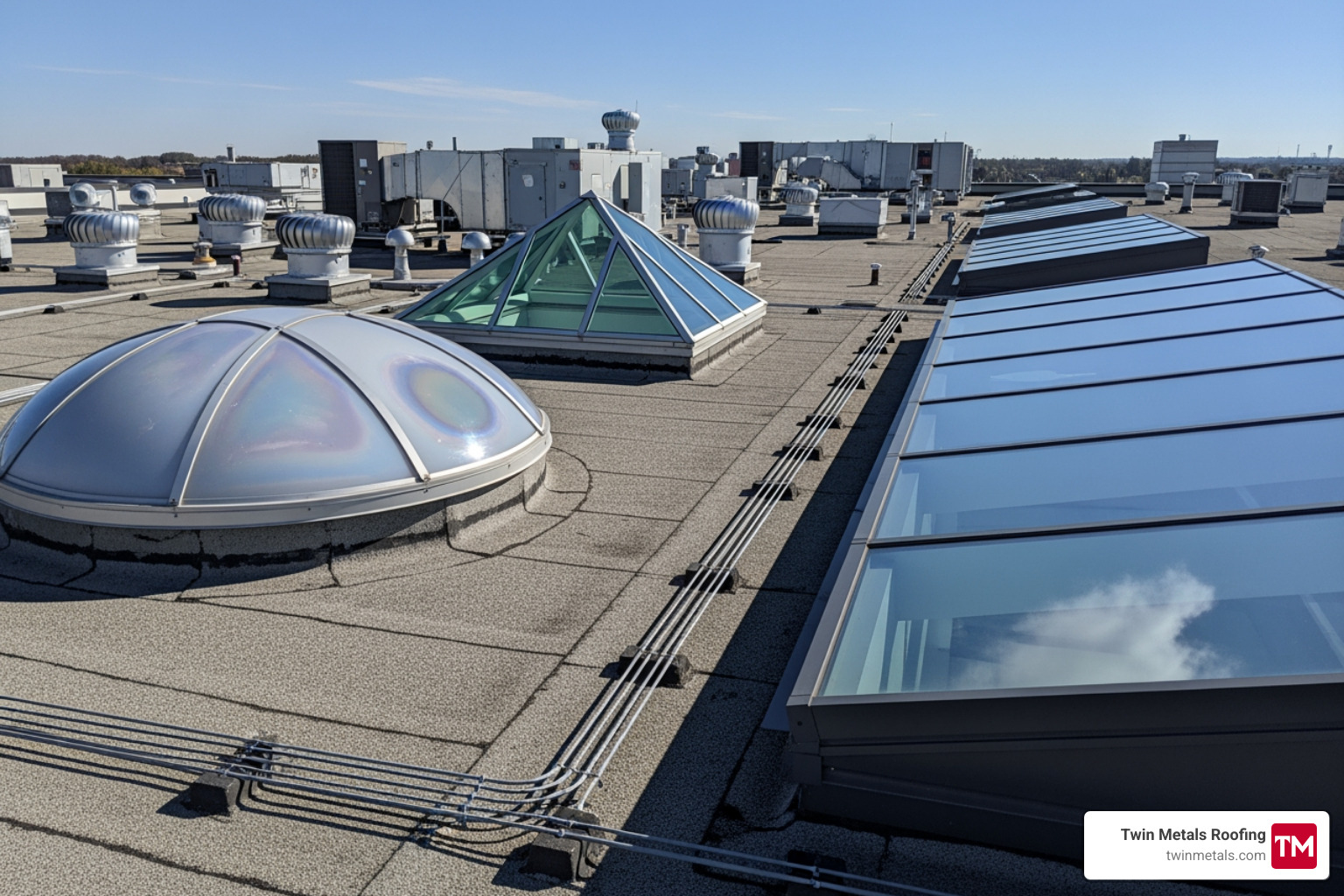
Here are the key considerations when choosing a commercial skylight replacement:
- Glazing Materials: The material of the skylight’s transparent surface is paramount.
- Polycarbonate: Extremely durable and impact-resistant, often used in areas prone to vandalism or severe weather. It’s lighter than glass and offers good insulation.
- Acrylic: A cost-effective option, available in various shapes (domes, pyramids). While less impact-resistant than polycarbonate, modern acrylics offer improved UV resistance.
- Laminated Glass: Consists of two or more panes bonded with an interlayer, designed to hold together if shattered. Excellent for safety and sound dampening.
- Impact-Resistant Glazing: Specifically engineered to withstand extreme impacts, crucial in areas with stringent building codes for hurricane or storm resistance.
- Insulated Glass Units (IGUs): Two or more panes of glass separated by a sealed air or gas-filled space. This significantly improves thermal performance.
- Frame Construction: The frame material (e.g., aluminum, vinyl, fiberglass) and its design play a role in durability, thermal performance, and appearance. Aluminum is common for commercial applications due to its strength and longevity.
- Fixed vs. Venting Options:
- Fixed Skylights: Provide natural light only. They are typically less expensive and require less maintenance.
- Venting Skylights: Can be opened to allow fresh air and passive ventilation. They can be manual, electric, or solar-powered. Venting skylights are excellent for improving indoor air quality and helping to reduce reliance on mechanical ventilation, lightening the load on your HVAC system.
- Building Type Suitability: The best skylight type depends on your commercial building’s function. For example, a warehouse might prioritize durability and light distribution, while an office building might focus on aesthetics, superior insulation, and glare control. Retail spaces often benefit from skylights that improve product visibility and customer comfort.
- Climate Considerations: Our New England climate, with its hot summers and cold, snowy winters, demands skylights with excellent thermal performance. Look for low U-factor (for insulation) and appropriate Solar Heat Gain Coefficient (SHGC) values to manage heat gain. Snow load capacity is also a critical factor for flat roofs.
- Energy Performance Ratings: Pay close attention to NFRC (National Fenestration Rating Council) ratings for U-factor, SHGC, and Visible Transmittance (VT). These ratings help you compare the energy efficiency and light-transmitting properties of different skylight models.
Matching Skylight Materials to Your Needs
Choosing the right material is a balance between budget, performance, and aesthetic goals. For instance, polycarbonate is often chosen for industrial buildings due to its robustness, while laminated glass might be preferred for offices or retail spaces where aesthetics and sound reduction are important. Insulated glass units (IGUs) are almost always recommended for their superior energy performance in our region.
Key Considerations for Your Commercial Skylight Replacement
Beyond the basic features, a few other factors are vital for a successful commercial skylight replacement:
- Snow Load Capacity: Given the heavy snowfalls we experience, ensuring your new skylights can safely bear the expected snow load is non-negotiable.
- Wind Uplift Rating: Commercial roofs are particularly susceptible to wind uplift. Your skylights must be rated to withstand the specific wind forces for your building’s location and height.
- Building Codes: All replacement skylights must comply with local building codes and energy efficiency regulations in Massachusetts and Southern New Hampshire. We ensure all our installations meet these stringent requirements.
- Integration with commercial roofing systems: The skylight must integrate seamlessly with your existing or new commercial roofing material, whether it’s EPDM, TPO, PVC, or metal. Proper flashing and sealing are crucial to prevent leaks.
- Long-Term Maintenance: Consider the ease of cleaning and maintenance. Some materials are more scratch-resistant or have self-cleaning coatings.
- Cost Factors: The potential cost factors involved in commercial skylight replacement can vary significantly. These typically include the type and size of the skylight, the chosen materials (e.g., acrylic vs. laminated glass), labor costs for removal and installation, any necessary structural modifications, and the complexity of integrating with the existing roof. While average costs for a single commercial skylight replacement might range from $1,500 to $5,000, specialized or large-scale projects can run upwards of $10,000 to $30,000 or more per unit. It’s important to remember these are average costs based on publicly available internet data and not our actual pricing. We always provide detailed, project-specific estimates.
The Commercial Skylight Replacement Process: A Step-by-Step Overview
Undertaking a commercial skylight replacement is a complex project that requires careful planning and execution to ensure durability, energy efficiency, and safety. When you work with us, we follow a meticulous process designed to minimize disruption to your business and deliver a high-quality, long-lasting solution.
Here’s how the process of commercial skylight replacement typically works:
- Professional Assessment: Our first step is always a thorough inspection of your existing skylights and roofing system. We assess the condition of the old units, identify any underlying issues (like structural damage or water intrusion), and discuss your specific needs and goals for the replacement. This includes evaluating the building type, climate considerations, and relevant building codes for your Massachusetts or Southern New Hampshire location.
- Site Safety Setup: Safety is our top priority. Before any work begins, we establish a secure work zone on the roof and inside the building, if necessary. This includes proper fall protection measures, securing the area below the skylights, and ensuring all personnel adhere to strict safety protocols.
- Removal of the Old Unit: Carefully, we dismantle and remove the existing skylight unit, including its frame, glazing, and flashing. This step is crucial to avoid further damage to the roof deck or surrounding roofing materials.
- Curb and Roof Deck Inspection & Preparation: Once the old skylight is removed, we inspect the skylight curb and the exposed roof deck. We look for rot, structural damage, or any deficiencies that need to be addressed before the new unit is installed. Any necessary repairs or modifications to the curb or roof opening are completed at this stage.
- Flashing and Weatherproofing: This is perhaps the most critical step for preventing future leaks. We install new, high-quality flashing systems that integrate seamlessly with your roof. Proper flashing creates a watertight seal between the skylight and the roofing material, protecting your building from rain and snow.
- New Skylight Installation: The new commercial skylight unit is carefully positioned and securely fastened to the prepared curb or roof opening. We ensure it is level, plumb, and properly aligned according to manufacturer specifications.
- Interior Finishing and Cleanup: Once the exterior installation is complete, any interior trim work or finishing around the skylight opening is performed. Our team then conducts a thorough cleanup of the work area, both inside and outside your building, removing all debris and old materials.
- Final Quality Inspection: Before we consider the job complete, we perform a comprehensive final inspection. This ensures that the new skylight is correctly installed, all seals are intact, and the area is watertight and structurally sound. We also verify that the new unit meets all agreed-upon specifications and safety standards.
The Professional Commercial Skylight Replacement Process
When you choose a professional for your commercial skylight replacement, you benefit from specialized expertise:
- Coordination with Roofing Work: Often, the best time for skylight replacement is during a re-roofing project. We expertly coordinate with any ongoing roofing work to ensure a smooth, efficient process, saving you time and money by addressing both needs simultaneously.
- Minimizing Business Disruption: We understand that commercial operations cannot simply shut down. Our teams work efficiently and strategically to minimize noise, dust, and disruption to your daily business activities.
- Proper Sealing Techniques: Our experienced technicians use industry-best practices and high-quality materials for all sealing points, ensuring long-term watertight performance even in challenging New England weather.
- Warranty Compliance: Professional installation ensures that your new skylight’s warranty remains valid. Many manufacturers, like VELUX, offer comprehensive warranties on their products and installation when performed by certified professionals.
Frequently Asked Questions about Commercial Skylight Replacement
We often hear similar questions from commercial property owners considering commercial skylight replacement. Here are some of the most common inquiries and our expert answers.
How long does a typical commercial skylight last?
The lifespan of a commercial skylight varies significantly based on its material, quality of installation, exposure to elements, and maintenance. Many older skylights, particularly those with acrylic domes or single-pane glass, may start showing signs of degradation like leaks, yellowing, or condensation after 10-15 years. However, high-quality, modern units from reputable manufacturers can last 20 to 30 years or even longer with proper maintenance and regular inspections. Investing in a durable, well-installed replacement is a long-term investment in your building’s integrity and efficiency.
Do I have to replace my roof to replace a skylight?
While replacing skylights during a full roof replacement is often the most cost-effective and efficient approach, it is not strictly required. Replacing both at the same time allows for seamless integration, coordinated warranties, and saves on labor costs since the roofing crew is already on site. However, a qualified roofing professional can absolutely replace a skylight on an existing roof. We ensure the new skylight is properly flashed and sealed to prevent leaks and integrates correctly with your current roofing system, minimizing disruption.
Are there tax incentives for installing energy-efficient skylights?
Yes, certain energy-efficient building upgrades may qualify for federal or state tax credits, and sometimes even local incentives. For example, VELUX Solar Powered Fresh Air Skylights and VELUX Solar Powered Blinds have been known to qualify under “Solar Electric Property” expenditures when purchased and installed. These incentives are designed to encourage businesses to invest in sustainable solutions that reduce energy consumption. We recommend consulting with a tax professional or energy expert to understand the current eligibility requirements and available programs specific to your commercial property in Massachusetts or Southern New Hampshire. This can significantly offset the initial investment in a commercial skylight replacement.
Conclusion
Making the decision for commercial skylight replacement is a smart move for any business owner or property manager. It’s an investment that pays dividends in various ways, from enhancing your building’s functionality to improving its financial and environmental performance.
We’ve seen how crucial it is to recognize the signs of failing skylights early, from leaks and discoloration to outdated safety standards. We’ve also explored the significant benefits of upgrading, including improved energy efficiency, superior daylighting quality, improved safety features, and a modern aesthetic. Choosing the right materials and understanding the installation process ensures a durable and effective solution.
At Twin Metals Roofing, we understand that your commercial property is a significant asset. As a leading installer of asphalt roofs in MA and NH, we understand how all roofing components work together to protect your investment. Our expertise ensures that your commercial skylight replacement is handled with the utmost professionalism and precision, integrating seamlessly with your existing commercial roofing system. We are committed to delivering superior performance, quality materials, and exceptional customer service for businesses across Berkshire County in Eastern Massachusetts and Southern New Hampshire.
Don’t wait for a small leak to become a major problem. Take a proactive step towards a safer, more energy-efficient, and brighter commercial space.
Request a professional estimate for your project today, and let us help you look up to a brighter future.
Twin Metals Roofing proudly serves the commercial and residential roofing needs of Berkshire County in Eastern Massachusetts and Southern New Hampshire.
Follow us on Facebook — https://www.facebook.com/twinmetalsroofing Follow us on Instagram – https://www.instagram.com/twinmetals/