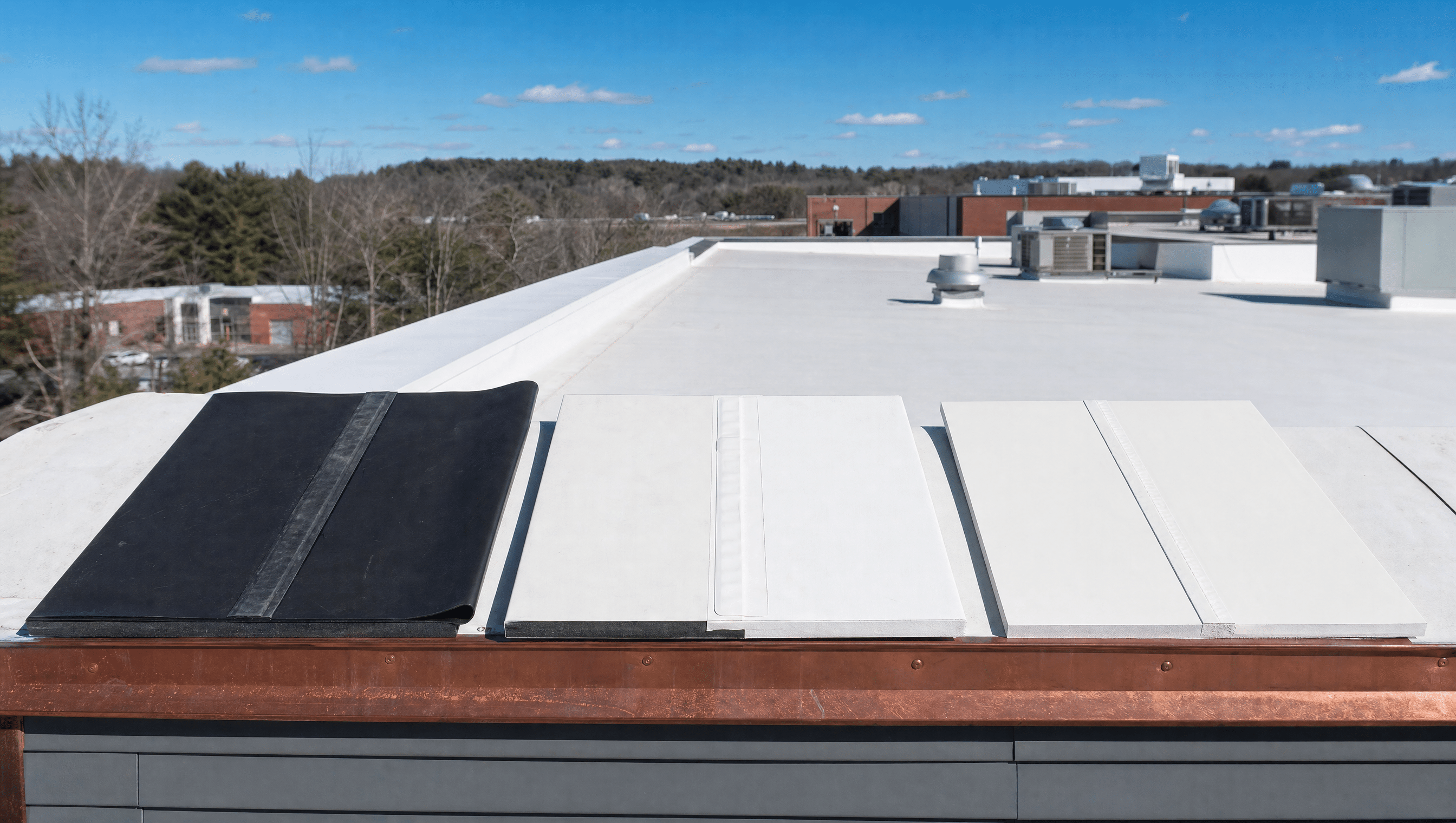
EPDM, TPO, and PVC are single-ply membrane categories used on low-slope roofs. They differ in material chemistry, seam method, color options, accessory systems, compatibility, and proposal details. The right choice depends on the building, existing assembly, drainage, rooftop traffic, exposures, and contractor’s complete system design.
Compare the three material families
| Factor | EPDM | TPO | PVC |
|---|---|---|---|
| Material | Synthetic rubber membrane | Thermoplastic polyolefin membrane | Polyvinyl chloride thermoplastic membrane |
| Seams | System-specific tapes or adhesives | Heat-welded seams | Heat-welded seams |
| Common appearance | Often black, with other system options possible | Commonly light-colored | Commonly light-colored |
| Key proposal detail | Seam, flashing, and attachment system | Membrane formulation, welding, and complete accessories | Compatibility, reinforcement, welding, and exposure requirements |
| Do not assume | Every EPDM system is identical | Color alone predicts total building energy use | Chemical resistance removes the need for exposure review |
The membrane is only one layer
Compare deck condition, vapor and air control, insulation type and thickness, cover board, attachment, membrane thickness, perimeter securement, flashing, drains, scuppers, penetrations, walk pads, and warranty requirements. A premium membrane over an unsuitable or wet assembly is not a complete solution.
Roof use can change the decision
Map HVAC service routes, grease or chemical exposure, exhaust, foot traffic, solar plans, snow storage, and equipment replacement zones. The membrane and accessories should match those conditions, with designated walk paths and protection where needed.
Drainage and details often control performance
Standing water, clogged drains, low spots, short flashings, crowded penetrations, and poor edge details can undermine any membrane. The proposal should state how existing wet material is identified, how slope and drainage are handled, and how every penetration and transition is flashed.
Compare bids on the same scope
- Exact manufacturer, product, thickness, and reinforcement
- Tear-off, recover, and wet-insulation assumptions
- Deck repair allowances and acceptable substrate
- Insulation, cover board, attachment, and uplift design
- Seam, flashing, drain, edge, and penetration details
- Walk pads and rooftop-equipment coordination
- Warranty type, term, inspection, and maintenance conditions
- Phasing, weather protection, debris, and occupied-building plan
Confirm the contractor’s current offerings
Twin Roofing’s current commercial roofing information lists EPDM, TPO, and PVC systems. Product availability, manufacturer relationships, and the system proposed for a particular building should still be confirmed in writing.
Twin Roofing provides commercial low-slope roofing services. A roof-specific evaluation can compare EPDM, TPO, and PVC as complete assemblies rather than isolated membrane names.