Why Your Home’s Soffits Matter More Than You Think
House soffit replacement is the process of removing old or damaged soffit panels—the material covering the underside of your roof’s overhang—and installing new ones. Here’s what you need to know:
Quick Answer for House Soffit Replacement:
- What it is: Replacing the panels on the underside of your roof overhang
- When needed: Visible damage (cracks, rot, sagging), water stains, pest entry, or poor attic ventilation
- Materials: Vinyl ($4-$8/linear foot), aluminum ($8-$20/linear foot), wood ($14-$22/linear foot), fiber cement ($10-$20/linear foot)
- Average cost: $1,500 to $6,000+ for a typical home (250 linear feet), based on publicly available internet data
- Typical timeframe: 1-2 days for professional installation
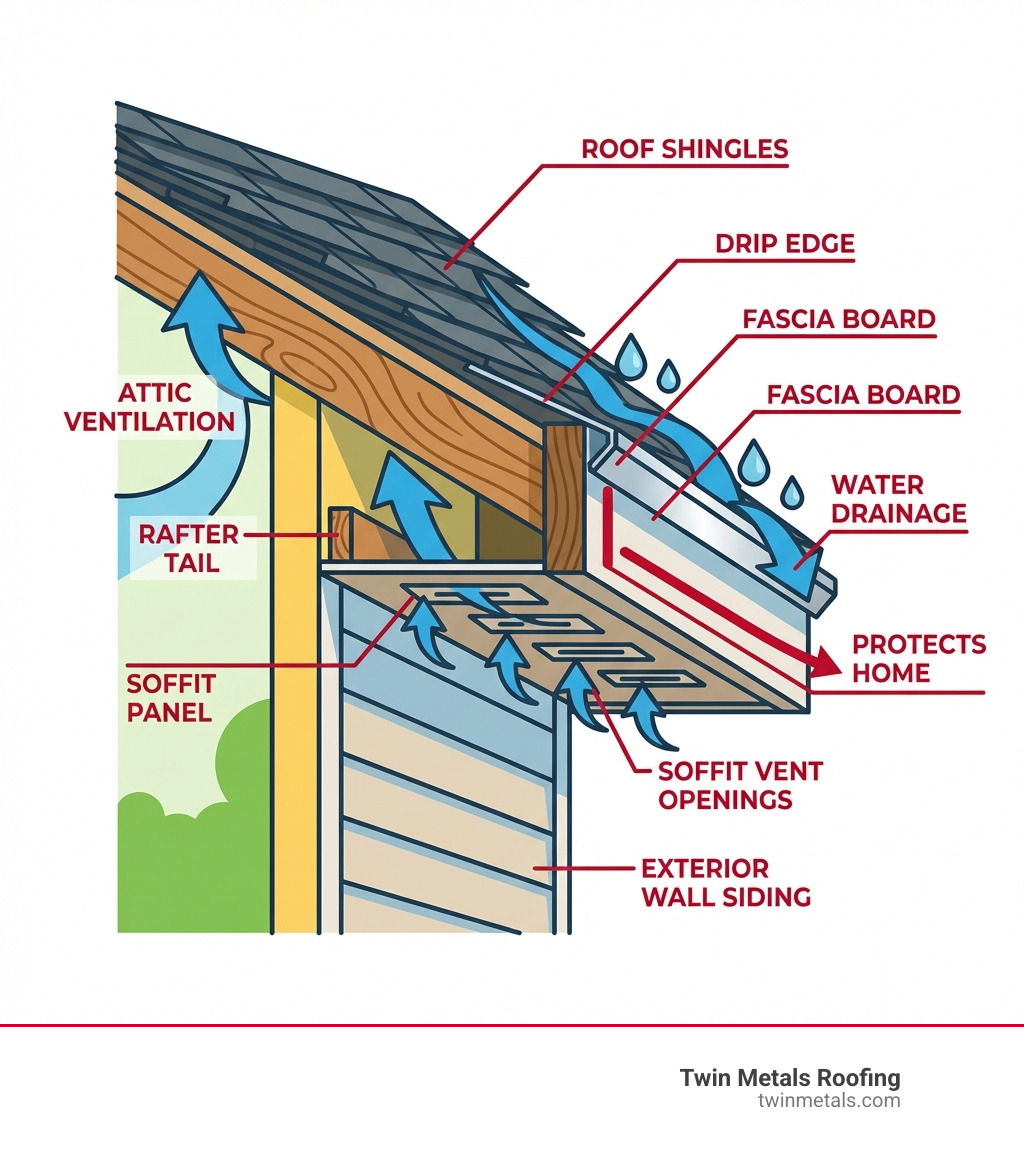
Your soffits might seem like a small detail, but they’re doing big work for your home. These panels protect the underside of your roof overhang from weather damage, provide crucial attic ventilation, and keep pests from making nests in your eaves.
When soffits fail, the problems multiply fast. Water can rot your rafters. Your attic becomes a sauna in summer and an icebox in winter. Squirrels and birds move in uninvited. Your energy bills climb.
The good news? Replacing damaged soffits is straightforward when you know what you’re doing. This guide walks you through the warning signs, material choices, and professional installation process so you can make informed decisions about protecting your home.
At Twin Metals Roofing, we install asphalt roofs throughout Massachusetts and New Hampshire, and we understand how critical proper soffit installation is to your roof’s overall performance and longevity.
When to Replace Your Soffits: Key Warning Signs
Soffits are often overlooked, blending into the background of your home’s exterior. However, they play a critical role in your home’s health and structural integrity. Knowing when your soffits are signaling for help can save you from more extensive and costly repairs down the line. We’ve seen how neglecting these components can lead to significant issues for homeowners in Massachusetts and Southern New Hampshire.
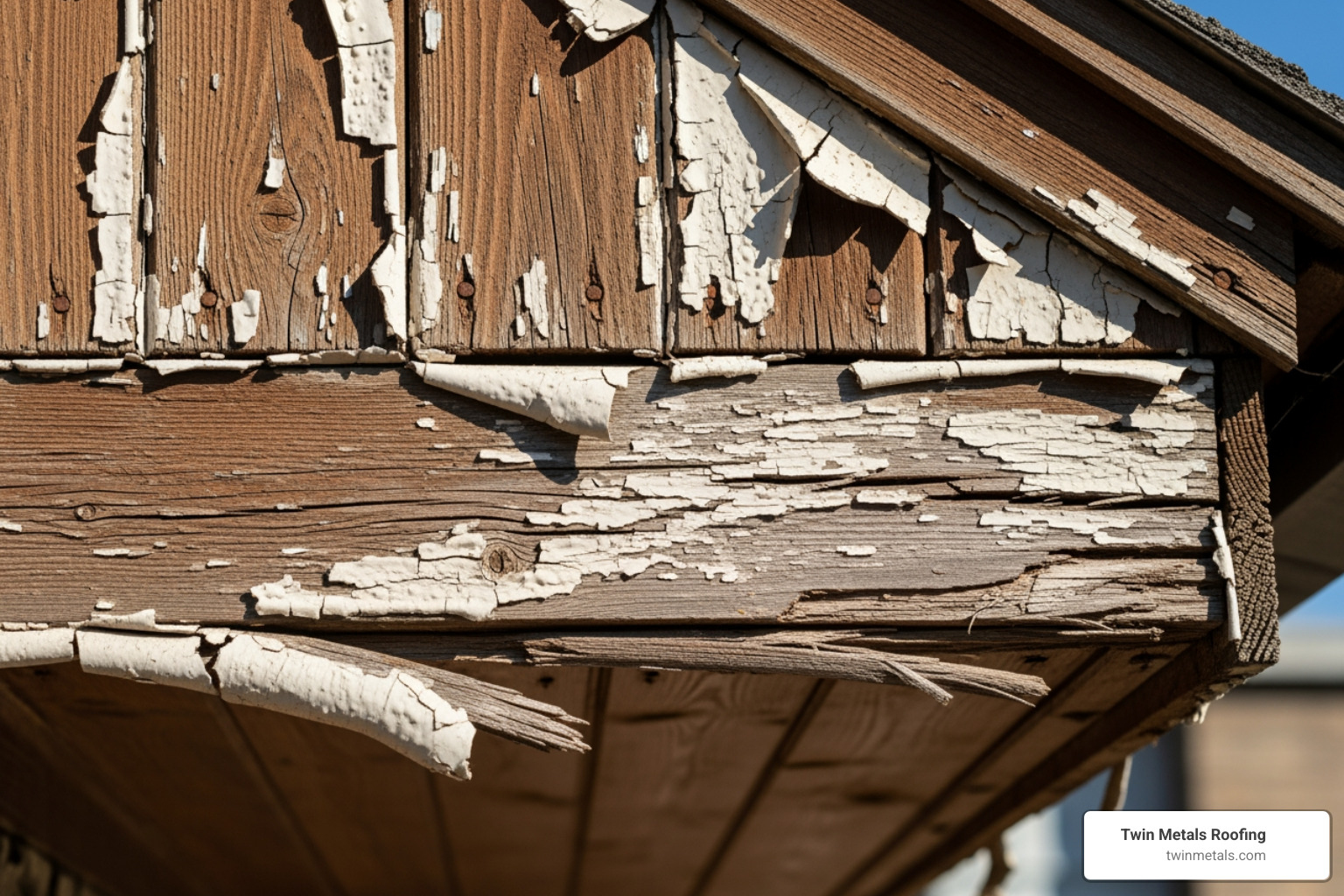
Here are the common signs that indicate your soffits might need attention, ranging from minor repairs to a full house soffit replacement:
- Visible Damage: Cracks, Holes, or Warping
This is often the most obvious sign. We look for any physical imperfections like cracks, holes, or sections that appear warped or bent. These openings are not just cosmetic flaws; they are direct invitations for moisture, insects, and small animals to enter your attic and roof structure. - Peeling Paint or Water Stains
If your soffits are painted, peeling paint is a major red flag. It almost always indicates moisture problems, suggesting that water is getting behind the paint and causing it to lift. Water stains, especially dark or discolored patches, are another clear sign of water intrusion, often from a leaking roof or clogged gutters. - Mold and Mildew Growth
Mold and mildew thrive in damp, poorly ventilated areas. Their presence on your soffits points to excessive moisture buildup and inadequate attic ventilation. This isn’t just an aesthetic issue; mold can spread, affecting indoor air quality and compromising the structural integrity of your home. - Pest Infestation
Soffits provide a convenient entry point for pests if they are damaged or improperly installed. We’ve seen everything from bees and wasps to squirrels and rodents making homes in attics through compromised soffits. Increased activity of these pests around your roofline is a strong indicator that your soffits are no longer providing adequate protection.- Statistic: Repairing insect or animal damage can cost between $75 and $2,000, depending on the extent of the infestation and structural damage.
- Sagging or Loose Sections
Soffits that are sagging, bowing, or appear loose are a clear sign of structural compromise. This can be due to water damage causing the material to rot or weaken, or simply from improper installation or aging fasteners. A sagging soffit cannot effectively support itself or provide the necessary ventilation. - Poor Attic Ventilation
While not a visible sign on the soffit itself, symptoms like an excessively hot or humid attic, or the presence of condensation, often point to inadequate soffit ventilation. Soffits are designed to allow air to enter the attic, creating a healthy airflow. If this airflow is compromised, moisture can build up, leading to mold, rot, and higher energy bills.
Repair vs. Replacement: Making the Call
When faced with damaged soffits, homeowners often wonder if a repair will suffice or if a full replacement is necessary. The decision hinges on the extent and nature of the damage:
- Repair is often suitable for:
- Minor, localized cracks or holes.
- Small sections of peeling paint without underlying rot.
- Isolated pest entry points that can be sealed after removal.
- A few loose panels that can be resecured.
- Statistic: Repairing water damage to your soffit and fascia costs between $10 and $23 per linear foot. Minor soffit repairs can cost $100-$300.
- Replacement is typically recommended for:
- Extensive rot or widespread water damage that compromises the material’s integrity.
- Significant structural damage to the soffit or underlying rafters.
- Multiple or large sections affected by pests or mold.
- Persistent poor ventilation issues that haven’t been resolved by minor fixes.
- When transitioning from an older, high-maintenance material (like wood) to a more durable, low-maintenance option (like vinyl or aluminum).
- Statistic: Repairing dry rot damage typically costs between $500 and $4,000. For widespread issues, replacement is often the most cost-effective long-term solution.
A thorough inspection by a professional roofing contractor can help you determine the best course of action for your home. We’ll assess the damage, identify the root cause, and recommend whether a targeted repair or a full house soffit replacement is the smartest investment.
Soffit Materials and Replacement Costs
Choosing the right material for your house soffit replacement is a crucial decision that impacts not only the aesthetics of your home but also its durability, maintenance requirements, and overall cost. As experts in roofing and exterior components, we understand that homeowners in Massachusetts and Southern New Hampshire need materials that can withstand our diverse climate while offering long-term value.
Soffit Materials: Durability, Lifespan, and Maintenance
Here’s a look at the most common soffit materials, their characteristics, and how they compare:
- Vinyl Soffits:
- Durability: Highly resistant to moisture, rot, and insects. It won’t peel, chip, or flake.
- Lifespan: Can last 20-40 years, often longer with good installation and care.
- Maintenance: Very low maintenance. Requires occasional cleaning with soap and water. No painting needed.
- Cost: Generally the most affordable option.
- Aluminum Soffits:
- Durability: Extremely durable, lightweight, rust-resistant, and non-combustible. It stands up well to harsh weather.
- Lifespan: Can last 40-50 years or more.
- Maintenance: Low maintenance. No painting required, just occasional cleaning. Can dent if impacted forcefully.
- Cost: A mid-range to higher-end option.
- Wood Soffits:
- Durability: Traditional and aesthetically pleasing, but susceptible to moisture, rot, and insect damage.
- Lifespan: 20-30 years with proper and consistent maintenance.
- Maintenance: High maintenance. Requires regular painting, sealing, and inspections for rot or pests.
- Cost: Material cost can be high, and ongoing maintenance adds to the long-term expense.
- Fiber Cement Soffits:
- Durability: Very resilient, resistant to moisture, rot, fire, and pests. Offers a premium look.
- Lifespan: Can last 50 years or more, often with extensive warranties.
- Maintenance: Low to moderate maintenance. Requires painting every 10-15 years, but the material itself is very durable.
- Cost: Typically the most expensive option due to material and installation complexity.
Here’s a quick comparison of these materials:
| Material | Material Cost (per linear foot) | Typical Lifespan | Maintenance Level |
|---|---|---|---|
| Vinyl | $4 – $8 | 20-40 years | Low |
| Aluminum | $8 – $20 | 40-50+ years | Low |
| Wood | $14 – $22 | 20-30 years | High |
| Fiber Cement | $10 – $20 | 50+ years | Low to Moderate |
Note: These are average costs based on publicly available internet data and can vary widely based on product quality, supplier, and geographic location.
Average Cost of House Soffit Replacement
The cost of house soffit replacement can vary significantly, ranging from minor repairs to a complete overhaul. Based on publicly available internet data, the average cost of installing or repairing fascia and soffits for a one-story home with 250 linear feet is about $2,500. However, the total cost for replacing soffits on an average-sized home can range from $1,500 to $6,000 or more.
Several factors influence this price:
- Home Size and Linear Feet: This is the most significant factor. Larger homes with more extensive roof overhangs will naturally require more material and labor. Professionally installing or repairing fascia and soffits generally runs from $6 to $20 per linear foot.
- Material Choice: As detailed above, vinyl is typically the most budget-friendly, while wood and fiber cement can be more expensive.
- Vinyl soffits cost approximately $4-$8 per linear foot for materials.
- Aluminum soffits cost approximately $8-$20 per linear foot for materials.
- Wood soffits cost approximately $14-$22 per linear foot for materials.
- Labor Costs: Installation complexity and local labor rates play a big role. Labor costs for soffit replacement typically range from $2 to $8 per linear foot. For roofers and related pros, this can average $40 to $80 per hour.
- Project Complexity:
- Accessibility: Difficult-to-reach areas, multi-story homes, or complex eave configurations can increase labor costs by 7% to 15%.
- Existing Damage: If underlying structures like rafters are rotted or damaged, additional repairs will be needed, adding to the cost. Repairing dry rot damage typically costs between $500 and $4,000.
- Gutter Placement and Drip Edges: Often, soffit replacement is bundled with gutter work. If gutters need to be removed and reinstalled, or if new drip edges are required, these will add to the overall expense. Drip edge installation costs $1 to $2 per linear foot, and gutter replacement can range from $100 to $1,100.
- Painting: If you choose wood soffits, painting them will add to the cost, typically $2.50 to $6.50 per linear foot. Vinyl and aluminum typically come pre-finished.
- Geographic Location: Costs can vary slightly based on regional material and labor markets. In Massachusetts and Southern New Hampshire, we strive to provide competitive pricing while ensuring top-quality materials and craftsmanship.
When considering a house soffit replacement, we always recommend getting a detailed estimate that breaks down material and labor costs, as well as any potential additional repairs.
The Professional Process for House Soffit Replacement
Undertaking a house soffit replacement is a significant home improvement project. While some homeowners might consider a DIY approach for minor repairs, extensive damage or a full replacement often warrants professional expertise. This section outlines the typical steps a professional contractor, like us at Twin Metals Roofing, follows, which can also inform an advanced DIY project.
Pre-Project Preparation and Safety
Safety is paramount on any job site, especially when working at heights. Before any work begins, our team ensures the area is safe and all necessary precautions are in place.

- Required Tools and Materials: A professional crew comes equipped with all the necessary tools for the job, including:
- Ladders (extension ladders, stepladders)
- Pry bars, hammers, screwdrivers
- Saws (circular saws, reciprocating saws, tin snips for metal/vinyl)
- Measuring tapes, levels, chalk lines
- Nail guns (finish nailers, brad nailers) and fasteners (corrosion-resistant nails, screws)
- Caulking guns and sealant
- Replacement soffit material (vinyl, aluminum, wood, fiber cement)
- F-channels, J-channels, and trim pieces (for vinyl/aluminum)
- Safety gear: hard hats, safety glasses, gloves, dust masks.
- Ladder Safety: Working on ladders requires careful attention to safety protocols. We always ensure ladders are placed on stable, level ground, extended correctly, and used within their weight limits. For detailed guidance on ladder safety, we refer to resources like the U.S. Occupational Safety and Health Administration (OSHA) guides: Safe Use of Extension Ladders and Safe Use of Stepladders.
- Site Preparation: This involves clearing the work area of obstructions, protecting landscaping, and setting up debris disposal.
The Steps for a House Soffit Replacement
The actual replacement process is methodical and requires precision. While the specifics can vary slightly depending on the material chosen and the existing structure, here’s a general overview, particularly when transitioning from wood to vinyl:
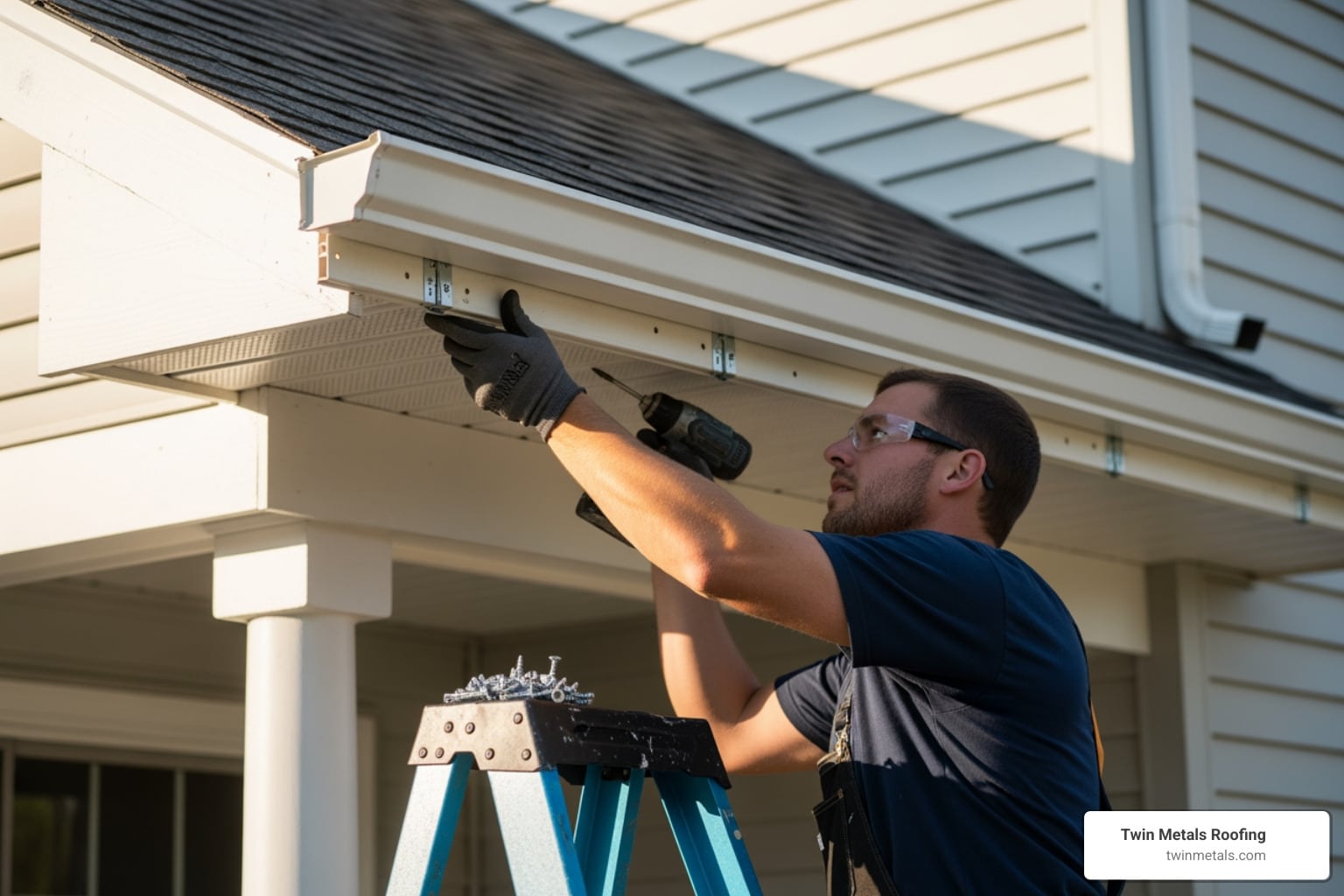
- Gutter Removal (If Necessary): If existing gutters impede access to the soffits or fascia, they will need to be carefully removed. This is often an opportune time to inspect the gutters for damage and consider replacement or cleaning. For more information on exterior components, see our guide on Gutters, Siding, and Soffits.
- Fascia Removal (If Necessary): The fascia board (the vertical board that caps the ends of the rafters) often needs to be removed to access the soffit, especially if it’s damaged or if you’re installing a new soffit system that integrates with the fascia. It’s not advisable to install new fascia over old, as this can trap moisture and lead to further issues.
- Removing Old Soffit: Damaged or old soffit panels are carefully detached using pry bars and hammers. For wood soffits, this means removing entire boards. For vinyl or aluminum, panels are typically slid out of their channels. Care is taken to avoid damaging adjacent roof components or siding.
- Inspecting and Repairing the Roof Structure: Once the old soffit is removed, the underlying roof structure, including the rafter tails and subfascia (if present), is exposed. This is a critical step where we inspect for:
- Rafter Rot: Any signs of rot, water damage, or pest infestation are addressed immediately. Minor rot can sometimes be treated with wood hardener, but extensively rotted sections of rafters or subfascia must be cut out and replaced with new, pressure-treated lumber to ensure structural integrity.
- Moisture Sources: We identify and repair the source of any moisture intrusion, whether it’s a leaky roof, damaged flashing, or issues with the drip edge.
- Installing Receiving Channel (for Vinyl/Aluminum): For vinyl or aluminum soffits, an F-channel or J-channel is installed along the house wall, precisely leveled and secured with fasteners spaced about 12 inches apart. This channel provides a track for the soffit panels to slide into. It’s crucial that fasteners are not driven too tight to allow for material expansion and contraction.
- Cutting New Panels: Soffit panels are measured and cut to size. For vinyl, panels are typically cut about 1/2 inch shorter than the actual opening to allow for thermal expansion and contraction. Tin snips are commonly used for vinyl and aluminum, while a circular saw is used for wood or fiber cement.
- Installing New Soffit Panels:
- Vinyl/Aluminum: One end of the cut panel is inserted into the receiving channel, and the other end is secured to the fascia board or subfascia with nails or screws. Panels are designed to interlock, creating a continuous, ventilated surface. Fasteners are placed in the center of the slots to allow movement.
- Wood/Fiber Cement: Panels are typically nailed directly to the rafter tails or a subfascia, ensuring a snug fit and proper alignment.
- Reinstalling Fascia and Gutters: Once all soffit panels are in place, new fascia boards are installed. These are typically slid under the roof’s drip edge and nailed securely to the rafter tails or subfascia. Finally, the gutters are reinstalled or new ones are put in place, ensuring proper alignment and drainage.
When to Call a Professional for Your House Soffit Replacement
While some minor soffit repairs might be within the capabilities of a handy homeowner, a full house soffit replacement project is often best left to professionals. Here’s why:
- DIY Pros and Cons:
- DIY Pros: Cost savings on labor, flexibility in scheduling.
- DIY Cons: Requires specific skills, knowledge of materials and installation techniques, specialized tools, and considerable time commitment.
- Extensive Rot or Structural Damage: If you’ve identified significant rot in your rafters or other structural components, this goes beyond a cosmetic fix. Professionals have the expertise to assess structural integrity, make proper repairs, and ensure your roof structure is sound.
- Multi-Story Homes: Working on heights, especially on multi-story homes, significantly increases safety risks. Professionals have the right equipment (scaffolding, specialized ladders) and training to work safely and efficiently.
- Ensuring Proper Ventilation: Soffits are key to attic ventilation. Improper installation can lead to inadequate airflow, negating the primary benefit of new soffits. Professionals ensure that new soffits are correctly vented, promoting healthy attic conditions and preventing issues like mold and ice dams.
- Professional Expertise and Warranties: We bring years of experience to every project, ensuring correct installation that adheres to building codes and manufacturer specifications. We also offer warranties on our work, providing you with peace of mind.
- Safety Risks: Falls from ladders are a leading cause of construction injuries. Attempting complex work at height without proper training and equipment is inherently dangerous.
For homeowners in Massachusetts and Southern New Hampshire, we at Twin Metals Roofing are experts in comprehensive exterior solutions, including house soffit replacement. We pride ourselves on superior performance, quality materials, and exceptional customer service, ensuring your home is protected from the elements.
Maintaining Your New Soffits for Lasting Protection
Once you’ve invested in a house soffit replacement, you’ll want to ensure those new components last as long as possible. Proper maintenance is key to prolonging their lifespan, preventing future issues, and protecting your home for years to come. Here are our top tips for keeping your new soffits in pristine condition:
- Regular Inspection (Twice Yearly): Make it a habit to inspect your soffits at least twice a year, ideally in the spring and fall. Look for any signs of damage, such as cracks, loose panels, peeling paint (if applicable), or early signs of mold or pest activity. Early detection can prevent minor issues from becoming major problems.
- Gutter Cleaning: Clogged or overflowing gutters are a leading cause of soffit damage, especially water damage and rot. Ensure your gutters are cleaned regularly, free of leaves, twigs, and other debris. This allows rainwater to drain away from your roofline and soffits, protecting them from moisture.
- Clearing Soffit Vents: If your new soffits are vented (which they should be for proper attic ventilation), make sure these vents remain clear and unobstructed. Dust, debris, paint, or even insulation can block airflow, leading to poor attic ventilation, moisture buildup, and potential mold growth.
- Painting Wood Soffits (If Applicable): If you opted for wood soffits, regular painting and sealing are crucial. Paint acts as a protective barrier against moisture and UV rays. Follow manufacturer recommendations for painting frequency, typically every 3-7 years, depending on the climate and paint quality.
- Sealing Gaps and Cracks: Even with durable materials like vinyl or aluminum, minor gaps can sometimes appear over time due to weather fluctuations. Promptly seal any small cracks or gaps with appropriate exterior caulk to prevent water intrusion and pest entry.
- Preventing Moisture Buildup: Address any roof leaks, damaged flashing, or compromised shingles immediately. Water intrusion from above is a primary enemy of soffits. Ensure your attic is well-ventilated to prevent condensation, which can also contribute to moisture problems.
- Professional Assessment: Consider having a professional roofing company, like Twin Metals Roofing, perform periodic inspections. We can identify subtle issues you might miss and ensure all your exterior components are working together effectively to protect your home.
By following these simple maintenance steps, you can significantly extend the life of your new soffits and continue to enjoy the benefits of improved protection, improved curb appeal, and better energy efficiency for your home in Massachusetts or Southern New Hampshire.
Conclusion
A successful house soffit replacement is more than just a cosmetic upgrade; it’s a vital investment in your home’s long-term health and efficiency. Properly installed and maintained soffits offer a myriad of benefits, from protecting your roof structure from moisture and pests to ensuring optimal attic ventilation and contributing to your home’s overall curb appeal.
At Twin Metals Roofing, we understand the interconnectedness of your home’s exterior systems. Whether you’re considering a full house soffit replacement or need expert advice on your roofing system, our team is dedicated to delivering superior performance, quality materials, and exceptional customer service. We install asphalt roofs throughout Massachusetts and New Hampshire, and we’re here to ensure your entire roofing system, including your soffits, provides lasting protection for your home.
Don’t let damaged or aging soffits compromise your home’s integrity. Request a professional estimate for your roofing project today.
Twin Metals Roofing is proud to serve homeowners throughout Berkshire County, Eastern Massachusetts, and Southern New Hampshire.
Follow us on Facebook — https://www.facebook.com/twinmetalsroofing
Follow us on Instagram – https://www.instagram.com/twinmetals/