Why Proper Architectural Shingles Installation Matters for Your Home
Architectural shingles installation is a complex process requiring careful preparation and precise technique. Unlike basic 3-tab shingles, architectural shingles have multiple laminated layers for a dimensional look, but they demand specific installation methods to last their expected 25-30 years.
Quick Overview: Key Steps in Architectural Shingles Installation
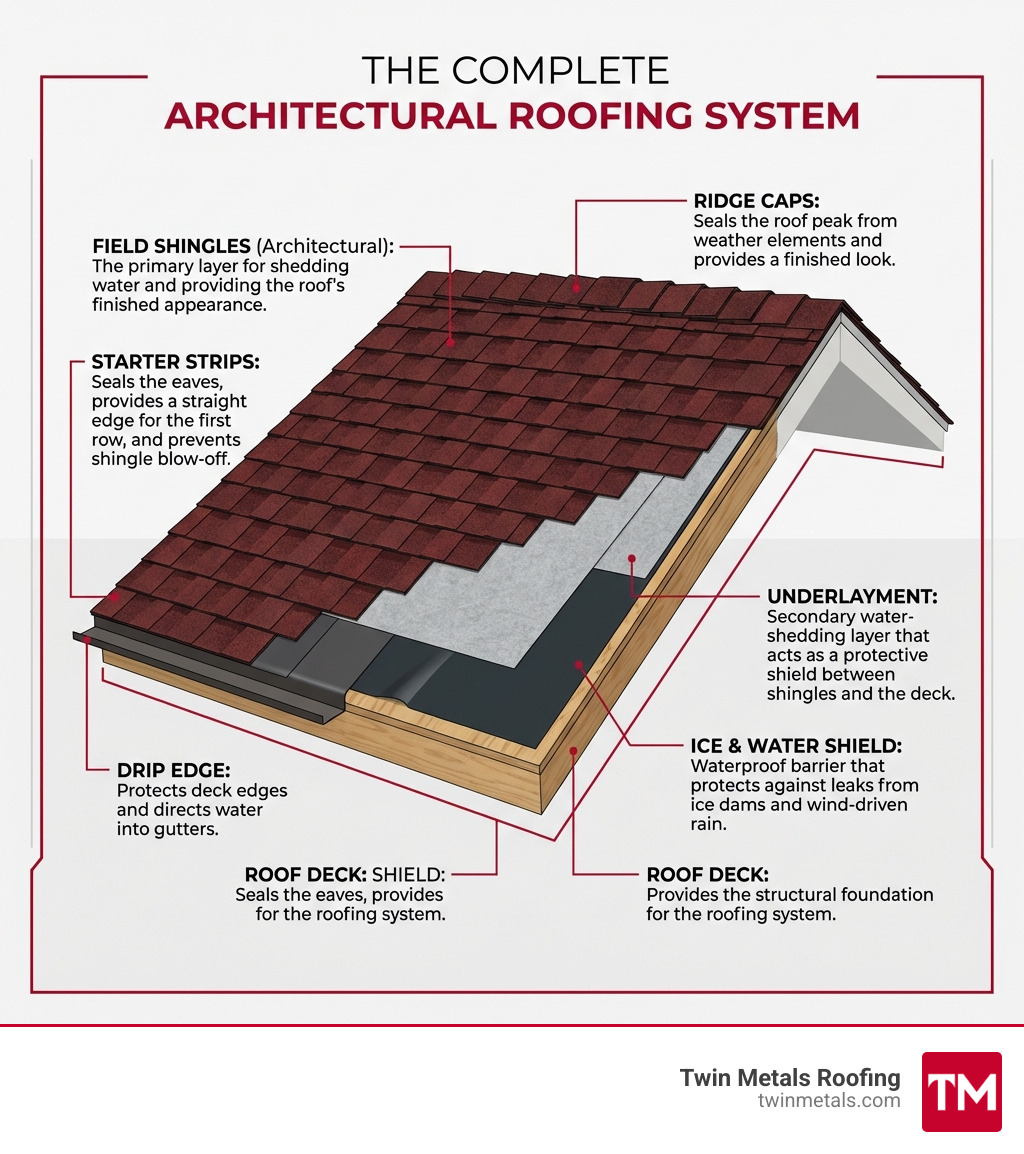
- Prepare the roof deck – Remove old shingles, inspect for damage, ensure a clean, dry surface.
- Install drip edge – Place along eaves first, then rakes after underlayment.
- Apply ice and water barrier – Extend 24″ past interior walls in cold climates.
- Lay underlayment – Cover the entire roof deck with proper overlap.
- Install starter strips – Create a sealed edge with proper overhang (½ inch).
- Nail field shingles – Use 4-6 nails per shingle in the nailing zone, staggering rows.
- Cap hips and ridges – Overlap specialized cap shingles and seal exposed nails.
Proper installation is critical because your roof is a complete system. Each component—from the deck to the underlayment—works together to shed water. Architectural shingles rely on gravity and correct overlapping to create a weather-tight barrier. Incorrect installation, such as misaligned rows or wrong nail placement, leads to premature failure and can void your warranty.
Industry data shows that improper nailing and installing over existing shingles are common mistakes that shorten a roof’s lifespan. While some codes allow one layer over another, a full tear-off is strongly recommended for best performance.
This guide covers the complete architectural shingles installation process, from safety to final ridge caps, highlighting professional steps and common mistakes. Twin Metals Roofing installs asphalt roofs throughout Massachusetts and New Hampshire, and we know what separates a roof that lasts from one that fails.
Essential Preparation: Safety, Tools, and Roof Deck Readiness
Proper preparation ensures a safe working environment and a solid foundation for your new roof.
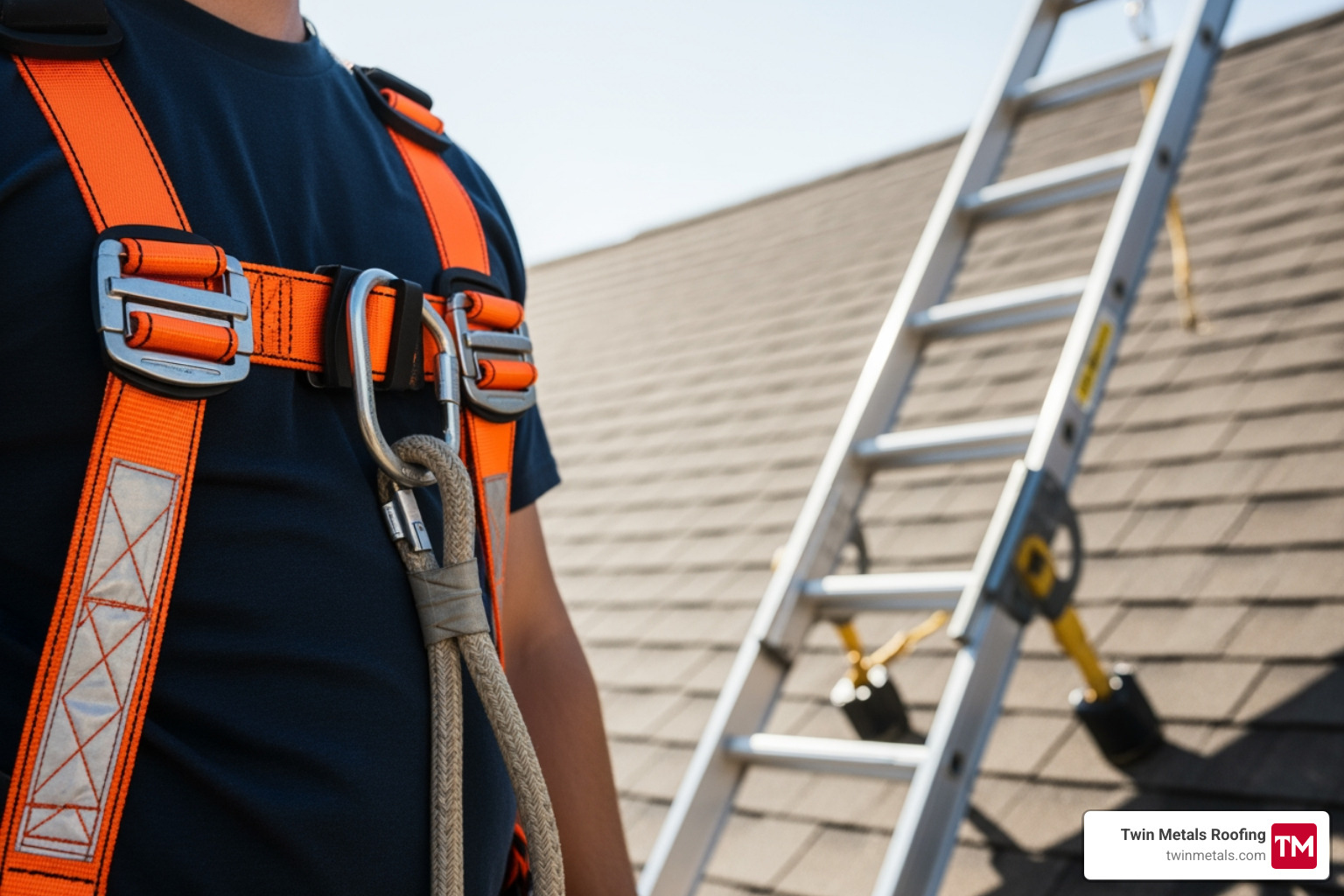
Safety is paramount when working at heights. Key precautions include:
- Fall Protection: Always use a securely anchored safety harness.
- Ladder Safety: Secure ladders at the top and bottom, extending them at least three feet above the roofline.
- Appropriate Attire: Wear rubber-soled shoes, gloves, and protective eyewear.
- Weather Conditions: Never work on a wet, icy, or overly hot roof. Choose mild, dry days for installation, as extreme temperatures can make shingles brittle or too soft.
Having the right tools makes the job smoother. For an architectural shingles installation, you’ll need a tape measure, chalk line, utility knife, tin snips, a roofing hammer or pneumatic nailer, galvanized roofing nails, roofing cement, a shingle stripper, and a pry bar, along with all necessary safety gear.
Proper shingle storage is also crucial. Store bundles on a flat surface, protected from weather. Avoid stacking them too high (no more than 4 feet). In cold weather, keep them in a warm place before installation to prevent brittleness.
Once safety is addressed, prepare the roof deck. Its condition directly impacts the performance of your architectural shingles installation.
- Tear-off: Remove all old shingles and underlayment down to the bare deck. We strongly recommend a complete tear-off over shingling-over, as it allows for deck inspection, prevents an uneven surface, and avoids voiding manufacturer warranties.
- Inspection and Repair: With the deck exposed, inspect it for rot, water damage, or loose sheathing. Replace any compromised sections of plywood or OSB. The deck must be thick enough (e.g., 3/8″ plywood or 7/16″ OSB) for proper nail penetration.
- Clean and Dry: The roof deck must be completely clean, dry, and smooth. Sweep away all debris and nails for a stable foundation.
Building the Foundation: Underlayment and Flashing
With the roof deck prepped, we build the foundational layers that provide critical water protection. First is the drip edge installation. This metal flashing directs water away from the fascia and into gutters. It is installed under the ice and water barrier at the eaves (lower edges) and over the underlayment on the rakes (sloped sides).
Next is the ice and water barrier, a self-adhering membrane essential in climates like Massachusetts and Southern New Hampshire to prevent leaks from ice dams and wind-driven rain. Ice dams form when melted snow refreezes at the eaves, causing water to back up under shingles. This barrier creates a waterproof seal.
- Installation: The barrier is installed along the eaves and must extend at least 24 inches past the home’s interior warm wall, per building codes. We also apply it in valleys and around penetrations. For low-slope roofs (2/12 to under 4/12), additional leak protection is required.
After the ice and water barrier, we install the roof underlayment (synthetic or felt) over the entire deck. This provides a secondary layer of water resistance. We install it in overlapping horizontal courses from the bottom up. Low-slope roofs often require a double layer of underlayment.
Finally, we address flashing critical areas where leaks are most common. This metal layer directs water away from vulnerable spots.
- Valleys: Where two roof planes meet, we install a wide strip of ice and water barrier followed by corrosion-resistant metal flashing.
- Penetrations & Walls: Chimneys, skylights, and vent pipes require a system of apron, step, and counter-flashing to create a watertight seal. Where the roof meets a vertical wall, we integrate step flashing with each shingle course. flash around plumbing stacks and attic vents
These foundational layers are crucial for a resilient Residential Roofing system.
The Core of Architectural Shingles Installation: Laying the Field
With the sub-layers installed, we can lay the architectural shingles. This is where precision turns a prepared deck into a protective roof.
First is the starter shingle installation. These vital strips provide a sealed edge at the eaves and rakes, preventing wind uplift and water intrusion. We install them along the eave line with a 1/2-inch overhang to ensure water drips clear of the fascia.
Proper nailing techniques for architectural shingles installation
Proper nailing is essential for wind resistance and warranty compliance. Mistakes here can compromise the entire roof.

- Nail Quantity: Use a minimum of four nails per shingle. For steep slopes (over 15/12) or high-wind areas, six nails are required for improved wind warranties.
- Nail Placement: This is critical. Nails must be placed in the manufacturer’s designated “nailing zone.” Nailing too high can cause blow-offs, while nailing too low exposes the nail head.
- Nail Depth: Drive nails flush with the shingle surface—not overdriven (which cuts the shingle) or underdriven (which leaves the head exposed). They must penetrate at least 3/4″ into the roof sheathing.
- Warranty Requirements: Deviating from the manufacturer’s specified nailing pattern can void your warranty.
Installing the field shingles for a flawless finish
With the starter course down, we lay the field shingles.
- Shingle Exposure & Staggering: Maintain the manufacturer-specified exposure (the visible part of the shingle, e.g., 5 5/8″). To create the dimensional look, we stagger the vertical seams of adjacent courses by a minimum of 4-8 inches. This offset pattern prevents water from running down continuous vertical lines.
- Working Up the Roof: We work from the eave upwards to the ridge, ensuring each course overlaps the one below it. This maintains the critical water-shedding design. For a visual guide, you can watch a how-to video on YouTube.
This meticulous process ensures a robust, weather-tight system for both residential and Commercial Shingle Roofs, ensuring the same high standards of installation.
Finishing Touches and Special Considerations
The bulk of the architectural shingles installation might be done once the field shingles are laid, but the finishing touches are just as important for the roof’s integrity and appearance.
The final step in completing the shingle layer is hip and ridge cap installation. These specialized shingles cover the peaks (ridges) and sloped intersections (hips) of your roof, providing a finished look and crucial protection.
- Bending and Overlapping Caps: Hip and ridge caps are individual shingles, often pre-formed or cut from a specific shingle type, that are bent over the hip or ridge. We start installing them from the bottom of the hip or from the end of the ridge opposite the prevailing winds. Each cap shingle overlaps the one below it, ensuring a continuous, weather-tight seal.
- Using Longer Nails: Because these caps cover multiple layers of shingles, we use longer nails to ensure they penetrate through all layers and securely into the roof deck.
- Sealing Exposed Nails: The last cap shingle installed at the very peak or end of a hip will have exposed nail heads. We carefully seal these with a dab of roofing cement to prevent water intrusion. For a detailed visual guide, check out this video on hip and ridge capping.
Beyond the standard installation, there are specific considerations for low-slope vs. steep-slope roofs. The angle of your roof significantly impacts the installation method and materials required.
- Minimum Slope: Asphalt shingles, including architectural ones, cannot be installed on roof slopes below 2/12 (meaning a 2-inch rise over a 12-inch horizontal run). Below this, different roofing materials are required.
- Low-Slope (2/12 to under 4/12): For these roofs, special application instructions are necessary. This often includes a double layer of underlayment, or a single layer of a self-adhering underlayment that meets ASTM D1970 standards. The goal is improved water protection due to the slower water runoff.
- Standard-Slope (4/12 and greater): All standard architectural shingles can be installed on these slopes with a single layer of field underlayment.
- Steep-Slope (greater than 15/12 or 21/12): On very steep roofs, additional fasteners are required. For example, slopes equal to or greater than 15/12 typically require a minimum of six nails per shingle instead of four. We may also hand-seal the shingles with asphalt plastic cement to ensure they adhere and resist wind uplift, especially since the thermal sealing strips may not activate as quickly on steep angles. Safety precautions also become even more critical on these roofs, often requiring specialized scaffolding or safety lines.
Finally, let’s discuss post-installation maintenance. Your new architectural shingle roof, though durable, benefits greatly from regular care to maximize its lifespan.
- Gutter Cleaning: Regularly clean your gutters and downspouts to ensure proper water drainage. Clogged gutters can lead to water backing up onto the roof and potentially causing damage or ice dams in winter.
- Regular Inspections: We recommend biannual visual inspections (from the ground or with binoculars for safety) to check for any missing, cracked, or curling shingles, granule loss, or debris accumulation. After severe weather, an inspection is always a good idea.
- Trim Branches: Keep overhanging tree branches trimmed back from your roof to prevent damage from rubbing, falling limbs, and excessive debris.
For any questions about maintaining your roof or if you’re considering a new architectural shingles installation, don’t hesitate to Request Estimate from us.
DIY vs. Hiring a Professional: Making the Right Choice
We’ve walked through the intricate steps of architectural shingles installation, from safety and preparation to the final cap shingles. Now, the big question: Is this a DIY project, or is it best left to the professionals?
The reality is that roofing, especially the installation of architectural shingles, is a task fraught with complexity and significant risks.
- Complexity of Roofing: As we’ve seen, it involves multiple layers, precise measurements, specific nailing techniques, and careful flashing around various penetrations and transitions. Each step, if done incorrectly, can compromise the entire roof system’s ability to protect your home. Architectural shingles, while visually appealing, demand more nuanced handling than simpler 3-tab versions due to their layered structure and offset requirements.
- Significant Safety Risks: Working on a roof means working at heights, often with heavy materials and power tools. Falls are a leading cause of injury in roofing. The risks of harm to yourself or others are incredibly high without proper training, safety equipment, and experience.
- Time Commitment: Even for a professional crew, an average residential roof (1,500 to 2,000 square feet) can take two to three days. For a first-time DIYer, this timeline can easily stretch into weeks, leaving your home vulnerable to weather during the process.
This is where the benefits of professional installation truly shine.
- Expertise and Experience: Professional roofers, like us at Twin Metals Roofing, have extensive training and hands-on experience. We understand the nuances of different roof types, slopes, and architectural shingle products. We know the local building codes in Massachusetts and Southern New Hampshire inside and out, ensuring your roof meets all regulatory requirements.
- Proper Tools and Equipment: We invest in specialized tools and equipment, from pneumatic nailers to safety scaffolding, that ensure efficiency, precision, and safety—tools that a homeowner might not have or know how to use effectively.
- Warranty Compliance: Manufacturers’ warranties for architectural shingles are often contingent on proper installation according to their specific guidelines. Professionals are trained to meet these stringent requirements, ensuring your warranty remains valid. Incorrect nailing, for instance, is a common reason warranties are voided.
- Efficiency: Our crews work efficiently and safely, minimizing the time your home is exposed during the re-roofing process. This means less disruption for you and a quicker return to a fully protected home.
At Twin Metals Roofing, we pride ourselves on our expertise in Residential Shingle Roofing. We bring superior performance, quality materials, and exceptional customer service to every project. While understanding the installation process is valuable for homeowners, entrusting the job to professionals ensures your investment is protected, your home is safe, and your roof lasts for decades.
Frequently Asked Questions about Architectural Shingle Installation
Here are answers to common questions about architectural shingles installation.
What is the best temperature for installing shingles?
The ideal range is between 45°F and 85°F (7°C and 29°C).
- Cold Weather (below 45°F): Shingles become brittle and can crack. The thermal sealant strips may not activate and bond, leaving the roof vulnerable to wind uplift.
- Hot Weather (above 85°F): Shingles can become too soft, leading to scuffing, granule loss, and tearing during installation. Mild, dry weather is best for a successful architectural shingles installation.
Can I install architectural shingles over an existing layer of shingles?
We strongly recommend against it. While some codes may permit one layer, a complete tear-off is best practice for several reasons:
- Hidden Damage: Shingling over prevents inspection of the roof deck for rot or other issues.
- Uneven Surface: An old layer creates a bumpy surface, preventing new shingles from laying flat and sealing properly.
- Excess Weight: A second layer adds significant, unnecessary weight to your roof structure.
- Voided Warranties: Most manufacturers require installation on a clean deck for the warranty to be valid. A complete tear-off ensures a durable and warrantied architectural shingles installation.
How does installation differ for architectural vs. 3-tab shingles?
While the basics are similar, there are key differences:
- Architectural Shingles: These heavier, multi-layered shingles create a dimensional look. Installation focuses on a random offset pattern by staggering the seams between courses (e.g., by 6-8 inches). This provides a varied, natural appearance without the rigid alignment of 3-tab shingles.
- 3-Tab Shingles: These are flatter and lighter. Installation uses a strict, repetitive offset pattern (like a half-tab cut) to ensure the vertical slots between tabs do not align. This creates a uniform, grid-like look.
Architectural shingles are preferred for their superior durability, wind resistance, and aesthetic appeal.
Conclusion: Achieve a Flawless Roof with Professional Installation
The architectural shingles installation process, as we’ve detailed, is a complex and multi-layered endeavor. It’s a system where every component, from the integrity of the roof deck to the precision of the final ridge cap, plays a critical role in protecting your home from the elements. Ignoring any step or cutting corners can lead to costly repairs, premature roof failure, and voided warranties.
We’ve seen that proper preparation, meticulous underlayment and flashing, correct nailing techniques, and attention to detail during shingle placement are not just best practices—they are necessities for a long-lasting and effective roof. The value of professional expertise in mastering these steps cannot be overstated.
For expert Residential Shingle Roofing services in Massachusetts and Southern New Hampshire, trust the professionals. Our team at Twin Metals Roofing brings years of experience, quality materials, and a commitment to exceptional customer service to every project, ensuring your architectural shingles installation is done right the first time, providing you with peace of mind and a beautiful, durable roof for decades to come.
Twin Metals Roofing installs asphalt roofs in Berkshire County in Eastern Massachusetts and Southern New Hampshire.
Follow us on Facebook — https://www.facebook.com/twinmetalsroofing Follow us on Instagram – https://www.instagram.com/twinmetals/