Why More Homeowners Are Choosing Types of Metal Residential Roofing
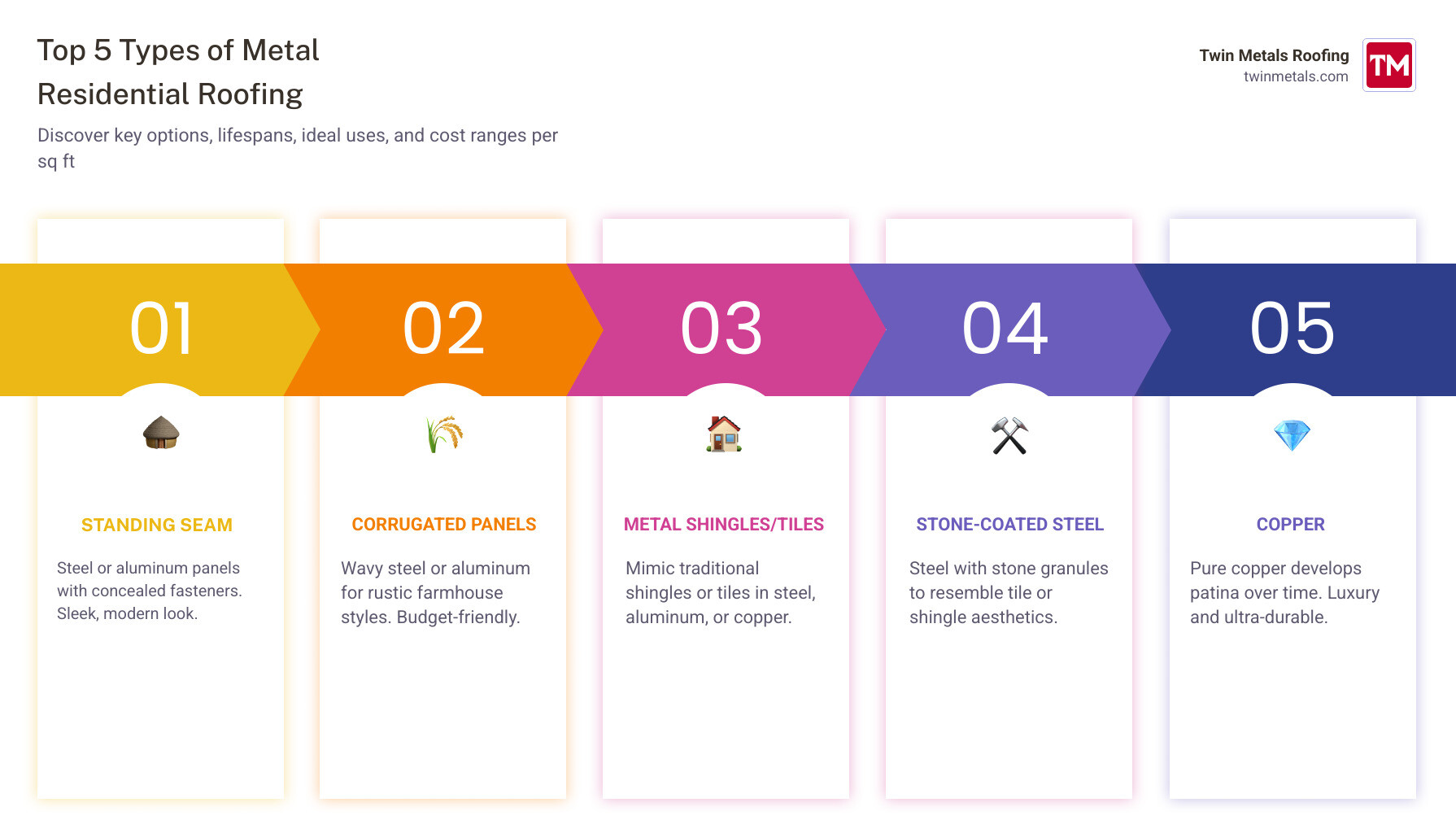
The types of metal residential roofing available today give homeowners more choices than ever before. Here’s a quick look at the most common options:
| Type | Material | Best For |
|---|---|---|
| Standing Seam | Steel or Aluminum | Modern homes, snow climates |
| Corrugated Panels | Steel or Aluminum | Farmhouse, rural, budget-friendly |
| Metal Shingles/Tiles | Steel, Aluminum, Copper | Traditional or HOA neighborhoods |
| Stone-Coated Steel | Steel with stone granules | Mimicking tile or shingle aesthetics |
| Copper | Pure Copper | Luxury, historic, long-lasting |
| Zinc | Pure Zinc | Architectural, self-healing, premium |
Metal roofs last 40 to 70 years on average – roughly twice as long as asphalt shingles. They can cut cooling costs by 10-25%, and according to Remodeling Magazine’s Cost vs. Value report, they deliver a 48.9% return on investment.
That’s not just a roof. That’s a long-term asset.
Yet with so many materials, panel styles, and fastener systems available, picking the right one isn’t always straightforward. The wrong choice can cost you thousands in repairs or leave you replacing a roof sooner than expected.
I’m Tom Gordon, owner of Twin Metals, Inc. and Twin Roofing, with nearly two decades of hands-on experience installing and fabricating metal roofing systems across Massachusetts and New Hampshire – and I’ve seen how the right types of metal residential roofing can transform both a home’s performance and its curb appeal. Let’s break down what you need to know.
Basic types of metal residential roofing glossary:
Popular Materials for Types of Metal Residential Roofing
When you begin looking into Residential Metal Roofing, the first decision is the metal itself. Not all metals are created equal, especially when facing the “sporadic and unpredictable” weather in Chester County or the coastal winds of the North Shore.
Choosing the right material impacts everything from your home’s 48.9% return on investment to how often you’ll need to think about maintenance. While some metals are prized for their budget-friendliness, others are selected for their ability to last a century.
Durable Steel: The Most Common Types of Metal Residential Roofing
Steel is the undisputed heavyweight champion of the American residential market. It is strong, widely available, and highly versatile. However, because raw steel will rust if exposed to moisture, it must be treated with a protective coating.
- Galvanized Steel: This material is coated with a layer of zinc to prevent corrosion. It’s a classic choice that has protected barns and homes for generations.
- Galvalume Steel: A step up in technology, Galvalume offers better corrosion resistance than galvanized steel by using a combination of 55% aluminum and 45% zinc. It is particularly effective in humid inland environments.
Steel roofs typically boast a 30-60 year lifespan. Because we operate our own Sheet Metal Fabrication Shop, we can ensure that steel panels are custom-cut to the exact specifications of your home, reducing waste and ensuring a perfect fit.
Aluminum and Specialty Types of Metal Residential Roofing
While steel is popular, it isn’t always the best choice for every zip code.
- Aluminum: If you live in a coastal town like Beverly or Danvers, aluminum is often the superior choice. Unlike steel, aluminum is completely rustproof, making it immune to the corrosive effects of salt air. It is incredibly lightweight and has a lifespan of 30-50 years.
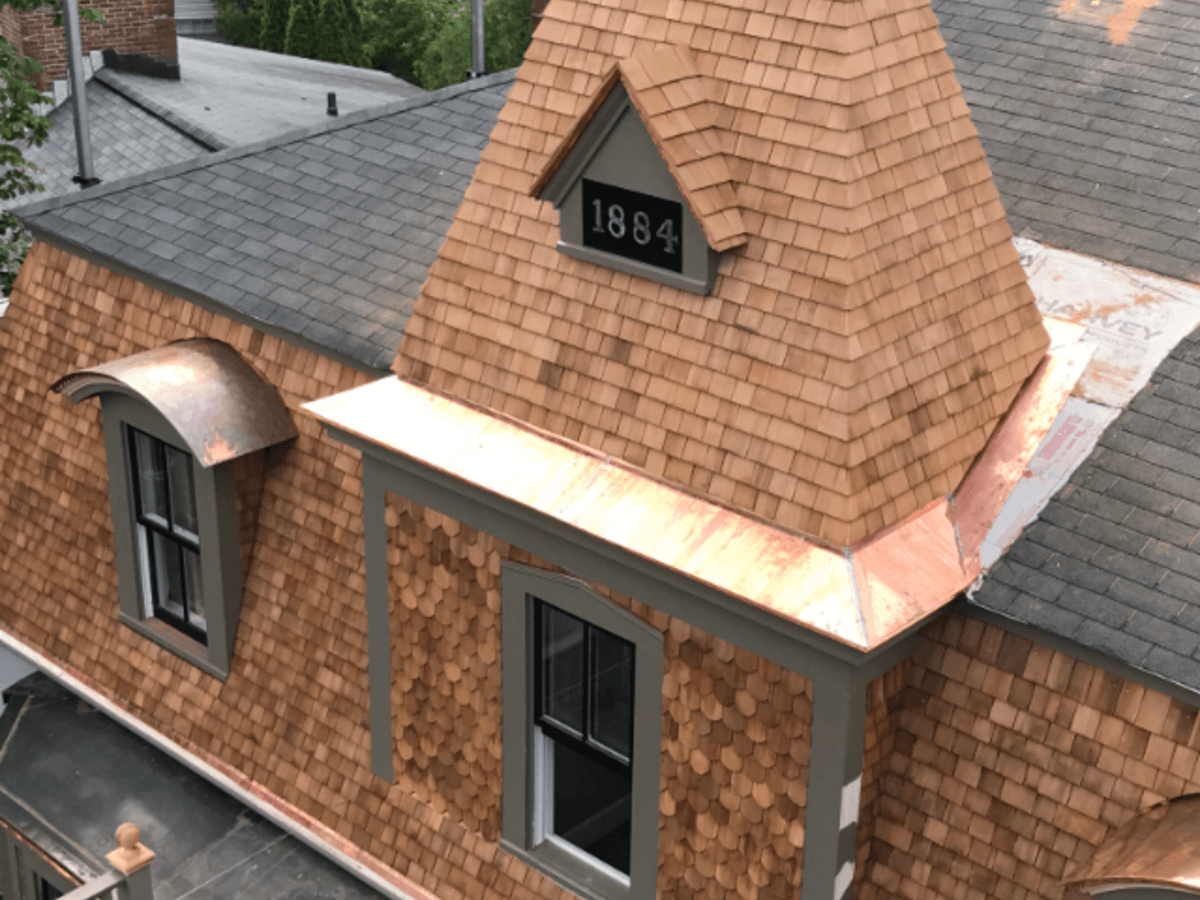
- Copper: This is the “forever” roof. Copper roofs can last 100 to 200+ years, famously developing a green patina over time. It requires specialized installation skills but offers unmatched architectural prestige.
- Zinc: Often the roof of choice for 70% of homes in Europe, zinc is gaining traction here. Zinc roofs are self-healing; as a protective patina forms, it can actually “fill in” minor scratches over time.
Panel Styles and Profiles for Modern Homes
Once you’ve picked your material, you need to choose the “look.” The panel style dictates the visual rhythm of your home.
Standing Seam Systems
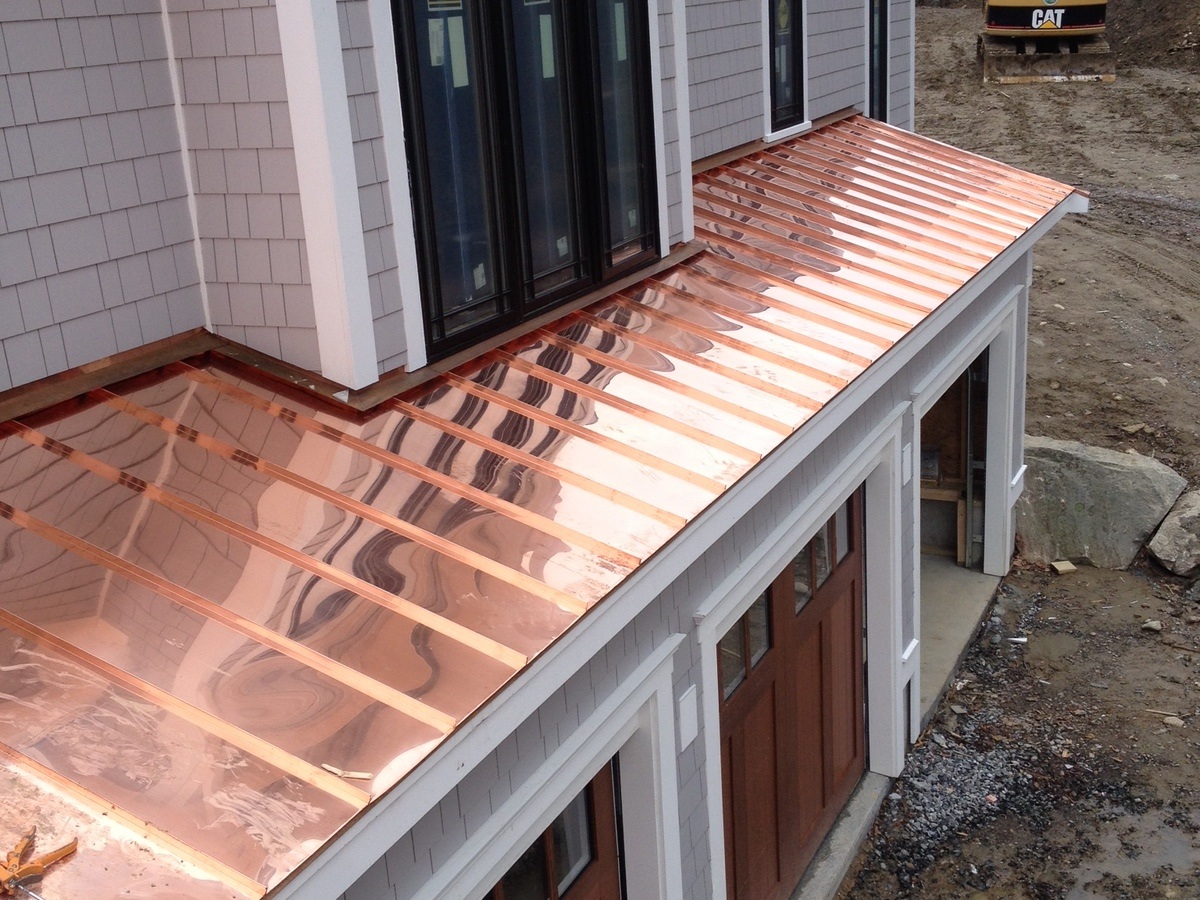
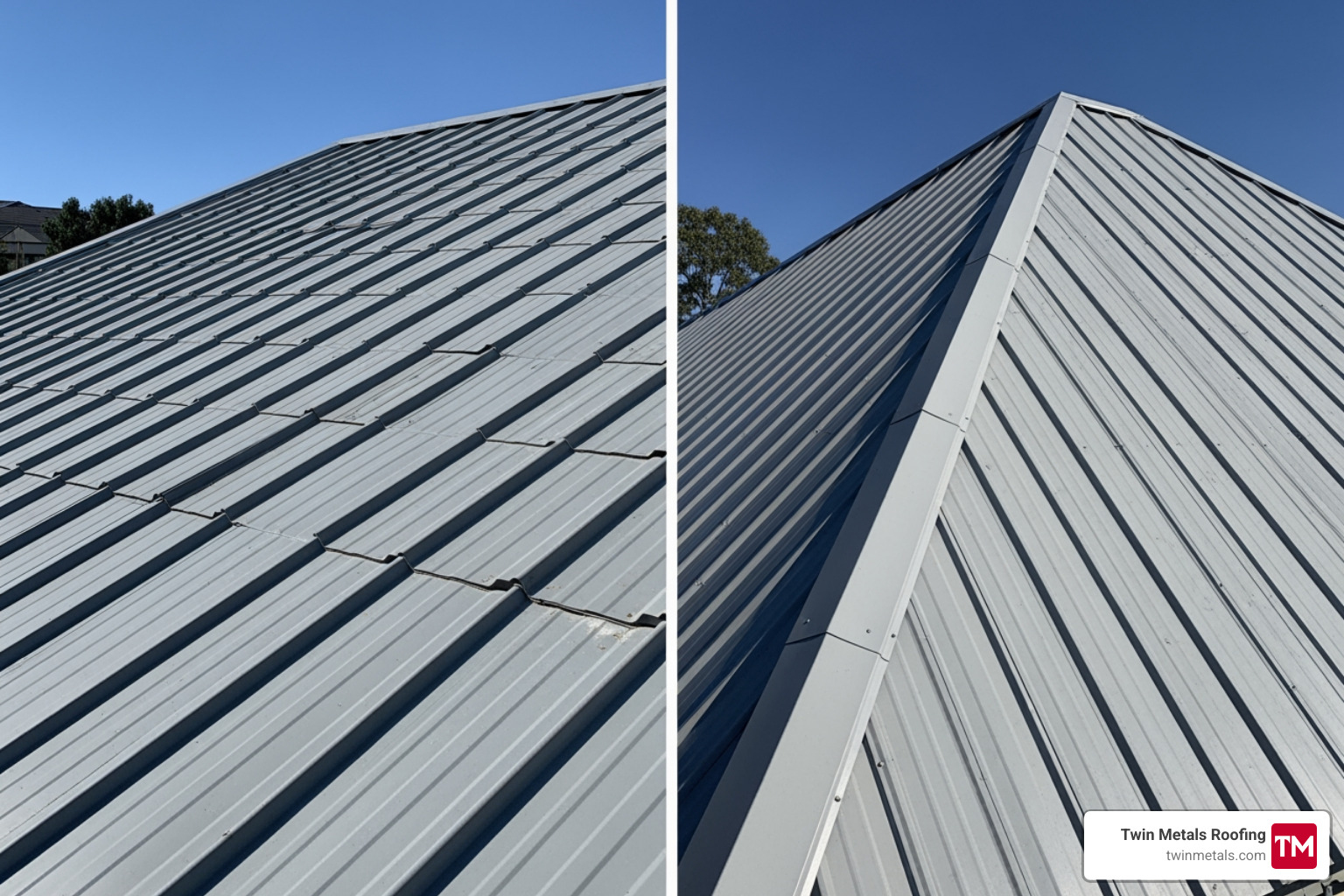
Standing seam is the gold standard for modern residential applications. These systems feature long, vertical panels with seams that stand above the level of the roofing surface.
The most significant advantage is the concealed fastener system. Because the screws are hidden beneath the metal, they aren’t exposed to the elements. This drastically reduces the risk of leaks and allows for natural thermal expansion and contraction. It provides a clean, sleek appearance that is perfect for contemporary architecture or mountain-style homes.
Corrugated and Ribbed Panels
The word corrugated refers to a pattern of wavy folds or alternating ridges. These are often the most affordable types of metal residential roofing because the panels are easier to manufacture and install.
- Ag Panels: Common for sheds, pole barns, and some rustic homes.
- PBR Panels: These feature a “purlin bearing leg” for better stability and are frequently used in both residential and Commercial Metal Roofs.
While corrugated roofs use exposed fasteners (where you can see the screw heads), they offer a charming “modern farmhouse” aesthetic that many homeowners love.
Performance, Climate, and Fastener Systems
A metal roof is more than just a aesthetic choice; it’s a performance shield. In Massachusetts and New Hampshire, our roofs have to handle everything from heavy Nor’easter snow to blistering July heat.
Climate-Specific Suitability
- Snow Shedding: Metal is naturally “slippery.” In snowy regions, standing seam roofs are ideal because they allow snow to slide off safely, preventing heavy ice dams from forming.
- High Winds: When properly designed, standing seam metal roofs can withstand wind gusts up to 140 miles per hour.
- Heat Reflectivity: Metal roofs reflect solar radiant heat. By checking the Cool Roof Rating Council’s database, you can find panels with a Solar Reflective Index (SRI) of 29 or higher, which can reduce cooling costs by up to 25%.
Exposed vs. Concealed Fasteners
This is one of the most important technical distinctions in the industry.
- Exposed Fasteners: The panels are overlapped and screwed directly through the metal into the deck. While cheaper, these require more maintenance. The neoprene washers on the screws can degrade over 15-20 years, potentially leading to leaks if not inspected.
- Concealed Fasteners: Used in standing seam systems, the fasteners are protected by the next panel or a clip system. This is the “set it and forget it” option for homeowners who want maximum longevity and minimum hassle.
Comparing Metal to Traditional Roofing Materials
Is metal worth the higher upfront cost? When you look at the “true cost” over 50 years, the answer is almost always yes.
| Feature | Metal Roofing | Asphalt Shingles | Tile/Slate |
|---|---|---|---|
| Lifespan | 40-70 Years | 15-30 Years | 50-100+ Years |
| Maintenance | Very Low | Moderate | Moderate/High |
| Weight | Lightweight | Moderate | Very Heavy |
| Eco-Friendly | 100% Recyclable | Ends in Landfill | Recyclable |
| Fire Rating | Class A (Non-combustible) | Class A | Class A |
Longevity and Energy Efficiency
While Residential Shingle Roofing is the most common choice in the U.S., it is vulnerable to shrinking, eroding, and cracking. Asphalt shingles are gaining popularity less quickly than metal because homeowners are starting to prioritize durability.
Metal roofs are eco-friendly because they are often made from recycled content and are 100% recyclable at the end of their life. Unlike asphalt, which takes 300 years to decompose in a landfill, metal can be repurposed indefinitely.
Frequently Asked Questions about Metal Residential Roofing
Are metal roofs noisier than asphalt shingles during rain?
Actually, no. When installed with proper solid sheathing and underlayment, a metal roof is no noisier than a conventional roof. The attic space and insulation act as a sound barrier, so you won’t feel like you’re living inside a drum during a rainstorm.
Do metal roofs attract lightning or increase fire risk?
This is a common myth. Metal conducts electricity, but it doesn’t “attract” it. If lightning were to strike, the metal roof would safely dissipate the charge. Furthermore, because metal is non-combustible, it actually provides better fire protection than wood or asphalt.
Can metal roofs be installed over existing shingles?
In some cases, yes. This can save on labor and disposal costs. However, we generally recommend a full tear-off to inspect the decking for rot and ensure the new underlayment is perfectly sealed.
Conclusion
Choosing between the various types of metal residential roofing is a big decision, but it’s one that pays off in peace of mind and property value. Whether you’re looking for the sleek lines of a standing seam roof in Andover or the rustproof reliability of aluminum in Beverly, we are here to help.
At Twin Metals Roofing, we pride ourselves on being residential and commercial roofing specialists. We serve a wide range of communities, including Acton, Arlington, Bedford, Billerica, Concord, Lexington, Newton, and many more across Massachusetts and Southern New Hampshire.
While we are experts in Residential Metal Roofing, we also understand that every home is unique. That’s why Twin Roofing installs asphalt roofs in MA and NH as well. If you’re not sure if metal is right for you, we can also discuss Residential Rubber Roofing for flat surfaces or traditional shingles.
Average costs based on publicly available internet data, not the Client’s actual pricing: Steel roofing typically ranges from $4 to $12 per square foot installed, while premium materials can range from $15 to $45 per square foot.
The company services Berkshire County in Eastern Massachusetts and Southern New Hampshire.
Follow us on Facebook — https://www.facebook.com/twinmetalsroofing
Follow us on Instagram – https://www.instagram.com/twinmetals/