Why Choosing the Right Siding Contractor Matters for Your Massachusetts Home
Siding contractors MA professionals provide installation, repair, and replacement services for residential and commercial properties across Massachusetts. When searching for a qualified contractor, homeowners should look for:
- Valid licensing: Massachusetts HIC (Home Improvement Contractor) registration
- Proper insurance: Both general liability and workers’ compensation
- Manufacturer certifications: Relevant product training and documented installation experience
- Local experience: Familiarity with New England weather conditions
- Strong reviews: Verified customer testimonials and consistent ratings
Your homes exterior systems work together. While this guide focuses on siding selection and contractor vetting, its important to remember that siding performance is closely tied to roofing, flashing, and gutter drainage. In Massachusetts, the freezethaw cycle, wind-driven rain, and ice can expose weak points where rooflines meet walls, around dormers, and near chimney and step flashing.
Choosing the right contractor isnt just about the lowest bidits about workmanship, water-management details, and warranty support. Typical siding projects take about 12 weeks depending on home size, material choice, and any hidden carpentry repairs discovered after removal.
Im Tom Gordon, owner of Twin Roofing, a division of Twin Metals, Inc. With nearly two decades working with property owners across Massachusetts and New Hampshire, Ive seen how proper exterior detailingespecially roof-to-wall flashing and reliable gutter systemshelps protect homes through New England weather. Twin Roofing installs asphalt roofs in MA and NH, and we often coordinate roofing, gutters, and exterior water-management details to help keep the building envelope performing as intended.
Choosing Reputable Siding Contractors MA
Finding a contractor you can trust in the Bay State requires a bit of detective work. Massachusetts has specific regulations designed to protect you, the homeowner, but these only work if you know what to look for.
Because exterior systems overlap, its also worth asking how a siding contractor coordinates with roofing details and guttersfor example, how they handle step flashing at roof-to-wall transitions, kickout flashing where a roof edge meets a wall, and how water will be directed into gutters (not behind trim).
Licensing and HIC Registration
In Massachusetts, any contractor performing more than $1,000 of work on an existing one-to-four-unit, owner-occupied primary residence must be registered as a Home Improvement Contractor (HIC). This isnt just a piece of paper; it gives you access to the Guaranty Fund if things go south.
Insurance: The Non-Negotiable
Never hire siding contractors MA who cannot provide current certificates for both General Liability and Workers Compensation. If an installer gets hurt on your property and the contractor isnt insured, you could be held liable. Always ask for proof of insurance directly from the agent to ensure the policy is active.
Manufacturer Certifications
Manufacturer certifications and training can be helpful signals of experience, but theyre not a substitute for solid references and correct installation details.
Essential Credentials for Siding Contractors MA
Beyond the legal requirements, you want a team that can clearly explain how theyll manage water at penetrations and transitions.
What to look for in a professional partner:
- Local Experience: New England weather is unique, and detailing at rooflines, dormers, and valleys must account for ice and wind-driven rain.
- Written Estimates: You should receive a detailed, itemized quote that specifies scope, materials, and how change orders are handled.
- Punctual Communication: Clear communication early usually predicts how warranty and punch-list items will be handled later.
- Specialist Teams: Crews who regularly install siding tend to be more consistent with flashing integration and trim details that affect drainage.
Popular Siding Materials for New England Homes
Choosing the right siding material is a balance of aesthetics, budget, and maintenancebut it should also support roofing and gutter performance by shedding water efficiently and allowing proper flashing integration.
Vinyl Siding
Vinyl remains a popular option because it is cost-effective and low maintenance.
- Pros: No painting required, resists pests and rot, affordable.
Fiber Cement
Fiber cement offers a durable, paintable finish with strong weather resistance.
- Durability: Non-combustible and resistant to many common exterior threats.
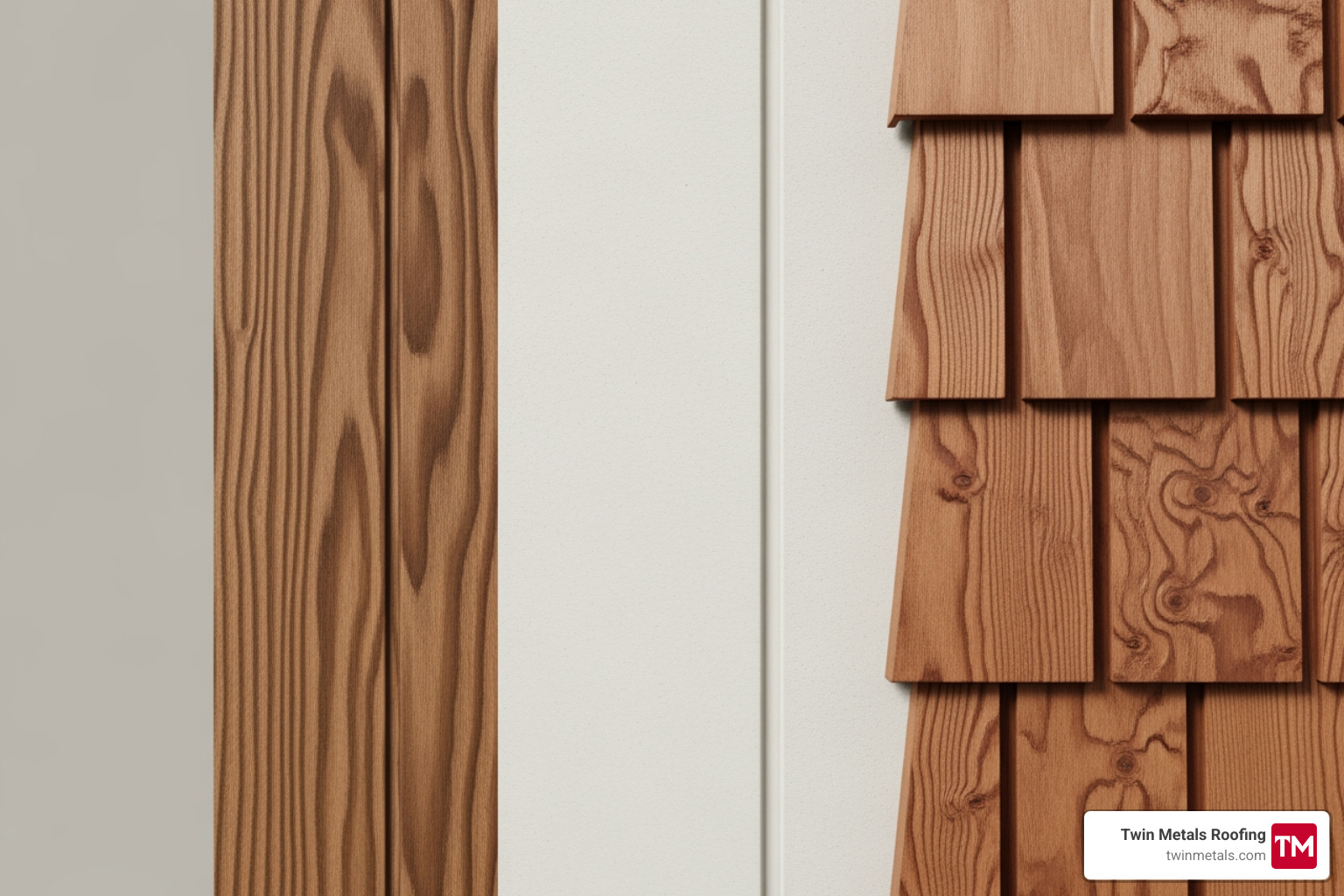
Wood Clapboard and Cedar Shingles
Wood can be a great fit for historic aesthetics, but it requires consistent upkeep.
- Cons: Regular painting or staining is needed; neglected wood is more likely to deteriorate in New England moisture and temperature swings.
Composite Siding
Composite options can provide enhanced durability with lower maintenance than wood.
Performance Features That Affect Roof & Gutter Water Management
Even though this article is about siding, these performance factors directly relate to keeping water out of the structurewhich is also the core purpose of quality roofing and gutters:
- Wind-Driven Rain Control: Proper house wrap, correctly layered flashing, and tight trim details reduce the chance of water intrusion.
- Breathability: A well-designed wall system can help manage moisture vapor and reduce the risk of condensation issues.
- Integration at Rooflines: Siding should be installed with correct clearances where it meets roofing and flashing to prevent wicking and trapped water.
- Drainage to Gutters: Fascia, drip edge, and gutter placement should work together so runoff is captured and directed away from the foundation.
The Siding Replacement Process and Timeline
A professional siding project is a major undertaking, but a well-organized team makes it feel seamless. Here is what you can expect from a high-quality contractor serving the Massachusetts area.
1. Initial Consultation and Estimate
The process starts with a thorough inspection. A pro won’t just look at your siding; they’ll check the “associated carpentry.” This includes rake boards, fascia boards, and the condition of the plywood underneath. You should receive a written quote within 24-48 hours.
2. Preparation and Material Selection
Once you choose your colors and profiles, the materials are ordered. Before the crew arrives, you’ll need to do a little prep:
- Clear the driveway for equipment.
- Remove items from interior walls (vibrations can knock down pictures).
- Trim back overgrown shrubs to give the crew room to work.
3. Removal and Surface Prep
We don’t recommend “siding over” old materials. A reputable contractor will remove the old siding to inspect the sheathing for rot or pest damage. This is the time to repair any “soft” wood before the new house wrap is applied.
4. Installation
This is where the magic happens. Using specialized tools like the NailRIGHT™ system (which ensures nails are driven into studs every 8 inches), the crew will install the panels, corner posts, and trim.
5. Cleanup and Final Walkthrough
A professional crew will perform a daily cleanup, but the final day involves a “magnetic sweep” to find any stray nails. You should walk the property with the project manager to ensure every detail meets your expectations.
Signs You Need a Siding Contractor
How do you know if it’s time to call in the pros? Don’t wait for a panel to fall off. Look for these “silent” warning signs:
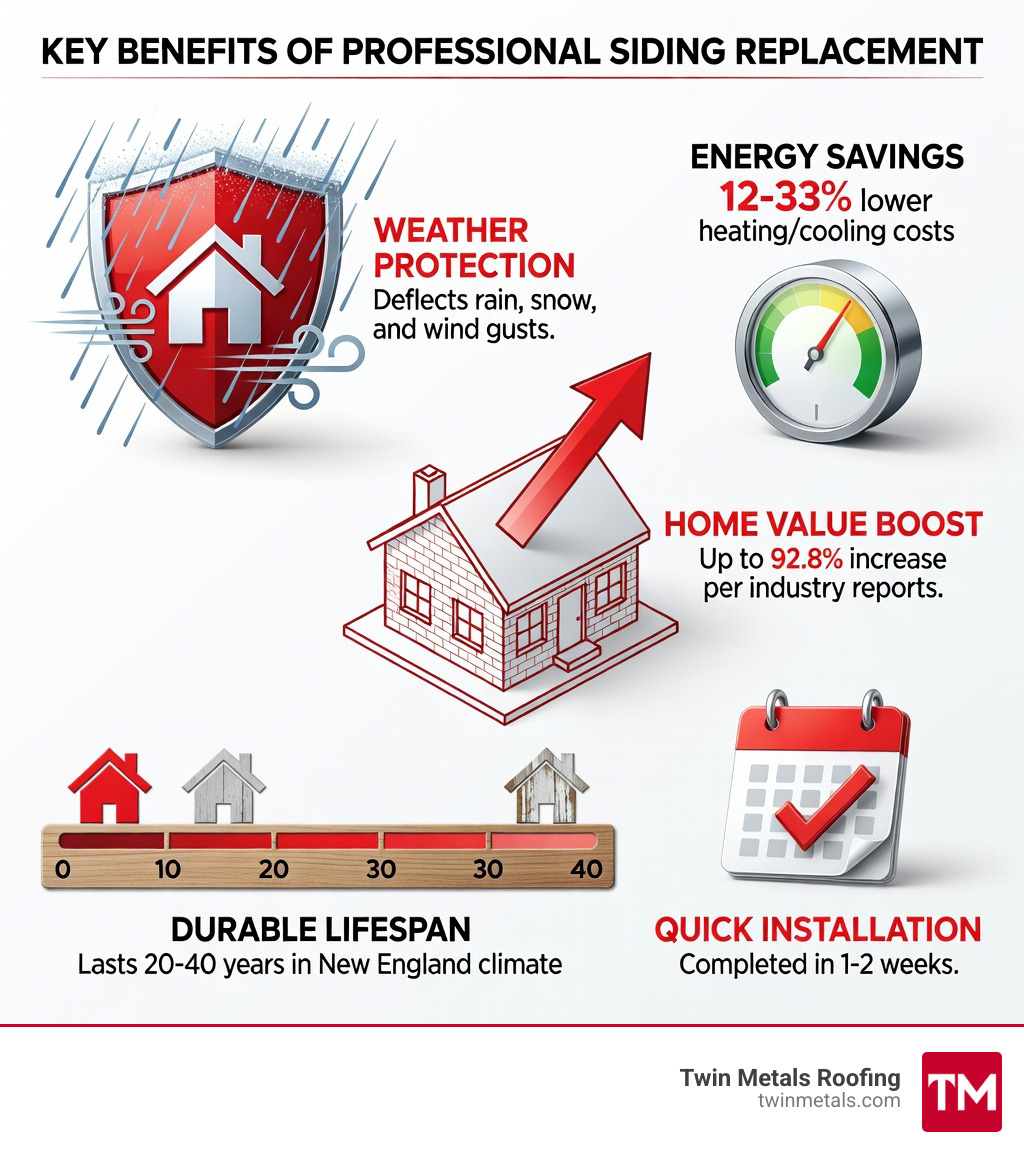
- 20-40 Year Age: If your siding was installed when the Red Sox were still under the “curse,” it’s likely reached the end of its lifespan.
- Warping or Buckling: This often indicates that moisture has gotten behind the panels and is affecting the wood underneath.
- Fungus, Mold, or Mildew: If you see green or black growth, especially near the seams, your siding is no longer shedding water effectively.
- Peeling Interior Paint: Surprisingly, moisture getting through your siding often shows up as peeling paint or wallpaper inside your house.
- High Energy Bills: If your heating costs are spiking in the winter, your siding may have lost its insulating properties or the house wrap has failed.
Cost Considerations in Massachusetts
Lets talk numbers at a high level. The ranges below are average costs based on publicly available internet data for the Massachusetts marketthey are not Twin Roofings pricing, and they should not be used to estimate your specific project.
To keep expectations realistic, pricing can vary widely based on height, access, architectural complexity, material grade, tear-off requirements, and any sheathing or trim repairs.
| Material Type | Average Cost Per Sq. Ft. (Installed) | Maintenance Level |
|---|---|---|
| Vinyl Siding | $3.00 $30.00 | Low |
| Fiber Cement | $5.00 $60.00 | Moderate |
| Composite | $6.00 $75.00 | Low |
| Wood Clapboard | $7.00 $90.00 | High |
Financing and Discounts
Some contractors offer financing or seasonal promotions. Terms vary significantly by provider and approval criteria, so always confirm details in writing and avoid assuming any companys exact pricing or discounts without a signed proposal.
Frequently Asked Questions
How long does a typical siding installation take in MA?
Most residential projects take 1 to 2 weeks. A standard 2,000-square-foot home in a town like Tewksbury or Peabody typically takes about 4 to 5 days for the actual installation, with extra time allocated for the removal of old materials and any necessary carpentry repairs.
Does new siding improve home value?
Absolutely. According to HGTV, new siding can provide a return on investment of 92.8%. Beyond the numbers, it makes your home much easier to sell. Curb appeal is the first thing a buyer sees, and “low-maintenance siding” is a major selling point in the Massachusetts real estate market.
Can siding be installed in the winter?
Yes! Siding can be installed year-round in Massachusetts. Professional siding contractors MA use specific cold-weather techniques to ensure the material doesn’t crack during cutting. The only thing that usually stops us is a major blizzard or extreme ice. In fact, many homeowners prefer winter installation because it’s easier to schedule and doesn’t interfere with summer landscaping.
Conclusion
Choosing the right contractor is the key to a smoother exterior projectand to long-term performance in Massachusetts weather. Even when the work is focused on siding, the most important details often come down to water management: roof-to-wall flashing, clean tie-ins at trim, and gutters that reliably capture and direct runoff.
Twin Roofing is a residential and commercial roofing specialist serving Massachusetts & Southern New Hampshire. We install asphalt roofs in MA and NH, emphasizing superior performance, quality materials, and exceptional customer service.
More info about siding and gutter services
The company services Berkshire County in Eastern Massachusetts and Southern New Hampshire.
Follow us on Facebook