More Than Just Shingles: Understanding Your Complete Roof System
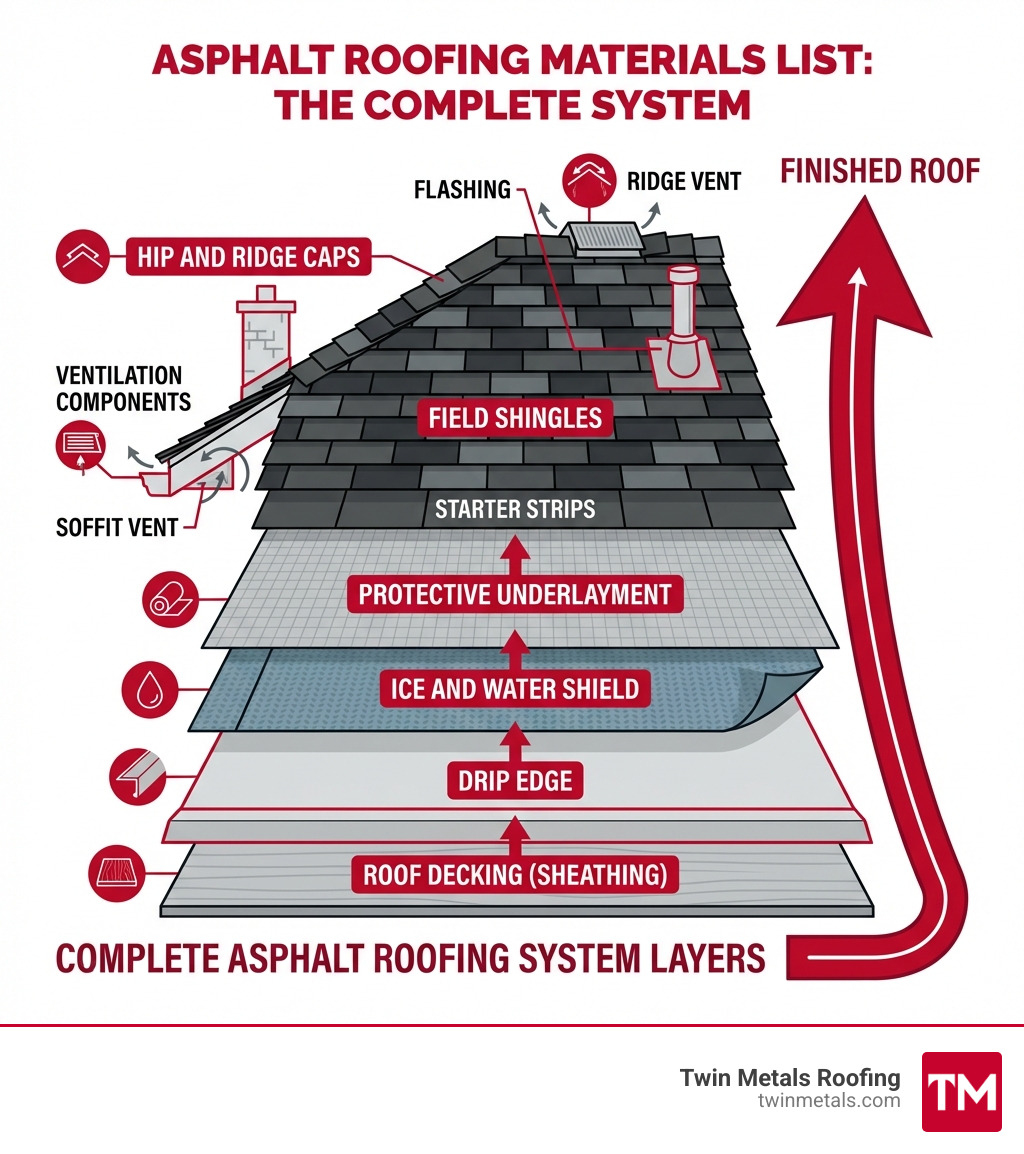
An asphalt roofing materials list includes much more than just the shingles you see from the street. Here’s what makes up a complete asphalt roofing system:
- Roof Decking (Sheathing) – Plywood or OSB that provides structural support
- Protective Underlayment – Synthetic or felt barrier that blocks water infiltration
- Ice and Water Shield – Self-adhering membrane for critical areas like eaves and valleys
- Asphalt Shingles – The visible weatherproofing layer (3-tab, architectural, or premium)
- Starter Shingles – Special strips along roof edges to prevent blow-offs
- Hip and Ridge Caps – Shingles designed for roof peaks and ridges
- Flashing – Metal components that seal around chimneys, vents, and valleys
- Drip Edge – Metal trim that protects roof edges
- Ventilation Components – Soffit and ridge vents for airflow
- Fasteners – Roofing nails and other attachment hardware
Asphalt shingles remain the most popular roofing choice in America, covering more than 80 percent of all residential roofs. But what makes them perform so well isn’t just the shingles themselves.
Your roof is a complete system. Each layer and component works together to protect your home from rain, snow, ice, wind, and UV damage. When even one part fails or gets skipped during installation, the entire system becomes vulnerable.
This matters especially in New England, where our roofs face harsh winters, ice dams, and dramatic temperature swings. Quality materials at every layer—not just premium shingles on top—determine whether your roof lasts 15 years or 30.
Twin Metals Roofing installs asphalt roofs throughout MA and NH, and we know that homeowners rarely think about what’s under their shingles until something goes wrong. This guide breaks down every essential component, from the deck to the ridge cap, so you understand exactly what protects your home.
The Foundation: Structural and Protective Layers
Before we even get to the shingles, a strong and healthy roof relies on a robust foundation. Think of it as the bedrock of your home’s protection. Without these critical layers, even the best shingles can’t do their job effectively.
Roof Decking (Sheathing)
The very first item on any asphalt roofing materials list is the roof deck, often called sheathing. This is the structural layer of wood panels that forms the base of your roof. Typically made from plywood or Oriented Strand Board (OSB), the roof deck provides the solid surface onto which all other roofing materials are attached.
Its primary role is structural integrity: it supports the weight of the roofing system itself, plus any snow, ice, or wind loads, and transfers them to the roof trusses or rafters. Beyond that, it offers a nail-able surface, ensuring that fasteners for shingles and other components have something secure to grip onto. Before any new roofing material is applied, we carefully inspect the existing roof deck. It must be rigid, properly installed, and completely free of warped, rotted, or damaged areas. We also make sure that deck joints are staggered to minimize the effects of normal building movement, preventing potential stress points in your new roof.
Protective Underlayment
Once the roof deck is sound, the next layer in our asphalt roofing materials list is the protective underlayment. This crucial barrier is installed directly over the sheathing and beneath the shingles. Often referred to as “felt paper,” modern underlayments have evolved significantly. While traditional asphalt-saturated felt is still used, synthetic underlayments are increasingly popular due to their durability and superior water resistance.
The underlayment serves as a vital secondary defense against moisture infiltration. It helps prevent wind-driven rain from seeping through any gaps in your shingles, keeping your roof deck dry and strong. In the event of shingle damage, this layer acts as temporary protection, buying you time until repairs can be made. It’s an essential part of a comprehensive roofing system, especially in our Massachusetts and New Hampshire climate, where we see plenty of driving rain.
For more information on how we build robust roofing systems, explore our Residential Roofing services.
Ice and Water Shield
For homeowners in Massachusetts and New Hampshire, the Ice and Water Shield is not just a recommendation—it’s a necessity. This self-adhering, polymer-modified bituminous sheet material is a specialized type of underlayment, thicker and more resilient than standard felt or synthetic options. It’s designed to create an impenetrable barrier against water, particularly in areas prone to ice dams.
Ice dams form when heat escapes from your attic, melting snow on the upper parts of your roof. This water then refreezes as it reaches the colder eaves, creating a barrier that prevents subsequent meltwater from draining off the roof. The trapped water backs up under your shingles, leading to leaks and significant damage to your roof deck, insulation, and interior ceilings.
We apply Ice and Water Shield along the eaves, in valleys, around chimneys, skylights, and other roof penetrations where water is most likely to pool or back up. This critical component of your asphalt roofing materials list gives us peace of mind, knowing your home is protected from the harshest New England winters.
The Main Event: A Guide to Asphalt Shingles
Now, let’s talk about the stars of the show: asphalt shingles. These are the visible elements that give your home its distinct character and primary weather protection. Far from being a one-size-fits-all product, asphalt shingles offer a surprising variety in style, performance, and aesthetic appeal.
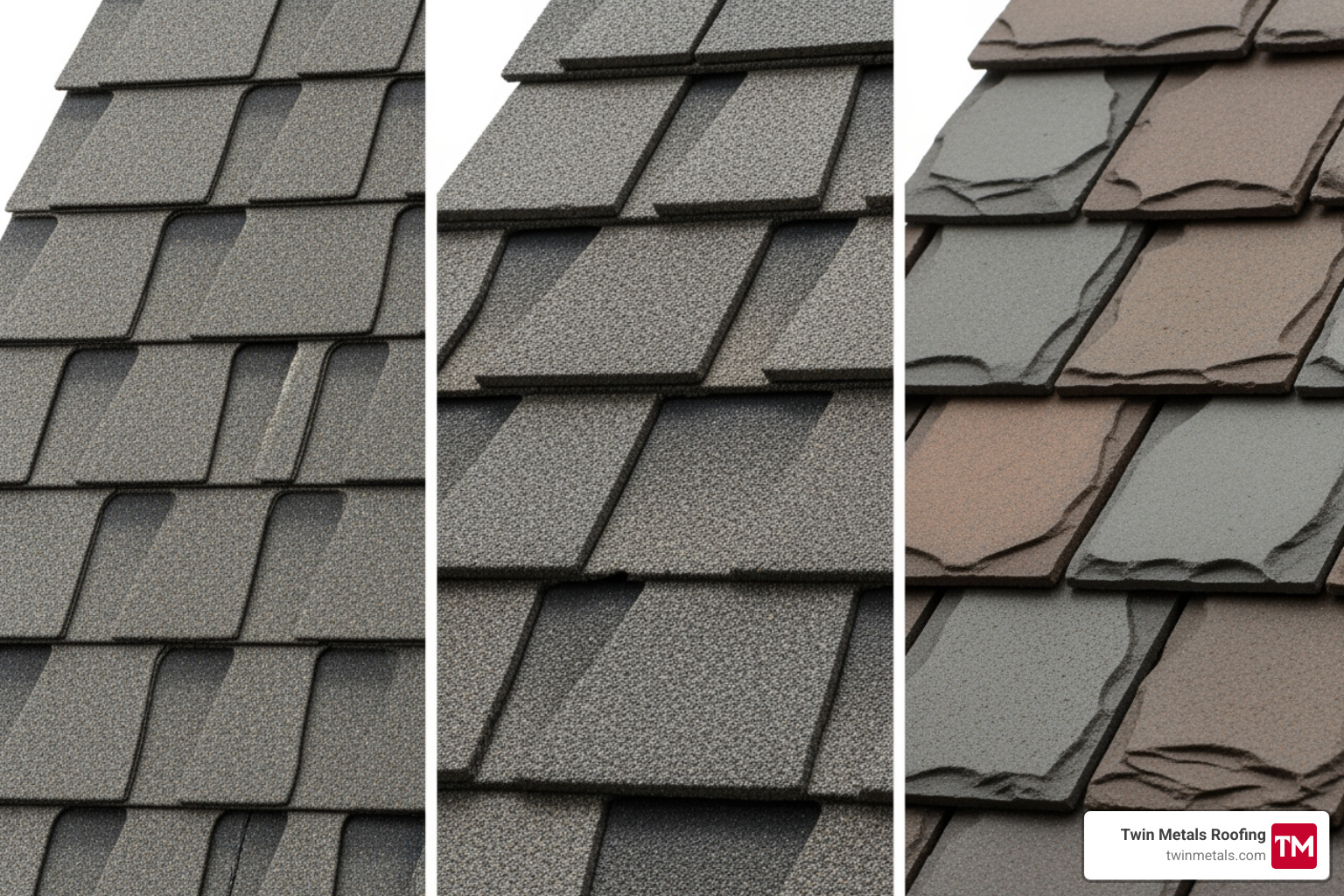
Types of Asphalt Shingles
When selecting asphalt shingles, you’ll generally encounter three main types, each offering different aesthetics and performance characteristics:
-
3-Tab Shingles: These are the most economical and traditional asphalt shingles. They are distinguished by their cutouts, or “tabs,” along the lower edge, giving the appearance of three separate pieces when installed. While once the most predominant shingle on the market, their popularity has waned slightly in favor of more dimensional options. They offer reliable basic protection and are a good choice for budget-conscious projects or utility buildings.
-
Architectural (Laminated) Shingles: Also known as dimensional shingles, these are among the most popular choices for new roof construction and replacements today. They are constructed with multiple layers of asphalt and fiberglass mat, laminated together to create a thicker, more contoured, and dimensional look. This layering gives them a premium appearance, often mimicking the look of wood shakes or natural slate without the associated cost or maintenance. Architectural shingles offer improved durability and wind resistance compared to 3-tab shingles, and their varied patterns can help hide minor imperfections in the roof deck.
-
Premium (Luxury) Shingles: At the top tier, premium shingles offer the highest quality, thickness, and most distinctive appearance. These are essentially improved architectural shingles, often designed to replicate the look of natural slate or cedar shakes with exceptional realism. They use advanced laminating technology for increased thickness and protection, providing superior durability, wind resistance, and a longer lifespan. While a greater investment upfront, luxury shingles can significantly boost curb appeal and property value, making them a popular choice for high-end homes or those seeking a truly distinctive aesthetic. Some structures, however, may require structural assessment due to their heavier weight.
The Anatomy and Benefits of a Modern Shingle
Despite their varied appearances, all asphalt shingles share a common fundamental construction designed for optimal performance. The core of a modern asphalt shingle is typically a fiberglass mat, which provides strength and stability. This mat is then thoroughly impregnated and coated with a waterproof asphalt coating that makes the shingle fire-resistant and waterproof. The asphalt also helps bind the other components together.
The top surface of the shingle is embedded with mineral granules, often ceramic-coated. These granules are not just for aesthetics; they are crucial for protecting the shingle from harmful UV rays, which can cause premature aging and deterioration. The granules also come in a wide array of colors, allowing for diverse aesthetic choices. Many shingles also feature a self-sealing adhesive strip that is activated by the sun’s heat after installation. This strip bonds each shingle securely to the one below it, significantly enhancing wind resistance and preventing blow-offs.
The benefits of asphalt shingles are numerous, contributing to their widespread popularity:
- Affordability: They offer an excellent balance of cost and performance, making them accessible for most homeowners.
- Versatility: Available in a vast array of colors, styles, and textures, they can complement almost any architectural style, from classic New England colonials to modern homes.
- Durability & Lifespan: With proper installation and maintenance, asphalt shingles have a lifespan of around 15 to 30 years, though many high-quality options can last from 25-40 years. Manufacturer warranties often guarantee a 15- to 30-year useful life.
- Weather Resistance: Modern asphalt shingles are engineered to withstand fluctuating temperatures, high winds, heavy rain, snow, and ice, making them ideal for the diverse weather patterns we experience in Massachusetts and New Hampshire.
- Fire Resistance: A significant advantage is their excellent fire resistance. Most fiberglass asphalt shingles manufactured today carry a Class A fire resistance rating, which is the highest rating available according to ASTM E108/UL790 standards, offering superior protection for your home.
This robust construction and proven performance ensure that asphalt shingles continue to be a leading choice for residential roofing. You can learn more about shingle manufacturing and the asphalt industry from the Asphalt Institute by visiting their Roofing 101 page.
The Complete System: Your Essential Asphalt Roofing Materials List
Beyond the shingle itself, a truly protective asphalt roof relies on a collection of specialized components working in harmony. These elements are often overlooked but are absolutely critical for directing water, sealing vulnerable areas, and ensuring the long-term health of your roof system.
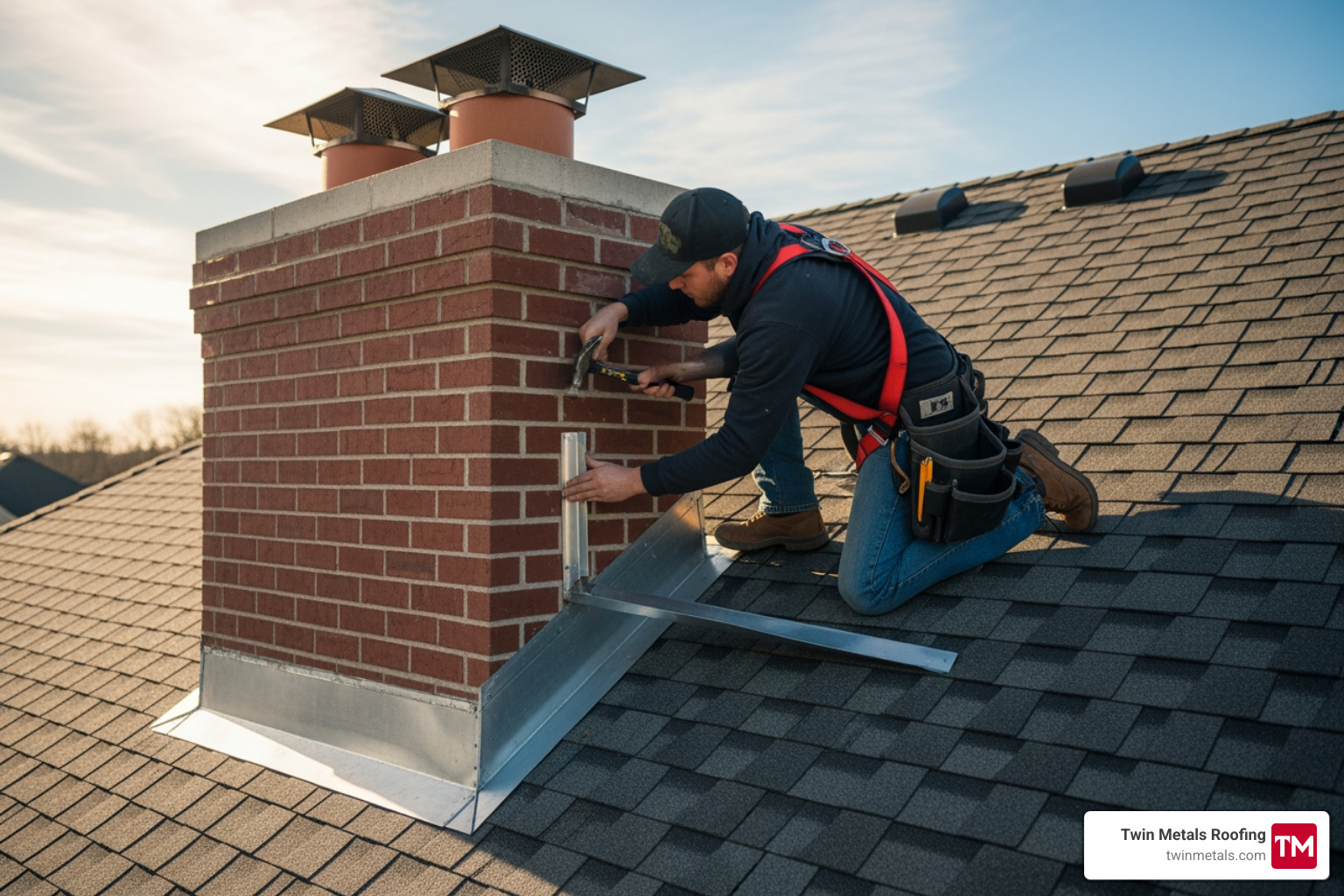
Your Comprehensive Asphalt Roofing Materials List
Here’s a more detailed look at the essential components that round out your asphalt roofing materials list:
- Starter Strip Shingles: These specialized shingles are installed along the eaves and rake edges of your roof, beneath the first course of regular shingles. They provide a continuous seal and bond, helping to prevent shingle blow-off in high winds and offering an extra layer of protection at the vulnerable edges.
- Field Shingles: These are the main body of shingles that cover the vast majority of your roof area, laid in overlapping courses from the eaves to the ridge. These are the 3-tab, architectural, or luxury shingles we discussed earlier.
- Hip and Ridge Cap Shingles: These are thicker, pre-formed shingles specifically designed to cover the hips (sloping angles) and ridges (horizontal peaks) of your roof. They provide a durable, watertight cap over these vulnerable intersections, protecting them from wind and wind-driven rain, while also providing a clean, finished aesthetic to the roofline.
- Drip Edge: This is a metal flashing installed along the edges of your roof. At the eaves, it’s placed under the underlayment to direct water off the roof and into the gutters, preventing it from running down the fascia board. Along the rake edges, it’s installed over the underlayment to protect the roof deck and fascia from wind and moisture.
- Valley Flashing: Valleys are critical areas where two roof planes meet, channeling a significant amount of water. Valley flashing, typically made of metal (like aluminum or galvanized steel), is installed in these channels to create a watertight seal and ensure water flows efficiently off the roof.
- Step Flashing: This type of flashing is used where a roof plane meets a vertical wall (e.g., a dormer wall or a chimney). Individual pieces are bent at a 90-degree angle and interwoven with the shingle courses in a “step” pattern, creating a watertight seal that directs water away from the wall.
- Vent Pipe Flashing: Any pipes penetrating the roof (for plumbing vents, for example) require specialized flashing. These typically consist of a metal base with a rubber or neoprene collar that fits snugly around the pipe, sealing the penetration and preventing leaks.
- Chimney Flashing: Chimneys are notoriously complex areas to seal. Chimney flashing involves several components, including a base flashing (apron flashing) at the front, step flashing along the sides, and head flashing (or a cricket for wider chimneys) at the back, all carefully integrated with the shingle courses to ensure a watertight seal.
A Balanced Ventilation System
Often overlooked in the asphalt roofing materials list, but absolutely essential for the longevity and performance of your roof, is a balanced ventilation system. Proper attic ventilation is critical for several reasons, especially in our New England climate:
- Prevents Heat Buildup: In summer, a well-ventilated attic allows hot air to escape, reducing the burden on your air conditioning system and potentially lowering your cooling energy costs. Conversely, a poorly ventilated attic can cause shingles to bake, leading to premature aging, curling, and cracking.
- Controls Moisture: During colder months, warm, moist air from your home can rise into the attic. Without proper ventilation, this moisture can condense, leading to mold growth, wood rot, and deterioration of insulation. This moisture can also contribute to the formation of ice dams.
- Extends Roof Life: By regulating temperature and moisture, a balanced ventilation system prevents premature deterioration of your shingles and roof deck, significantly extending the lifespan of your entire roofing system.
- Prevents Ice Dams: Proper ventilation keeps the roof deck temperature closer to the outside air temperature, which helps prevent snow from melting and refreezing at the eaves, thus reducing the risk of ice dam formation.
A balanced system typically involves both intake vents (usually soffit vents located at the eaves) and exhaust vents (often ridge vents along the roof’s peak). The goal is to achieve equal amounts of air intake and exhaust, creating a continuous airflow that sweeps heat and moisture out of the attic. We aim for a Net Free Ventilation Area (NFVA) of at least 1 square foot per 150 square feet of attic floor space, adjusting for specific circumstances.
Even the color of your roof can play a role in energy efficiency. Lighter-colored or “cool” roofs reflect more sunlight, further reducing heat absorption. You can learn more about the benefits of cool roofs from the Cool Roof Rating Council.
Planning Your Project: Installation, Estimation, and Replacement
Starting on a roofing project, whether it’s a full replacement or a repair, requires careful planning. Understanding the nuances of installation, how to estimate materials, and recognizing the signs that your roof needs attention are crucial steps for any homeowner.
Proper Installation and Nailing
Even the highest quality materials on your asphalt roofing materials list can fail prematurely if not installed correctly. This is where professional installation makes all the difference. For asphalt shingles, nailing technique is paramount. Nails must be driven straight and flush with the shingle surface, avoiding both under-driving (where the nail head isn’t flush) and over-driving (where the nail cuts through the shingle). Each nail should penetrate at least ¾ inch into the roof deck for a secure hold.
The number and placement of nails are also critical, especially in regions like Massachusetts and New Hampshire, which experience high winds. While four nails per shingle are standard in normal wind conditions, six nails per shingle are highly recommended for high-wind regions. We always use galvanized roofing nails with a minimum nominal shank diameter of 12 gauge (0.105 inches) and a minimum head diameter of 3/8 inches to ensure corrosion resistance and optimal holding power.
At Twin Metals Roofing, we pride ourselves on adhering to the highest industry standards for installation. We know that precision in every detail, from nail placement to flashing integration, contributes to a roof’s long-term performance and durability. Twin Metals Roofing installs asphalt roofs in MA and NH, ensuring every project meets our rigorous quality benchmarks.
You can explore examples of our commitment to quality on our Residential Shingle Roofing page.
Creating Your Asphalt Roofing Materials List for Estimation
Estimating the amount of roofing materials needed for a project can seem daunting, but it follows a logical process. The standard unit of measurement in roofing is the “square,” which covers 100 square feet of roof area.
Here’s how we typically approach material estimation:
- Measure the Roof Area: For simple, rectangular roofs, this is straightforward: length multiplied by width. For more complex roofs with multiple planes, dormers, and valleys, we break the roof down into smaller, manageable sections, calculate each area, and then sum them up. Digital tools and aerial roof measurement services can provide highly accurate calculations.
- Calculate Number of Squares: Divide the total square footage by 100.
- Account for Waste: This is a critical step. No roofing project uses materials without some waste from cutting and trimming. We typically account for 10% to 15% extra for waste, especially on roofs with many valleys, hips, or complex architectural features. It’s always better to have a few extra bundles for future repairs than to run short mid-project.
- Estimate Shingles: Knowing the number of squares tells you how many bundles of field shingles you’ll need (as bundles are packaged to cover a certain fraction of a square).
- Estimate Underlayment and Ice & Water Shield: These are typically sold in rolls, and their coverage is calculated based on the total roof area, with special attention to vulnerable areas for the Ice and Water Shield.
- Estimate Accessories: Don’t forget the other critical items on your asphalt roofing materials list: starter strip shingles, hip and ridge cap shingles, drip edge, and various types of flashing (valley, step, vent pipe, chimney). These are calculated based on linear feet or specific quantities for penetrations.
- Fasteners and Sealants: Finally, we factor in the number of nails (approximately 320 nails per square for standard shingles, 260 for metric, plus additional for underlayment) and any necessary roofing cement or sealants.
Accurate estimation ensures efficiency, minimizes waste, and helps us provide you with a precise project quote.
Signs You Need a New Roof
Your roof constantly battles the elements, and over time, even the most durable asphalt roofing system will show signs of wear and tear. Recognizing these indicators early can prevent minor issues from escalating into costly structural damage. Here are the common signs that your roof might be nearing the end of its lifespan and could require replacement:
- Curling or Cracked Shingles: Shingles that are curling (either upward at the edges or downward in the middle) or have visible cracks are a clear sign of weathering and granule loss. This compromises their ability to shed water and protect your home.
- Missing Shingles: Strong winds, especially common in our region, can uplift and tear off shingles. Missing shingles expose the underlayment and roof deck to direct moisture, leading to leaks.
- Granule Loss: As shingles age, the protective mineral granules wear off, often accumulating in gutters. “Bald spots” on shingles mean the asphalt is exposed to direct sunlight, accelerating deterioration.
- Moss or Algae Growth: While not always indicative of immediate failure, extensive moss or algae growth can trap moisture, causing granules to loosen and the roof deck to remain damp, especially in shaded or damp areas.
- Leaks or Water Stains: Any water stains on your ceilings, walls, or in the attic are undeniable red flags. These indicate that water has penetrated the roofing system. We always recommend checking your attic for signs of moisture, moldy insulation, or streaks on roof boards, as these can be early indicators of a compromised roof.
- Age of the Roof: Most asphalt shingle roofs have a lifespan of 15 to 30 years. If your roof is approaching or has exceeded this age, even if it looks okay from the ground, it’s wise to have a professional inspection. According to publicly available internet data, the average cost of a roof replacement nationwide is around $9,500. However, this is just an average, and the actual cost can vary dramatically. Based on these public sources, the typical cost range for a roof replacement can be anywhere from $6,000 to over $30,000, depending on the materials chosen, the complexity of the roof, and local labor costs. It is important to note that these figures are national averages and are not a quote for our services.
Ignoring these signs can lead to more extensive and expensive repairs down the line, affecting your home’s structural integrity and energy efficiency.
Your Partner for a High-Performance Roof
Understanding the comprehensive asphalt roofing materials list is the first step toward ensuring your home is protected. From the essential roof deck and underlayment to the various types of shingles, flashing, and a balanced ventilation system, each component plays a vital role in creating a durable, high-performance roof.
At Twin Metals Roofing, we believe that quality materials combined with expert installation are the keys to a long-lasting roof. We carefully select the best products for our New England climate and apply our extensive experience to every project, ensuring your home receives the protection it deserves. Investing in a new roof is investing in your home’s future, safeguarding your property, and enhancing its value for years to come.
Twin Metals Roofing serves Berkshire County in Eastern Massachusetts and Southern New Hampshire. If you’re considering a new asphalt roof or need an inspection, we’re here to help.
Request a free estimate for your roofing project.
Follow us on Facebook — https://www.facebook.com/twinmetalsroofing Follow us on Instagram – https://www.instagram.com/twinmetals/