The Case for a Long Lasting Metal Roof on Your Home
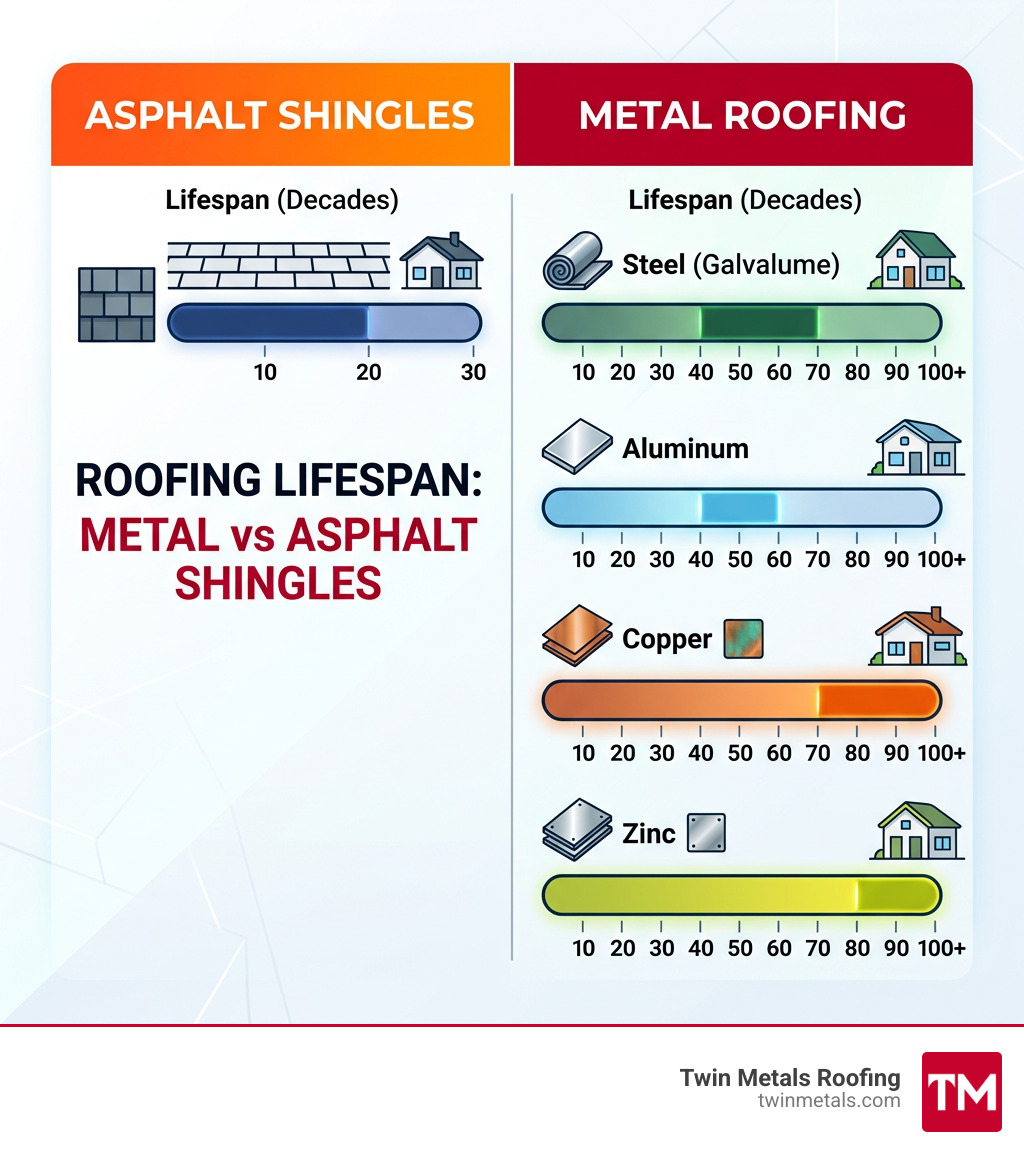
A long lasting metal roof can protect your home for 40 to 80 years — two to three times longer than a standard asphalt shingle roof. Here’s a quick look at what that means:
| Roofing Material | Typical Lifespan |
|---|---|
| Asphalt shingles | 15 – 30 years |
| Steel (Galvalume) | 40 – 70 years |
| Aluminum | 40 – 60 years |
| Copper | 70 – 100+ years |
| Zinc | 80 – 100+ years |
That kind of lifespan changes the math on what a roof actually costs you over time. And it’s not just about durability — metal roofs also reflect heat, resist fire, shed snow, and can even support solar panels without penetrating the surface.
For New England homeowners especially, where winters are harsh and roofs take a beating, those advantages matter a lot.
I’m Tom Gordon, owner of Twin Metals Roofing, and I’ve spent nearly two decades installing and overseeing long lasting metal roof systems across Massachusetts and Southern New Hampshire. In this guide, I’ll walk you through everything you need to know to decide if metal is the right choice for your next roof.
How Long Does a Long Lasting Metal Roof Actually Last?
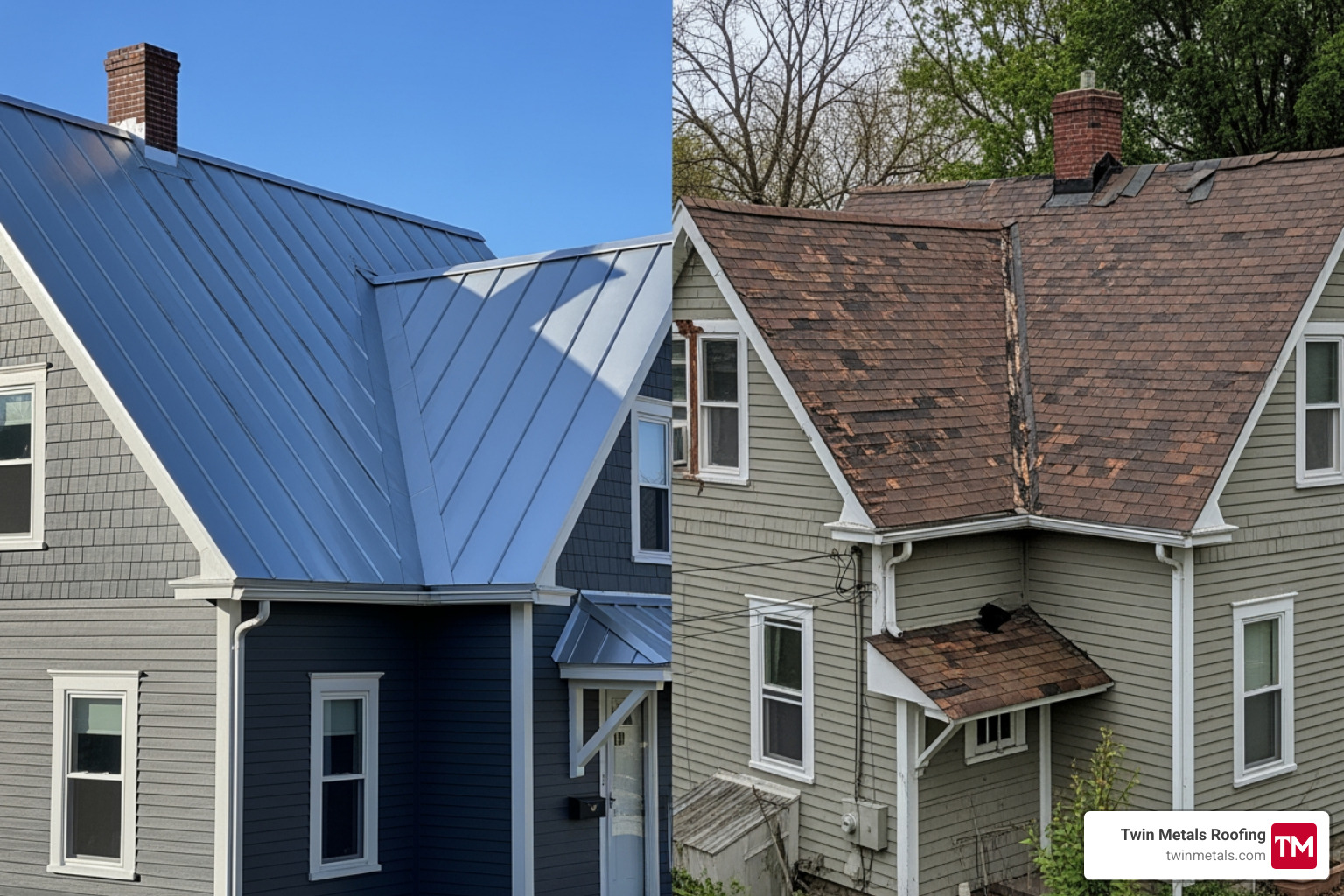
When we talk about service life, we aren’t just talking about how long the material stays on your house; we’re talking about how long it remains functional and watertight. Most homeowners in Massachusetts and Southern New Hampshire are used to the 20-year cycle of asphalt shingles. However, metal roofs can last between 40 to 80 years, which often makes them the last roof you will ever need to install.
While a traditional roof might start losing granules and curling after 15 years, a high-quality metal system is just getting started. The secret lies in the material’s inherent resistance to the elements. Metal doesn’t rot, it isn’t eaten by termites, and it doesn’t support the growth of mold or mildew. In our experience at Twin Metals Roofing, we see metal roofs easily outlasting two or even three generations of neighboring shingle roofs.
Lifespan of Different Metal Materials
Not all metals age the same way. The specific alloy you choose will dictate whether your roof lasts 40 years or 100.
- Steel (Galvalume & Galvanized): This is the most popular choice for residential homes. Galvalume, which is steel coated with a mix of aluminum and zinc, typically lasts between 40 and 70 years. It offers excellent corrosion resistance, making it ideal for the varied climates of Andover and Billerica.
- Aluminum: If you live closer to the coast, such as in Beverly or Danvers, aluminum is a fantastic choice. It naturally resists salt-spray corrosion and generally lasts 40 to 60 years.
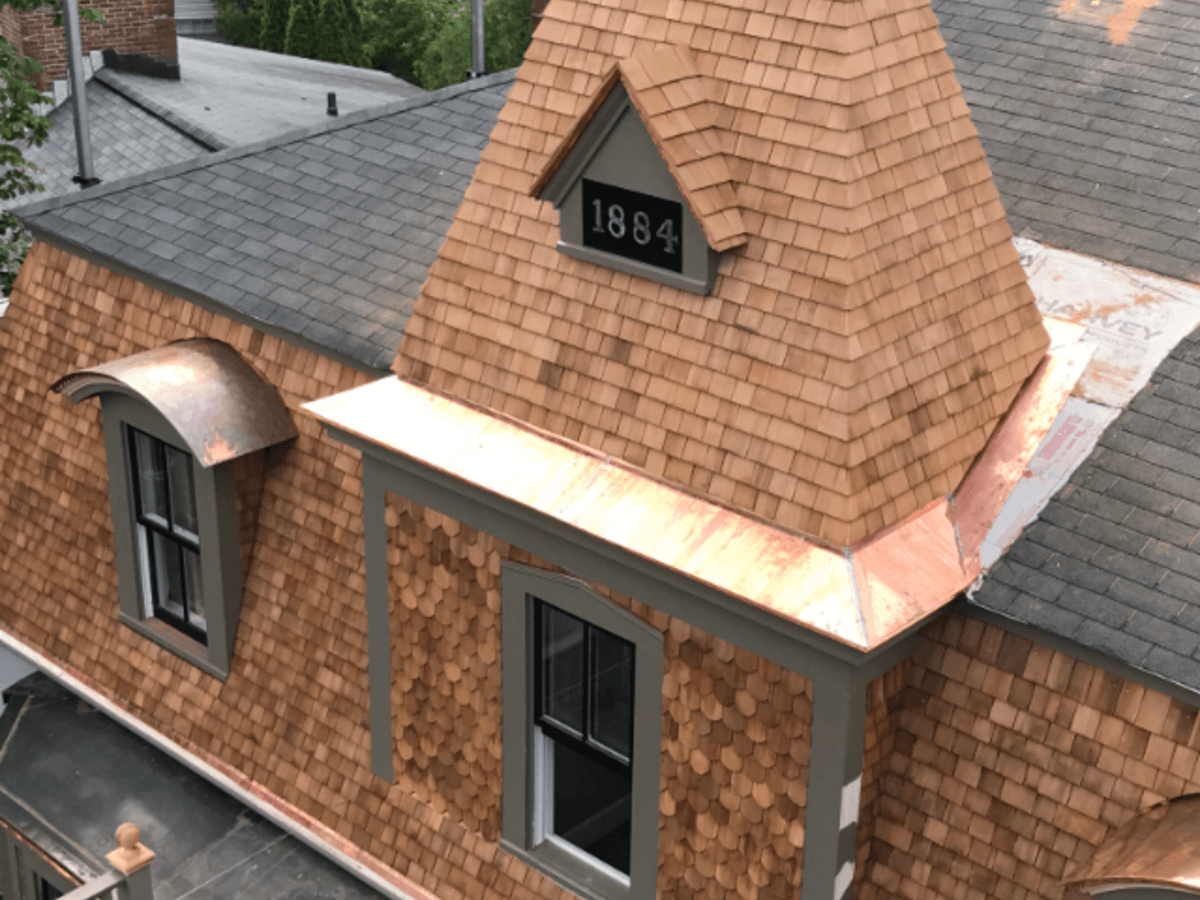
- Copper: This is the “gold standard” of roofing. Copper roofing is without question one of the best of all premium roofing products, often exceeding 100 years of service. It develops a beautiful green patina over time that actually acts as a protective layer.
- Zinc: Similar to copper, zinc is a “self-healing” metal. If it gets scratched, the patina eventually reforms over the mark. You can expect a zinc roof to last 80 to 100+ years.
Standing Seam vs. Screw-Down Systems
The way your roof is put together is just as important as the metal itself. There are two primary types of installations:
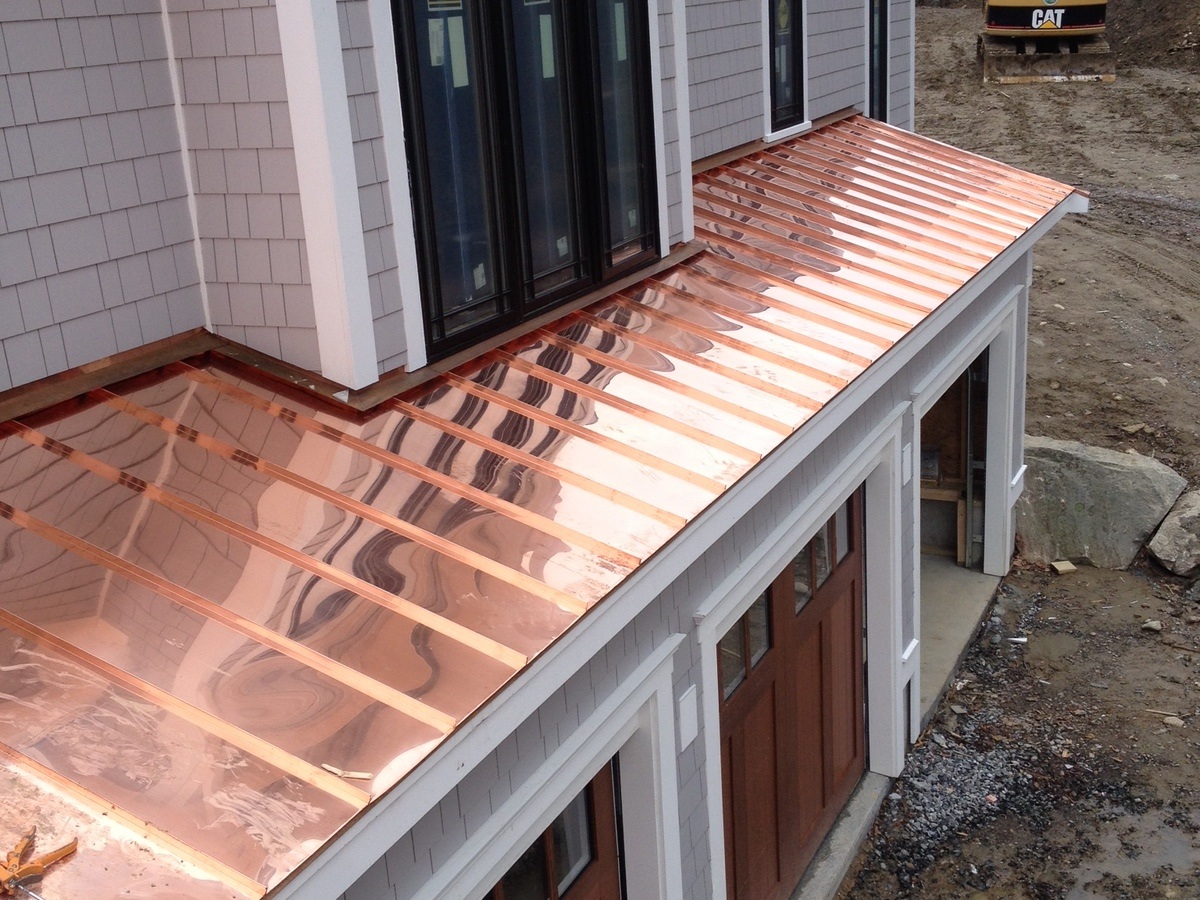
- Standing Seam: This system uses hidden fasteners. The panels are joined by raised seams that “lock” together. Because the screws are tucked away under the metal, they aren’t exposed to rain or snow. This allows the metal to breathe—expanding and contracting with the temperature changes we see in places like Nashua or Waltham—without stressing the attachment points. Standing seam systems are the gold standard for longevity, often lasting 50 to 70+ years.
- Screw-Down (Exposed Fastener): These panels are overlapped and screwed directly through the face of the metal. While more affordable upfront, the rubber washers on those thousands of screws eventually dry out and crack. This system usually requires fastener replacement every 10 to 15 years and has a total lifespan of about 20 to 30 years.
Key Factors Influencing Your Roof’s Durability
Even the best materials can fail if the environment or the installation isn’t right. At Twin Metals Roofing, we emphasize that a long lasting metal roof is a system, not just a pile of panels.
- Installation Quality: This is the number one factor. If the seams aren’t locked correctly or the flashing around chimneys isn’t precise, you’ll have leaks long before the metal wears out.
- Climate Impact: In New Hampshire and Massachusetts, we deal with heavy snow loads and high winds. Fortunately, metal roofs can endure winds up to 140 mph if installed correctly. They also shed snow efficiently, preventing the ice dams that plague so many homes in Lexington and Concord.
- Ventilation: Proper attic airflow is crucial. Without it, heat and moisture can build up under the roof deck, potentially leading to condensation issues that can damage your home’s structure.
- Roof Slope: Steeper pitches are generally better for metal roofs because they allow water and debris to run off quickly. While metal can be installed on lower slopes, it requires specific sealing techniques to ensure it remains watertight. For more details on how we handle these variables, check out our residential metal roofing page.
Maintenance for a Long Lasting Metal Roof
One of the best things about metal is that it is incredibly low-maintenance, but “low” doesn’t mean “none.” To hit that 80-year mark, we recommend:
- Annual Inspections: Take a look (or have us look) once a year to ensure no tree branches have scratched the finish and no debris is trapped in the valleys.
- Gutter Cleaning: Keep your gutters clear so water doesn’t back up under the eaves.
- Protective Coatings: Most modern steel roofs come with high-performance paints like Kynar 500. These are designed to last decades, but eventually, a roof may need a fresh coat of specialized paint to maintain its aesthetic and protective qualities.
- Fastener Checks: If you have an exposed fastener roof, those screws need to be checked periodically to ensure they haven’t backed out due to thermal expansion.
Our in-house sheet metal fabrication shop allows us to create custom trim and flashing that fits your home perfectly, reducing the maintenance burden over time.
Beyond Longevity: The Financial and Environmental Benefits
While durability is the headline, a long lasting metal roof offers several “hidden” benefits that save you money and protect the planet.
- Energy Efficiency: Metal is a reflective material. Unlike asphalt, which absorbs heat and radiates it into your attic, metal reflects solar radiant heat. This can save a homeowner around 40% on energy costs during our humid New England summers.
- Solar Compatibility: If you’re thinking about going green, metal is the perfect partner. Metal roofing and solar deployment go hand-in-hand because standing seam roofs allow solar panels to be clamped onto the ribs without drilling a single hole in your roof. Plus, since the roof lasts 50+ years, you won’t have to pay to remove and reinstall your solar panels just to replace a worn-out roof.
- Fire Resistance: Metal is non-combustible and typically carries a Class A fire rating—the highest protection available.
- Recyclability: Most metal roofs contain 25% to 95% recycled content and are 100% recyclable at the end of their long life. They never have to end up in a landfill like the 11 million tons of asphalt shingles generated annually in the U.S.
Cost Analysis of a Long Lasting Metal Roof
Let’s talk numbers. We know the upfront cost of metal is higher than shingles, but it’s an investment in your home’s future.
Based on average internet data, a new roof can range from $11,000 to over $45,000. Why such a big range? It depends on the size of your home, the complexity of the roof, and the material (steel vs. copper). While this is a significant initial investment, you have to look at the “cost per year.” An asphalt roof that costs $15,000 and lasts 15 years costs you $1,000 per year. A metal roof that costs $30,000 but lasts 60 years only costs $500 per year.
Additionally, many insurance companies in Massachusetts and New Hampshire offer discounts for metal roofs because of their resistance to wind, hail, and fire. They also significantly increase your home’s resale value. If you’re ready to see what the numbers look like for your specific property, request an estimate.
Frequently Asked Questions about Metal Roofing
Are metal roofs noisy during rain or hail?
This is the most common question we get! The short answer is: No, not if installed correctly. In a barn or shed with no ceiling, yes, it’s loud. But on a residential home with solid sheathing, high-quality underlayment, and attic insulation, a metal roof is no noisier than an asphalt shingle roof. Modern installation techniques have made the “patter of rain” a thing of the past.
Do metal roofs attract lightning?
Science says no. Lightning is attracted to the highest point, not necessarily the material. Because metal is a conductive material and non-combustible, it is actually a safer option. If struck, the metal roof helps dissipate the electrical charge safely over the surface and into the ground, and since it’s fire-rated, it won’t catch fire.
Can metal roofs be recycled?
Absolutely. This is one of the most sustainable choices a homeowner can make. Unlike asphalt shingles, which are petroleum-based and difficult to recycle, metal is a valuable commodity. When your roof eventually reaches the end of its 80-year life, it can be melted down and turned into something new—perhaps even another roof!
Conclusion
At Twin Metals Roofing, we believe in providing our neighbors in Massachusetts and Southern New Hampshire with the best possible protection for their homes. Whether you are in Acton, Newton, or Auburn, NH, a long lasting metal roof offers peace of mind that traditional materials simply can’t match.
We take pride in our superior performance and quality materials, ensuring that every installation—whether it’s a sleek standing seam system or a traditional asphalt roof—is done to the highest standards. If you are tired of the “20-year roof cycle,” it might be time to make the switch to metal.
Twin Metals Roofing services Berkshire County in Eastern Massachusetts and Southern New Hampshire. We also install asphalt roofs in MA and NH.
Follow us on Facebook — https://www.facebook.com/twinmetalsroofing Follow us on Instagram – https://www.instagram.com/twinmetals/