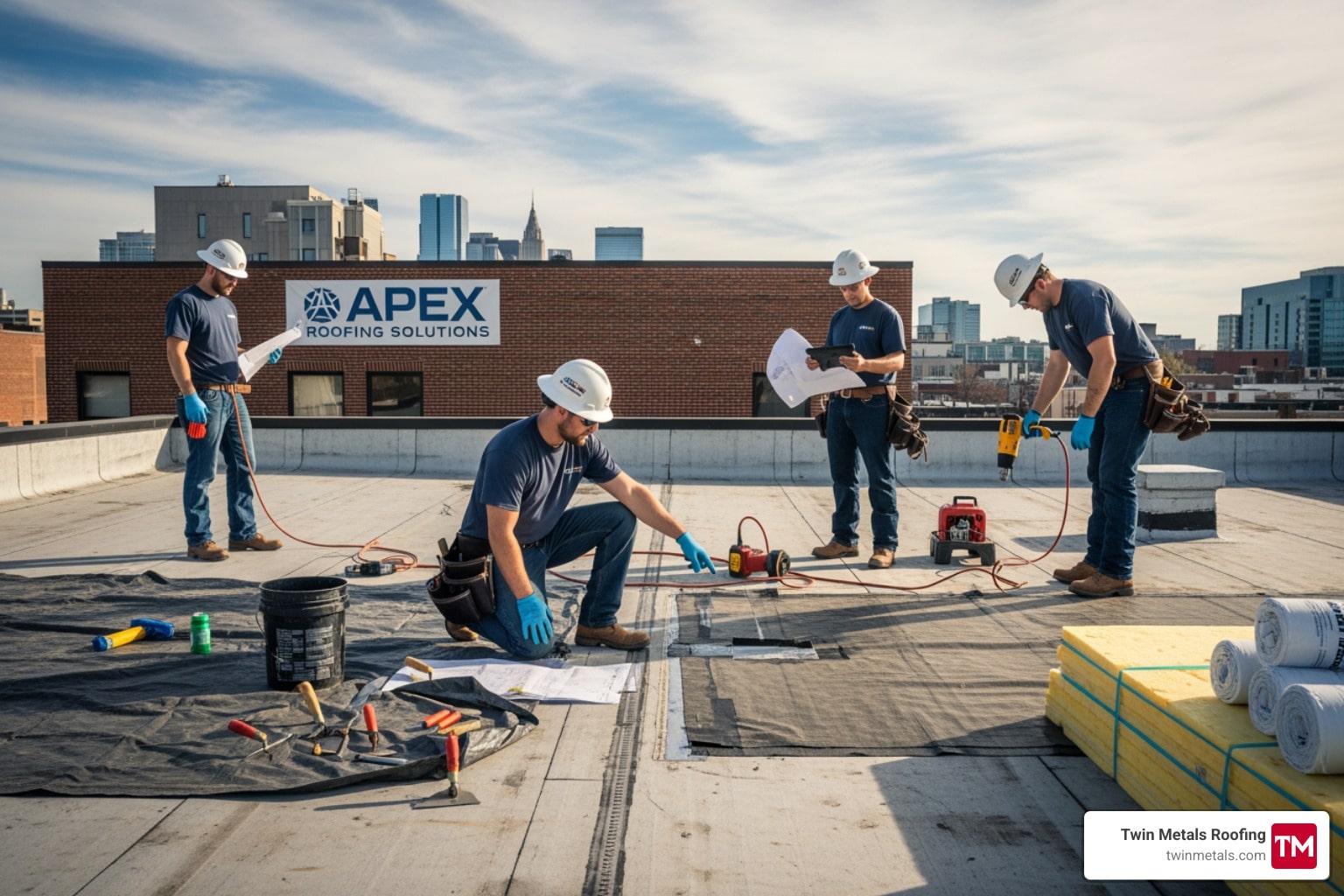
Why Finding the Right Local Flat Roof Specialists Matters
Local flat roof specialists are roofing contractors who focus specifically on installing, repairing, and maintaining flat or low-slope roofing systems in your area. Here’s what makes them your best choice:
- Regional expertise: They understand local weather patterns, from heavy New England snowfall to summer heat
- Code compliance: They know Massachusetts and New Hampshire building regulations inside and out
- Fast emergency response: Local teams can arrive quickly when storm damage or leaks threaten your property
- Accountability: Their reputation depends on serving your community well
- Proper licensing and insurance: Most states require specific credentials for commercial roofing work
Flat roofs are common on commercial buildings, modern homes, and additions throughout Massachusetts and New Hampshire. While they offer practical advantages like usable rooftop space and lower installation costs, they also face unique challenges.
Without proper drainage, flat roofs can develop ponding water that leads to leaks. UV rays, freeze-thaw cycles, and debris accumulation can damage roofing membranes over time. The right local specialist knows how to address these issues before they become costly problems.
Whether you’re dealing with an aging EPDM system, planning a new TPO installation, or facing an emergency leak, choosing a qualified local contractor makes all the difference. Twin Metals Roofing specializes in Commercial Roofing throughout the region, combining decades of experience with knowledge of local climate demands.
This guide will help you understand flat roofing systems, recognize when repairs or replacement are needed, and find a trustworthy contractor who stands behind their work.
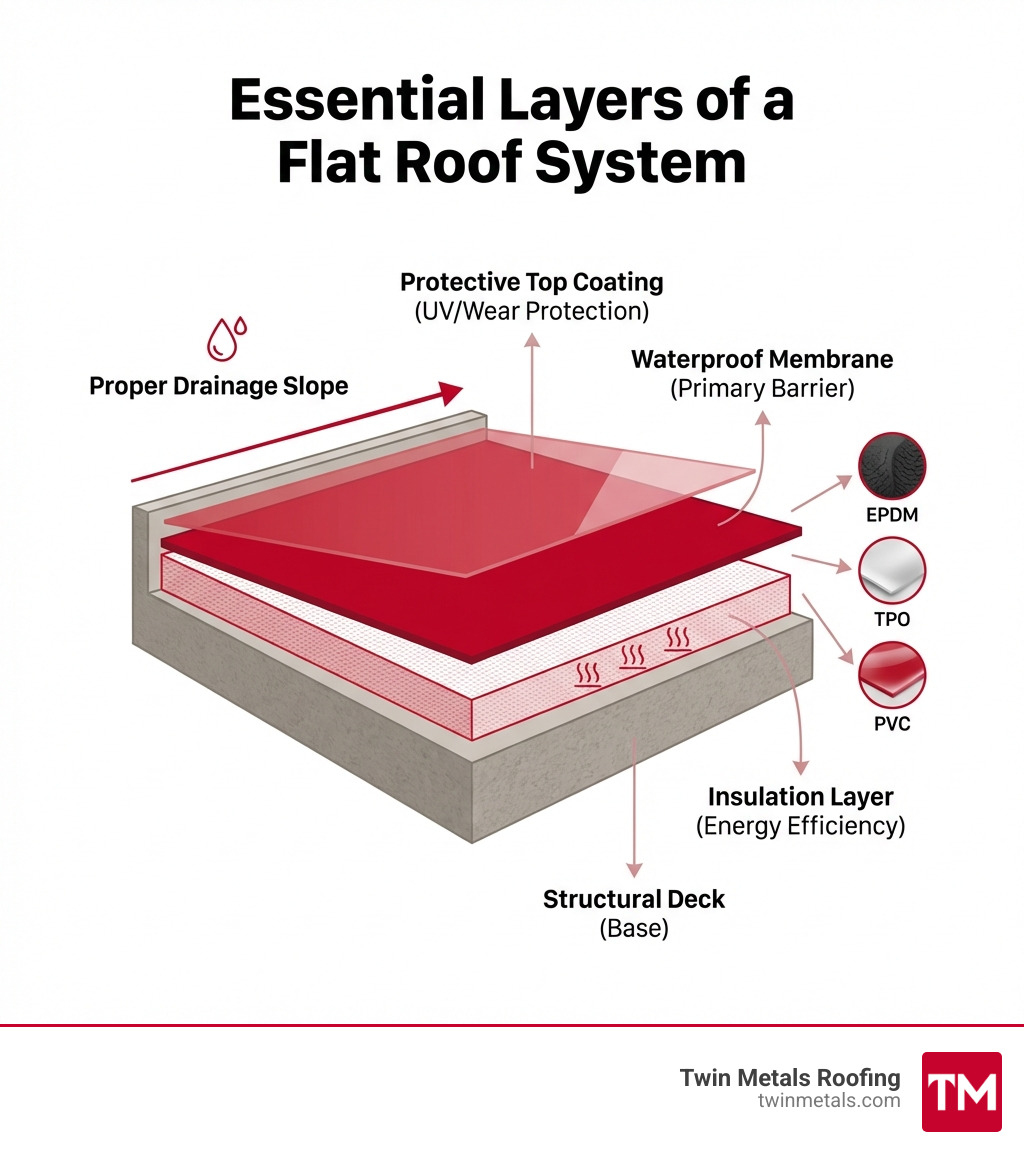
Understanding Flat Roofs: Common Challenges and Materials
This section covers the fundamental aspects of flat roofing systems, from the problems they face to the materials used to build them.
Primary Challenges of Flat Roof Maintenance
Flat roofs, despite their sleek appearance and practical advantages, come with a unique set of maintenance challenges that property owners in Massachusetts and New Hampshire need to be aware of. Unlike sloped roofs that naturally shed water, flat roofs require meticulous design and upkeep to prevent issues.
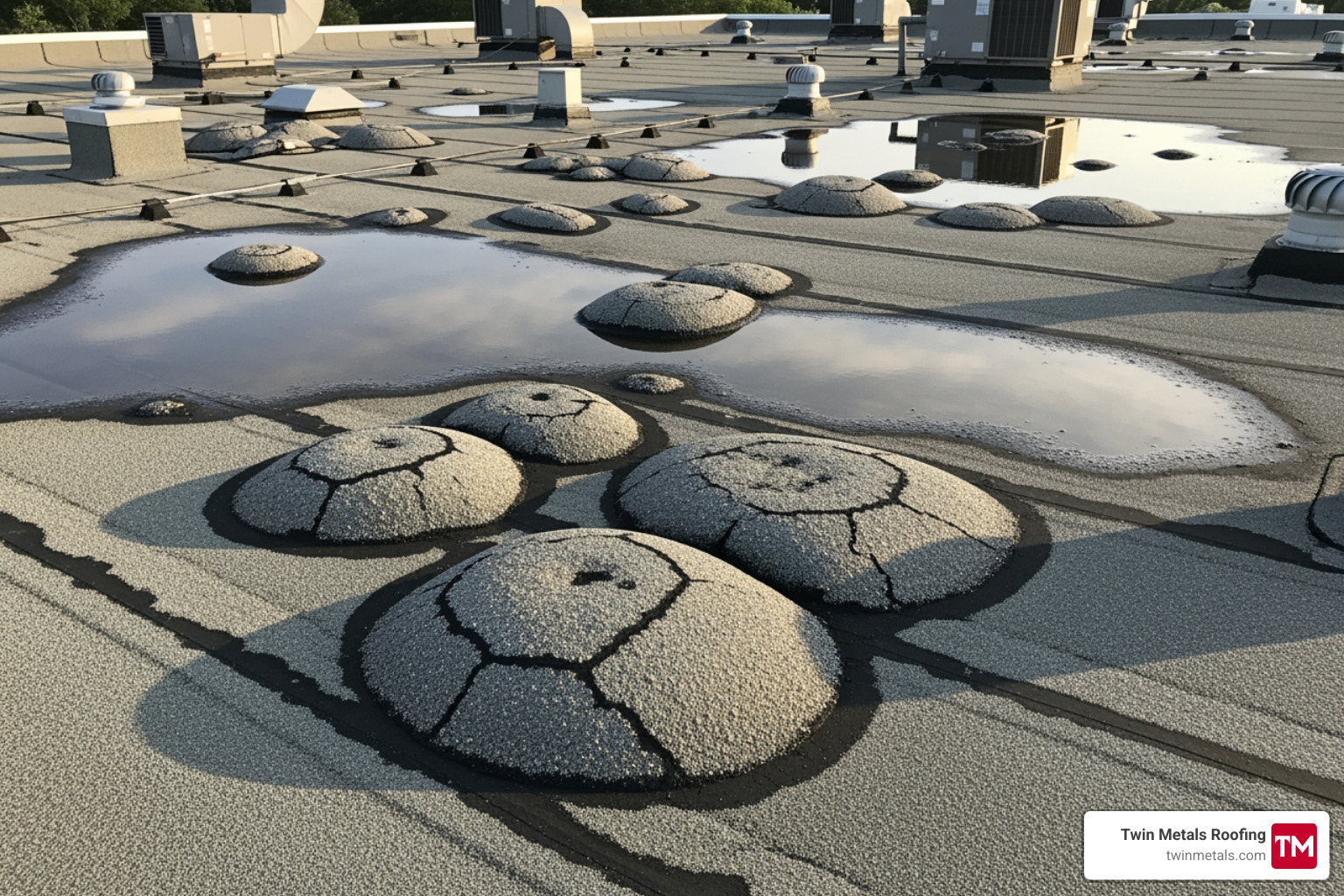
One of the most persistent problems is ponding water. While a “flat” roof actually has a slight slope for drainage, poor installation, structural settling, or clogged drains can lead to water accumulating on the surface. If water sits for more than 48 hours, it can accelerate membrane degradation and lead to leaks.
This leads directly to another major challenge: leaks and moisture intrusion. Ponding water, coupled with the constant freeze-thaw cycles we experience in New England, puts immense stress on roofing membranes. Any small crack or seam separation can become a gateway for water, causing interior damage, mold growth, and compromising the building’s structural integrity.
UV ray degradation is another silent killer for flat roofs. The sun’s relentless UV radiation can break down roofing materials over time, making them brittle, less flexible, and prone to cracking. This is particularly true for older materials or those not designed with modern UV protection.
Debris accumulation from fallen leaves, branches, and even trash can clog internal drains, scuppers, and gutters, exacerbating ponding water issues. Regular cleaning is essential to keep these critical drainage pathways clear.
Finally, membrane blistering, punctures, and tears are common physical damages. Blisters occur when moisture or air gets trapped beneath the roofing membrane, expanding with heat and creating weak spots. Punctures can result from foot traffic, falling debris, or even sharp objects left on the roof. Tears can stem from structural movement or extreme weather events. These small damages, if left unaddressed, can quickly escalate into major problems requiring extensive repair or even premature replacement.
Common Flat Roofing Materials and Their Lifespan
When it comes to flat roofing, our local flat roof specialists have a range of materials at their disposal, each with its own characteristics, advantages, and typical lifespan. The choice of material often depends on the building’s specific needs, budget, and desired performance.
EPDM (Ethylene Propylene Diene Monomer), often called “rubber roofing,” is a synthetic rubber membrane widely used for low-slope roofs. It’s known for its durability, flexibility, and resistance to UV radiation, hail, and extreme temperatures. EPDM is a cost-effective option and has been successfully used for decades. We often recommend Commercial Rubber Roofing for its proven track record. Its typical lifespan ranges from 20 to 30 years.
TPO (Thermoplastic Olefin) is a single-ply roofing membrane that has gained significant popularity due to its energy efficiency and heat-welded seams. TPO is highly reflective, which helps reduce cooling costs in warmer months, making it a great choice for buildings looking to reduce their energy footprint. Its seams are hot-air welded, creating a monolithic, watertight barrier. TPO roofs typically last between 20 and 30 years.
PVC (Polyvinyl Chloride) is another single-ply thermoplastic membrane. Like TPO, it features heat-welded seams for superior watertightness and is highly resistant to chemicals, grease, and punctures, making it suitable for restaurants or industrial applications. PVC roofs are often among the most durable single-ply options, with a lifespan of 20 to 30 years, and sometimes even longer with proper maintenance. Some IB PVC membranes, for instance, are available in various thicknesses (50-mil, 60-mil, 80-mil) for improved durability.
Modified Bitumen (Mod Bit) is an asphalt-based flat roofing system reinforced with polyester or fiberglass. It’s applied in layers, often using torch-down methods (though self-adhering versions are also common), to create a robust, multi-ply roof. Modified Bitumen offers excellent waterproofing and flexibility, performing well in colder climates. Its lifespan typically ranges from 15 to 20 years.
Beyond these common options, we also see Built-Up Roofing (BUR), often referred to as “tar and gravel” roofs. These are traditional multi-ply systems made from alternating layers of asphalt and reinforcing fabrics, topped with gravel. While less common in new installations, they are still present on many older commercial buildings. Their lifespan can vary widely, from 15 to 30 years.
Modern flat roofing materials and technologies bring several advantages. Many TPO and PVC systems qualify as cool roof technology due to their reflective surfaces, which can significantly reduce a building’s energy consumption. Fluid-applied roof restoration systems, for example, can reduce a building’s energy consumption by up to 20% on average. These advancements save money on utilities, contribute to a more comfortable indoor environment, and reduce environmental impact.
Here’s a quick comparison of common flat roof materials:
| Material Type | Typical Lifespan | Energy Efficiency | Typical Applications |
|---|---|---|---|
| EPDM (Rubber) | 20-30 years | Moderate | Commercial, residential |
| TPO | 20-30 years | High (reflective) | Commercial, residential |
| PVC | 20-30+ years | High (reflective) | Commercial, industrial |
| Modified Bitumen | 15-20 years | Moderate | Commercial, residential |
| BUR (Tar & Gravel) | 15-30 years | Low | Older commercial |
Why Choosing Local Flat Roof Specialists is a Smart Investment
Hiring a local expert offers distinct advantages over a national chain, especially when dealing with regional climate and building regulations specific to Massachusetts and New Hampshire.
The Advantages of Hiring a Local Expert
When your property needs flat roof work, opting for local flat roof specialists isn’t just about convenience; it’s a strategic investment in your roof’s longevity. In Massachusetts and New Hampshire, our unique climate makes local expertise invaluable.
First, local climate knowledge is paramount. We understand the specific challenges New England weather poses to flat roofs – from heavy snowfall and ice dams to humid summers and intense thunderstorms. A local contractor has years of experience with these conditions and knows which materials and installation techniques will stand up best against them. For instance, proper roof snow removal is critical in winter to prevent structural damage.
Furthermore, familiarity with local building codes is non-negotiable. Building codes can vary between towns in Massachusetts and New Hampshire. A local specialist is well-versed in these nuances, ensuring all work is compliant, passes inspections, and avoids costly delays. Our work in communities like Commercial Roofing Andover MA ensures we are always up-to-date with local requirements.
One of the most compelling reasons to choose local is faster emergency response. When a storm hits and your flat roof starts leaking, every minute counts. A local team can dispatch help quickly, often offering same-day or next-day service for urgent situations. This rapid response can prevent minor damage from escalating into major interior repairs. Storm damage typically gets priority scheduling.
Finally, community accountability and personalized customer service set local specialists apart. Our reputation is built on serving our neighbors and local businesses. As part of the community, our success depends on client satisfaction. This translates to more transparent communication, honest advice, and a genuine commitment to quality workmanship.
What to Expect from Your Local Flat Roof Specialists
When you engage with local flat roof specialists, you should anticipate a comprehensive and professional approach. Their local presence and expertise mean they are equipped to handle a wide array of situations, from routine maintenance to unexpected crises.
One of the critical services we offer is emergency response teams. Flat roof leaks need to be fixed as soon as possible, especially during severe weather. Local companies often maintain dedicated teams ready to respond to urgent situations, with priority scheduling for storm damage and winter roof snow removal to prevent further interior damage.
You can also expect thorough storm damage assessment. After a significant weather event, a local specialist will conduct a detailed inspection to identify all damage, visible and hidden, and provide a clear plan for repair. This includes understanding how freeze-thaw cycles and heavy rain impact flat roofs in our region.
Proactive maintenance programs are a hallmark of reliable local contractors. These programs typically include twice-yearly inspections (spring and fall), drain cleaning, minor sealant touch-ups, and addressing ponding water issues before they cause leaks. Regular maintenance is a cost-effective way to extend the service life of a commercial roof. We offer maintenance agreements for commercial buildings and multi-unit residential properties to keep your roof in top condition.
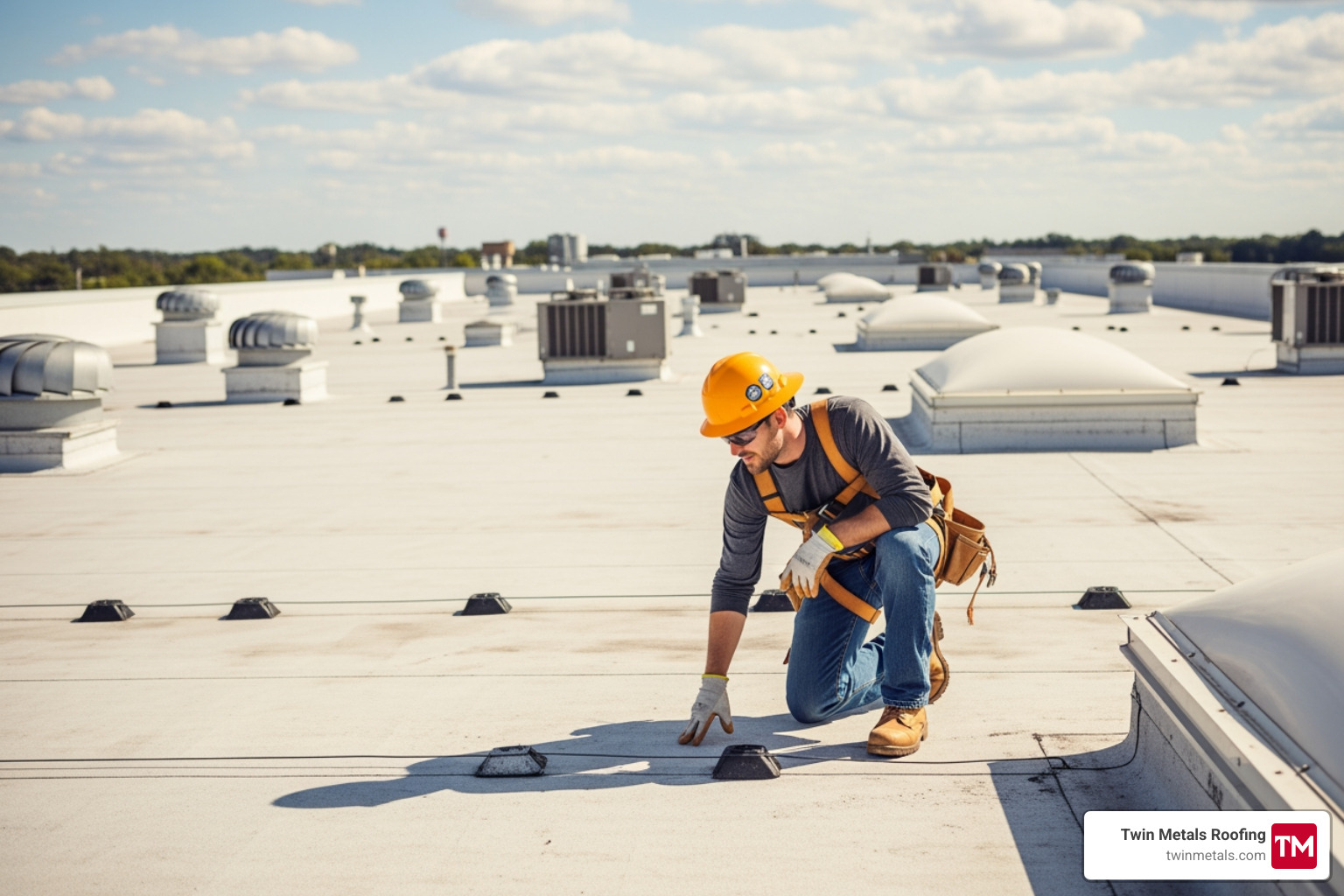
Furthermore, expect detailed inspections that go beyond a quick glance. A good specialist will carefully examine the entire roof system, including the membrane, flashing, drains, and any penetrations. They should provide you with a comprehensive report, often with photos, outlining their findings and recommendations.
Finally, transparent communication is key. We provide honest advice on whether a roof membrane repair or a full roof restoration is the best course of action. You should receive detailed, written estimates that clearly show material costs, labor breakdown, and any additional work needed, with no hidden fees. This ensures you make informed decisions about your property’s most critical protective layer.
How to Select the Right Flat Roofing Contractor
Vetting a contractor is the most critical step. Here’s what to look for to ensure you hire a true professional.
Key Factors for Vetting Local Flat Roof Specialists
Choosing the right local flat roof specialists is paramount to ensuring your investment is protected and your roof performs as expected. We emphasize a thorough vetting process because the quality of your roof directly impacts your property’s safety and longevity.
First, always verify state licensing. Most states, including Massachusetts and New Hampshire, require roofers to be licensed. A license indicates that the contractor has met specific state requirements and is legally permitted to operate. You can usually check a contractor’s license status through your state’s professional licensing board.
Next, demand proof of insurance, specifically liability coverage and workers’ compensation. This protects you from financial responsibility if an accident occurs on your property or if a worker is injured during the project. Don’t just take their word for it; ask for current certificates of insurance directly from their insurance provider.
Consider their years of experience. While new companies can be excellent, those with a long track record often bring invaluable expertise. Companies with over 20 or 30 years of experience, for example, have seen it all and know how to handle complex challenges. This experience translates to better problem-solving and higher quality workmanship.
Always check online reviews and testimonials. Platforms like Angi (formerly Angie’s List) provide verified reviews from other homeowners and businesses. Look for patterns in feedback, paying attention to communication, punctuality, quality of work, and post-project cleanup. We find that checking online reviews and testimonials can offer significant insight into a contractor’s reliability and customer satisfaction.
Insist on detailed written estimates. A professional contractor will provide a comprehensive proposal that outlines the scope of work, materials to be used, timelines, payment schedules, and a clear breakdown of costs. Avoid contractors who offer vague verbal assurances or push for upfront payment without a detailed contract.
Finally, ask for a portfolio of completed local projects. This allows you to see their work firsthand, potentially even driving by properties they’ve serviced in your area. A reputable contractor will be proud to showcase their work and provide references from satisfied clients. This also confirms their local presence and expertise in handling properties similar to yours.
Understanding Warranties and Guarantees
When investing in a new flat roof or a significant repair, understanding the warranties and guarantees offered by your local flat roof specialists is just as important as the materials themselves. These protections safeguard your investment against defects in materials and workmanship.
There are typically two main types of warranties you’ll encounter:
-
Workmanship Warranties (or Labor Warranties): This warranty covers the quality of the installation itself. It ensures that if the roof fails due to faulty installation by the contractor, they will return to fix the issue at no additional cost. The duration of workmanship warranties can vary, but a reputable contractor will often offer a warranty ranging from 5 to 10 years, sometimes even longer.
-
Manufacturer Material Warranties: These warranties are provided by the company that produces the roofing materials (e.g., EPDM, TPO, PVC manufacturers). They cover defects in the materials themselves. The duration of these can be quite extensive, often ranging from 10 to 20 years, and for some high-performance systems, even up to 30 years or a lifetime. For these longer warranties, manufacturers often require their materials to be installed by certified contractors and may conduct an inspection before issuing the warranty.
It’s crucial to understand the nuances of these warranties:
- Labor Coverage: Confirm whether the warranty covers both the cost of materials and the labor to reinstall them if a defect occurs. Some material warranties might only cover the cost of new materials, leaving you responsible for labor.
- Warranty Duration: Pay close attention to how long each warranty lasts. A 20-year material warranty is great, but a 1-year workmanship warranty might indicate less confidence in their installation.
- Non-Prorated vs. Prorated Coverage: A non-prorated warranty covers 100% of the material cost for the entire warranty period. A prorated warranty means the coverage amount decreases over time. Always aim for non-prorated coverage if possible, especially for the initial years.
- Transferable Warranties: If you plan to sell your property, a transferable warranty can be a significant selling point. Confirm if the warranty can be passed on to a new owner and if there are any associated fees or conditions.
Always get all warranty information in writing and ensure it’s clearly explained before signing any contracts. A trustworthy local specialist will be transparent about their offerings and help you understand the full scope of your protection. Long-term warranty options often include plans that are extendable, renewable, and transferable, providing peace of mind for years to come.
Is It Time for a Repair or Replacement?
Knowing the warning signs can help you address issues before they cause catastrophic damage to your property.
Telltale Signs Your Flat Roof Needs Attention
Your flat roof is a critical component of your property, protecting everything beneath it from the harsh New England elements. Recognizing the signs that it needs attention can save you from costly repairs down the line. We encourage property owners in Massachusetts and New Hampshire to be vigilant.
One of the most obvious signs is active leaks or interior water stains. If you see water dripping from the ceiling, discolored spots on walls or ceilings, or feel dampness, your roof is compromised. Don’t ignore these; they indicate water has already penetrated the roofing system.
Another clear indicator is ponding water lasting over 48 hours. While flat roofs are designed with a slight slope for drainage, persistent standing water is a red flag. This can be due to clogged drains, structural issues, or membrane depressions. Ponding water significantly accelerates material degradation and increases the risk of leaks.
Visually inspect your roof for physical damage. Look for cracks, blisters, or splits in the membrane. Cracks and splits are direct pathways for water, while blisters indicate trapped moisture or air and are weak points prone to rupturing. These seemingly small imperfections can quickly lead to widespread issues.
A less obvious but equally important sign is rising energy consumption. If your heating or cooling bills are inexplicably higher, it could be a sign that your roof’s insulation or membrane integrity is failing. A compromised roof can lead to significant heat loss in winter and heat gain in summer.
Finally, simply consider your roof age exceeding 20 years. While some flat roofing systems can last longer with meticulous maintenance, many materials begin to show significant wear and tear after two decades, especially given our region’s weather. If your flat roof is approaching or has surpassed this age, it’s wise to have a professional inspection to assess its remaining lifespan and plan for potential replacement.
How Professionals Ensure Proper Water Drainage
Proper water drainage is the single most critical factor for the longevity and performance of a flat roof. Without it, even the best materials will fail prematurely. Our local flat roof specialists employ several key strategies to ensure water effectively leaves your roof.
The foundation of good drainage starts with tapered insulation systems. Tapered insulation boards are designed to create a slight slope (typically 1/8 to 1/4 inch per foot) directly beneath the roofing membrane. This subtle incline directs water towards drainage points, preventing ponding.
Once the water is moving, it needs an exit strategy. This is achieved through internal drains and scuppers and downspouts. Internal drains are typically located at the lowest points of the roof, collecting water and channeling it through pipes inside the building’s structure. Scuppers are openings in the parapet wall that allow water to flow off the roof edge into external downspouts, which then direct the water away from the building’s foundation.
The goal is always creating a positive slope. This means ensuring that every part of the roof surface encourages water to move towards a drain or scupper, rather than pooling. This requires careful planning and precision during installation, taking into account the roof’s size, shape, and any obstructions.
Finally, regular drain cleaning is a non-negotiable part of flat roof maintenance. Even with a perfect slope, drains can become clogged with leaves, debris, and sediment, especially during fall and after storms common in Massachusetts and New Hampshire. We recommend twice-yearly cleaning as part of a proactive maintenance plan to ensure unimpeded water flow.
Frequently Asked Questions about Flat Roofing
How much does a flat roof replacement cost?
The average cost to replace a roof ranges between $5,890 and $12,800, though large or high-end projects can cost upwards of $46,000. Please note these are average costs based on publicly available internet data. Actual pricing depends on your roof’s size and complexity, the materials chosen (e.g., EPDM, TPO, PVC), existing damage, and local labor costs in Massachusetts or New Hampshire. Labor often accounts for about 60% of the total cost. We provide detailed, written estimates after an inspection for an accurate quote.
How often should a commercial flat roof be inspected?
We recommend inspecting commercial flat roofs at least twice a year: in the spring to assess winter damage and in the fall to prepare for the cold season. These routine checks identify small problems like clogged drains or minor membrane damage before they escalate. It is also crucial to schedule an inspection immediately after any severe weather event, such as a heavy snowstorm or high winds. Proactive maintenance is the best way to extend the lifespan of your commercial flat roof.
Can a flat roof be repaired, or does it need to be replaced?
The decision to repair or replace depends on the roof’s age, material, and the extent of the damage. Minor issues like small punctures, localized seam separations, or isolated flashing problems can often be effectively repaired by local flat roof specialists, which is a cost-effective way to extend the roof’s life. However, a full replacement is the more prudent long-term solution if your roof has widespread problems like extensive blistering, numerous leaks, significant UV degradation, or is nearing the end of its lifespan (20+ years). While some restoration systems can extend a roof’s life, they are only viable if the underlying roof is in fair condition. An honest assessment from a qualified contractor will determine the best course of action.
Conclusion: Partner with a Trusted Local Roofer
Choosing the right local flat roof specialist is crucial for protecting your investment. By understanding the materials, vetting contractors for proper credentials, and staying proactive with maintenance, you can ensure your flat roof performs for decades. For property owners in Massachusetts and New Hampshire, Twin Metals Roofing provides expert Commercial Roofing services, delivering the quality and reliability your building deserves.
Twin Metals Roofing is a trusted installer of asphalt shingle and metal roofs for residential and commercial properties throughout Berkshire County, Eastern Massachusetts, and Southern New Hampshire.
Follow us on Facebook — https://www.facebook.com/twinmetalsroofing Follow us on Instagram – https://www.instagram.com/twinmetals/