Is Installing a Metal Roof Over Shingles Actually Possible?
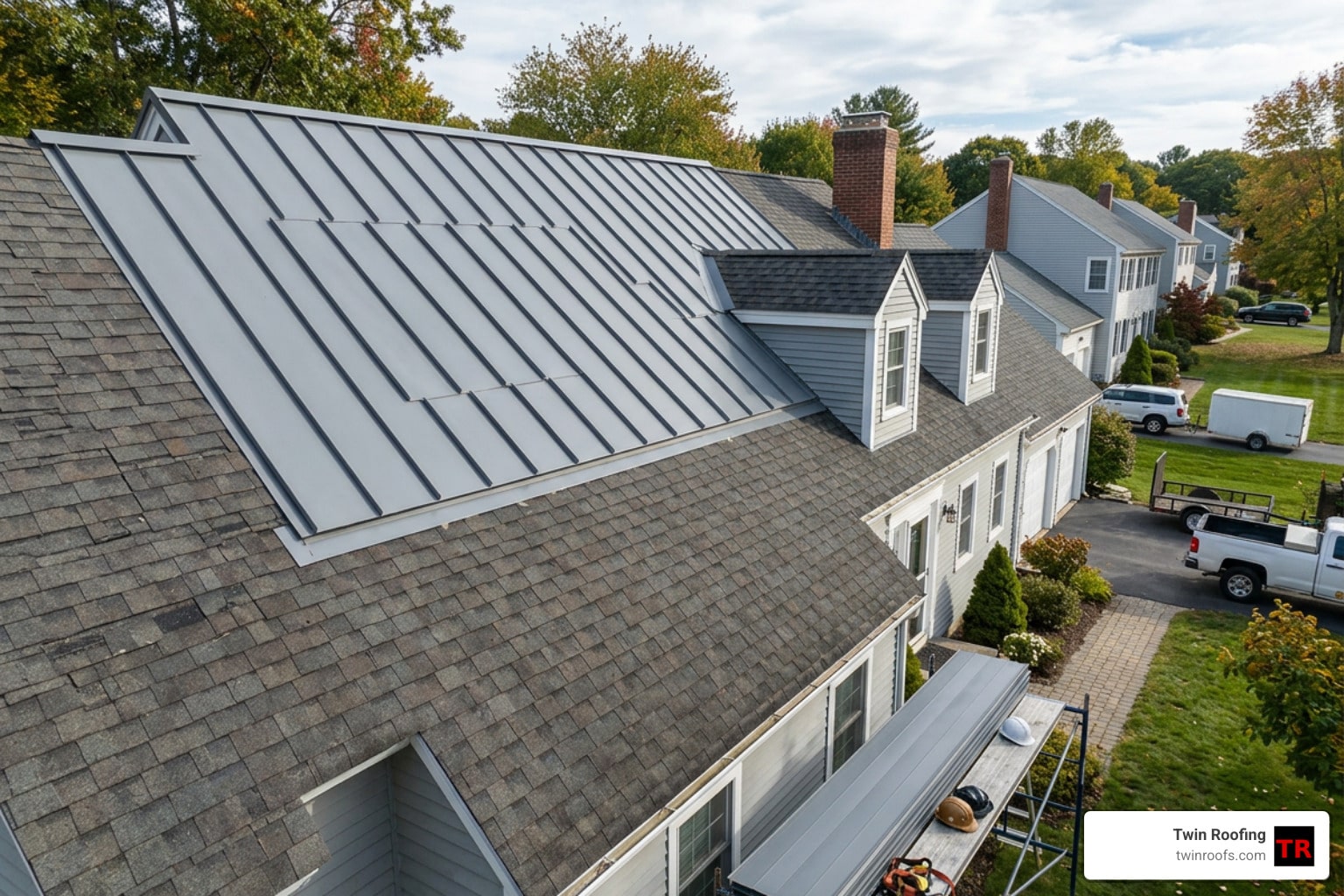
Can a metal roof be installed over shingles? Yes — in most cases it can, and it’s a legitimate, code-compliant option for many New England homeowners.
Here’s the quick answer:
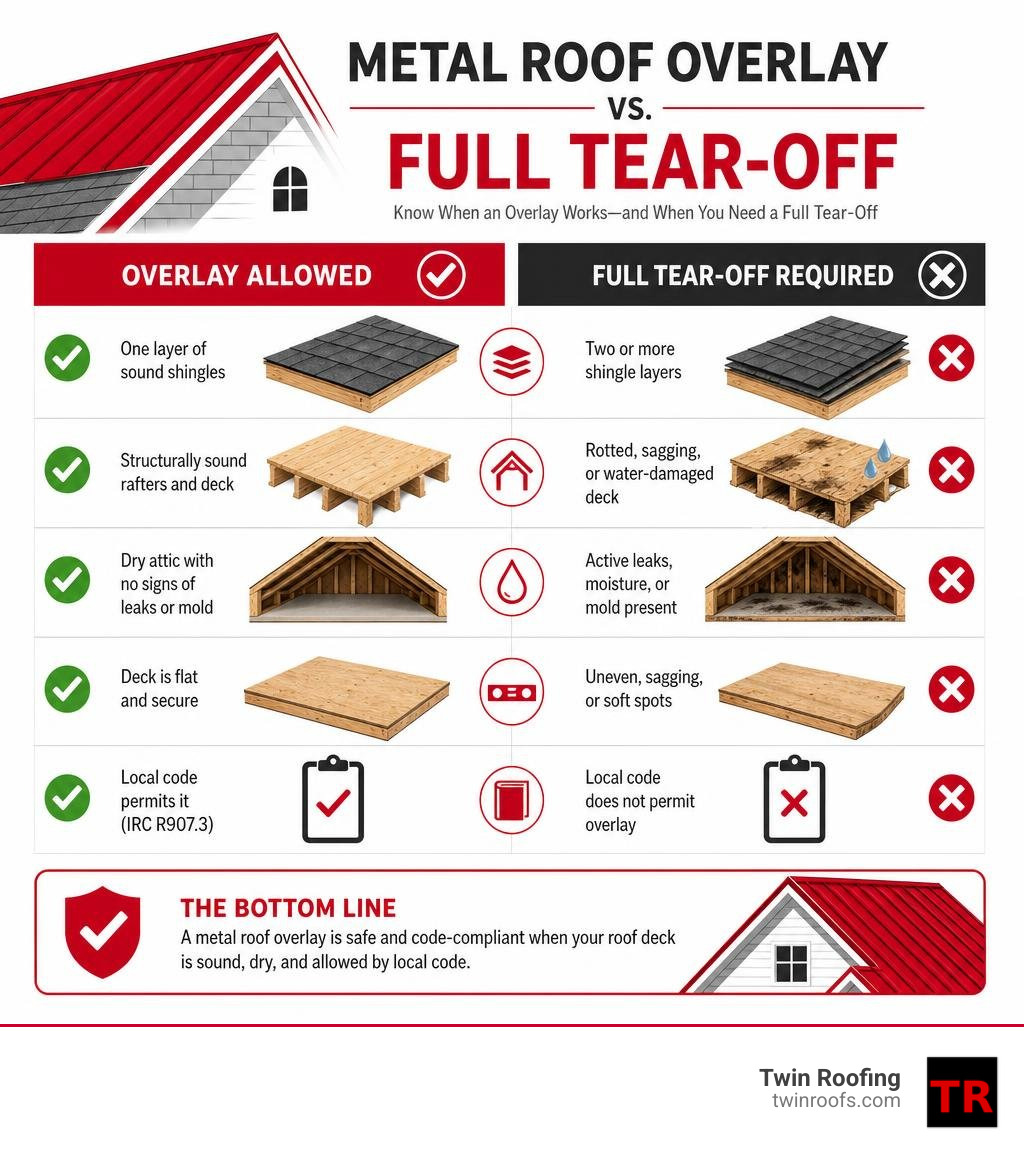
| Condition | Overlay Allowed? |
|---|---|
| One layer of sound asphalt shingles | Yes |
| Two or more existing shingle layers | No |
| Rotted, sagging, or water-damaged deck | No |
| Structurally sound rafters and deck | Yes |
| Local code permits it (IRC R907.3) | Yes |
The catch? Not every roof qualifies. And skipping the right checks before you install can turn a smart upgrade into a costly problem.
Most homeowners assume replacing a roof always means tearing everything down to bare wood first. But metal roofing works differently. Because it weighs far less than asphalt — under 1 lb per square foot versus up to 4 lbs for shingles — it can often go right over the existing layer without overloading the structure.
That said, the difference between a roof that lasts 50 years and one that causes headaches in year three comes down to preparation, proper installation, and knowing when not to do an overlay.
I’m Tom Gordon, owner of Twin Roofing, a division of Twin Metals, Inc., and I’ve spent nearly two decades installing and evaluating metal and asphalt roofing systems across Massachusetts and New Hampshire — including plenty of metal-over-shingle projects where understanding can a metal roof be installed over shingles correctly made all the difference. In this guide, I’ll walk you through exactly what qualifies a roof for an overlay, what the risks are, and when a full tear-off is the smarter call.
Know your can a metal roof be installed over shingles terms:
- is a metal roof hotter than shingles
- is metal roof heavier than shingles
- metal shingles vs asphalt shingles cost
Can a Metal Roof Be Installed Over Shingles? What Building Codes and Structural Limits Say
When homeowners in Eastern Massachusetts and Southern New Hampshire ask us about skipping the messy tear-off stage, the first place we look is the local building code book. Building regulations are designed to prevent structural failure, and they place strict limits on how many layers of roofing can exist on a single residential home.
According to Section R907.3 of the International Residential Code (IRC), which serves as the foundation for state building codes in both Massachusetts and New Hampshire, standing seam metal roof systems designed to transmit loads directly to the structural framing do not necessarily require the removal of existing shingle coverings. However, the code is very clear about the limit: you cannot have more than two layers of roofing on a structure.
This means if your home in Arlington, MA or Concord, MA already has two layers of asphalt shingles, you must perform a full tear-off before putting on a metal roof. Trying to install a third layer is a major code violation and a serious safety risk.
For a detailed look at how manufacturers view these rules, check out the resources provided by McElroy Metal on Can A Metal Roof Be Installed Over My Existing Roof? .
Furthermore, the code requires that the underlying roof structure must be dry, free of rot, and fully capable of supporting the combined weight of both systems. If we inspect your roof and find sagging rafters or soft spots in the plywood sheathing, code compliance goes out the window until those structural issues are repaired. You can read more about how weight impacts structural integrity in our article Asphalt vs Metal: Debunking the Roof Weight Myth.
Structural Weight and Load Capacity
One of the most common myths we hear in places like Newton, MA and Nashua, NH is that adding a metal roof over existing shingles will cause the home’s roof deck to collapse. Fortunately, the physics of modern building materials tell a very different story.
Asphalt shingles are surprisingly heavy. A single layer of standard architectural shingles weighs between 2.3 and 4 pounds per square foot. On a typical 2,000-square-foot home, that translates to roughly 4,600 to 8,000 pounds of dead weight sitting on your rafters.
In contrast, metal roofing is incredibly lightweight. Most residential metal panels weigh less than 1 pound per square foot (typically between 0.5 and 0.8 pounds). When you overlay a metal roof, you are only adding a fraction of the weight that is already there. Your home’s framing and rafters, which are engineered to withstand heavy New England snow loads, can easily support this minimal extra weight—provided the wood beneath is dry and free of decay.
The Pros and Cons of a Metal-Over-Shingle Roof-Over
Like any major home improvement project, choosing a roof-over comes with trade-offs. To make an informed decision for your home, you have to weigh the immediate savings against long-term risks.

To get a complete picture of how these two materials compare in the long run, take a look at our Shingle vs Metal Roofs Survival Guide.
For additional perspective on whether an overlay is right for your property, you can read the guide on Can a Metal Roof Be Installed Over Asphalt Shingles? .
Weighing the Risks: Can a Metal Roof Be Installed Over Shingles Safely?
While we perform overlays regularly, we always educate our clients on the potential drawbacks. The three primary risks of installing metal directly over shingles are:
- The Sandpaper Effect (Granule Abrasion): Asphalt shingles are coated with rough mineral granules. Metal panels naturally expand and contract as temperatures change throughout the day. If metal is laid directly on top of asphalt shingles without a protective barrier, those rough granules act like sandpaper, slowly grinding away the protective backing of the metal panels. Over time, this abrasion can lead to premature rust and panel failure.
- Hidden Rot and Decking Damage: When you don’t tear off the old shingles, you cannot visually inspect the plywood sheathing beneath them. If there is an active, undetected leak that has rotted out a section of the wood deck, covering it with a metal roof will trap that moisture. The rot will continue to spread silently, eventually compromising your roof’s structural safety.
- Uneven Aesthetics (Telegraphing): If your existing asphalt shingles are buckled, curled, or badly warped, those imperfections can “telegraph” through to the metal panels. This is especially true with thin, direct-to-deck metal panels, which can end up looking wavy or distorted.
To learn more about the long-term durability of metal systems, read our article on Why Your Next Roof Should Be Metal.
The Benefits of Choosing an Overlay
Despite the risks, a professionally executed overlay offers incredible advantages for the right home:
- Substantial Cost Savings: By skipping the labor-intensive tear-off process and avoiding rising landfill disposal fees, you can keep thousands of dollars in your pocket.
- Rapid Installation: Tearing off a roof can add days of loud, messy labor to a project. An overlay can often be completed in just 1 to 3 days, causing minimal disruption to your daily life.
- An Extra Layer of Protection: When properly prepped, the old shingle roof acts as an additional thermal and acoustic barrier. This extra layer can actually improve your home’s insulation and further dampen the sound of heavy New England rainstorms.
- Eco-Friendly Choice: Asphalt shingles are a massive contributor to environmental waste, accounting for roughly 11 million tons of landfill waste in the U.S. annually. Leaving your single layer of shingles in place keeps that waste out of our local landfills.
If you want to read more about how metal stands up to the elements over time, check out our guide on the Durable Metal Roof.
Essential Preparation: Underlayment, Furring Strips, and Ventilation
If you decide to move forward with a metal roof overlay, the difference between a successful installation and a complete disaster comes down to preparation. You cannot simply throw metal panels over old shingles and hope for the best.
The Role of Underlayment and Furring Strips
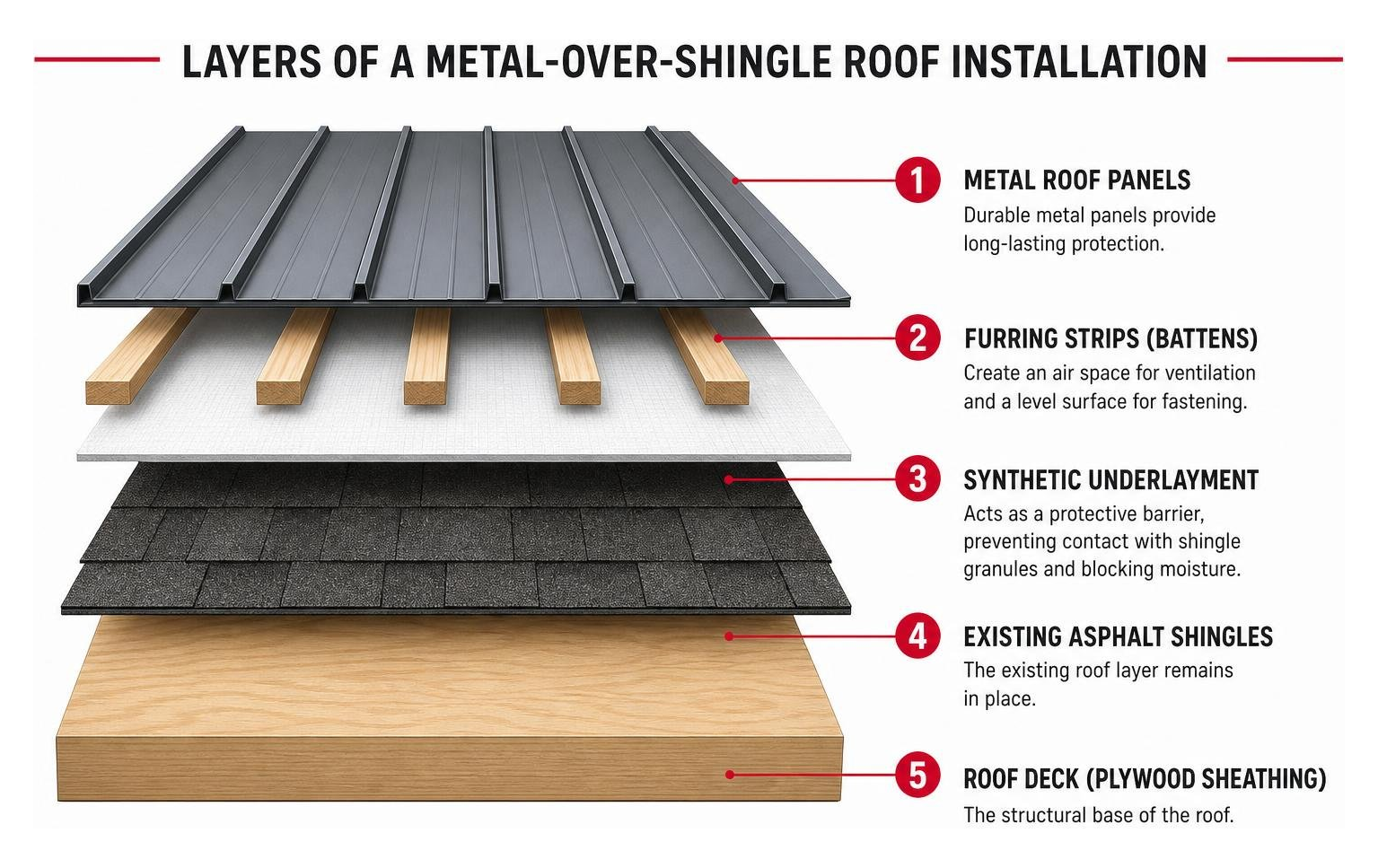
To prevent the “sandpaper effect” and protect your investment, a separation barrier is absolutely mandatory. There are two primary ways we achieve this:
- Synthetic Underlayment (Direct-to-Deck Barrier): If we are installing metal panels directly over the shingles, we first lay down a high-quality, high-temperature synthetic underlayment. This tough, slippery membrane acts as a physical shield, preventing the rough asphalt granules from contacting the back of your new metal panels.
- Furring Strips (Wood Purlins): The preferred professional method is to install 1×4 wood furring strips (also called purlins) horizontally across the roof, securing them directly through the shingles and into the rafters below. These furring strips lift the metal panels completely off the shingles, eliminating granule contact and creating a flat, level plane for the new roof.
Managing Roof Ventilation and Moisture
When you trap a layer of shingles between a wooden deck and a metal roof, you create a potential breeding ground for condensation. Warm, moist air escaping from your home’s attic can hit the cold underside of the metal panels, turning into liquid water that drips down onto your old shingles and rots your roof deck.
To control this risk, we use a technique called Above-Sheathing Ventilation (ASV). By installing wood furring strips, we create a 1.5-inch air gap between the old shingles and the new metal roof. This air gap allows natural airflow to carry heat and moisture away before it can condense. This system not only prevents rot but also keeps your home cooler in the summer by acting as a thermal break.
For a deeper dive into how metal roofs handle New England’s summer heat, check out The Burning Question of Whether Metal Roofs Are Hotter Than Shingles.
Cost Comparison: Overlay vs. Full Tear-Off
For many homeowners in Beverly, MA and Brookline, MA, the decision ultimately comes down to the numbers. Tearing off an old roof is hard, labor-intensive work that requires dumpsters, disposal fees, and extra crew hours.
To understand the baseline cost differences between these materials, read The Real Cost of Metal Shingles vs Asphalt.
Here is an overview of how a typical overlay compares to a full tear-off and replacement:
| Cost Category | Metal Roof Overlay (Re-Cover) | Full Tear-Off & Metal Replacement |
|---|---|---|
| Labor Costs | Lower (Fast installation, no removal labor) | Higher (Includes shingle scraping and cleaning) |
| Disposal Fees | $0 (No landfill waste generated) | $1,000 – $2,500+ (Dumpster rental and dump fees) |
| Deck Repairs | Spot repairs only (Hidden damage may be missed) | Comprehensive (Full deck inspection and replacement) |
| Project Duration | 1 – 3 Days | 3 – 7 Days |
Financial Feasibility: Can a Metal Roof Be Installed Over Shingles to Save Money?
Based on publicly available internet data, the average cost to install a residential metal roof can range widely from $4,000 to $18,000 or more, depending on the size of your home, the roof’s pitch, and the specific metal profile you choose. Please note that these are average industry costs based on public data and do not represent actual pricing for Twin Roofing.
By choosing a metal roof overlay instead of a full tear-off, homeowners can typically save anywhere from $1,000 to $3,000 or more on labor and disposal fees alone. This represents an immediate savings of 10% to 20% on the total cost of the project. When you combine those upfront savings with the long-term energy efficiency of metal, an overlay becomes an incredibly attractive financial option.
Insurance and Wind Mitigation Credits
Before you commit to an overlay, we highly recommend calling your home insurance agent. In wind-prone coastal areas of Massachusetts, insurance companies offer wind mitigation credits for homes with roofs that meet strict wind-uplift standards.
When we perform a full tear-off, we can verify and upgrade the nailing pattern of your plywood deck directly to the rafters, which often qualifies you for maximum insurance discounts. With an overlay, because we cannot physically verify the deck’s attachment points, your insurance provider may limit or deny these wind mitigation credits. However, because metal roofs are highly impact-resistant and rated for high winds, you may still qualify for other premium discounts.
When You Should Choose a Full Tear-Off Instead
As much as we love saving our clients money, there are times when installing a metal roof over shingles is a recipe for disaster. If your roof exhibits any of the following warning signs, a complete tear-off is your only safe option.
For a comprehensive look at high-end metal systems that require a clean deck, read The Ultimate Guide to Residential Standing Seam Systems.
Signs Your Roof Needs a Complete Tear-Off
- Active, Widespread Leaks: If your roof has been leaking in multiple areas, the wood sheathing beneath is almost certainly damaged. Covering up active rot will only accelerate the decay of your home’s structure.
- Sagging Rooflines: A sagging roof indicates structural weakness in your rafters or ridge beam. Adding even a lightweight metal roof to a compromised structure is highly dangerous.
- Severely Curled or Buckled Shingles: If your old asphalt shingles are badly deformed, they will prevent the metal panels or furring strips from laying flat, resulting in an ugly, wavy finished roof.
- Existing Multiple Layers: If your home already has two layers of shingles, building codes strictly prohibit adding a third.
Warranty and Lifespan Considerations
A high-quality metal roof can easily last 40 to 70 years when installed correctly. However, your manufacturer’s warranty is only as good as the installation.
Some premium metal roofing manufacturers—particularly those that produce standing seam systems—require their products to be installed directly to a clean, flat deck to maintain their warranty coverage. If you install these systems over shingles, you could void your material warranty.
Before making a final choice, explore the different metal profiles available. Read our expert analysis on Steel Yourself for the Best Types of Metal Residential Roofing.
Frequently Asked Questions About Metal Roof-Overs
To help you navigate this decision, here are the answers to the questions we hear most often from homeowners in our service areas.
Will a metal roof overlay make my house louder during rain?
No. This is one of the biggest concerns homeowners have, but in reality, a metal roof overlay is incredibly quiet. Because your new metal panels are installed over an existing layer of asphalt shingles, a solid wood deck, underlayment, and your home’s attic insulation, you have multiple layers of acoustic dampening. It will sound no louder than a traditional asphalt roof during a heavy rainstorm.
Will installing metal over shingles void the manufacturer warranty?
It depends entirely on the manufacturer and the installation method. Many manufacturers of corrugated metal panels and stone-coated steel shingles fully support over-shingle installations, provided you use a approved underlayment or furring strip system. However, some standing seam manufacturers do require direct-to-deck installation. At Twin Roofing, we always verify the specific warranty requirements of your chosen material before starting work.
How long will a metal roof last when installed over existing shingles?
When installed with proper ventilation (ASV) and a high-quality underlayment or furring strip system, a metal roof installed over shingles will last just as long as one installed on a bare deck—anywhere from 40 to 70 years. The key is ensuring that no moisture is trapped between the layers to cause rust or rot.
Conclusion
Can a metal roof be installed over shingles? Absolutely. When your existing roof has only a single layer of sound shingles, your roof deck is dry and structurally stable, and you work with an experienced team that understands proper ventilation and separation barriers, an overlay is a fantastic, cost-effective upgrade.
However, if your roof has hidden rot, multiple layers, or structural sagging, a full tear-off is the only way to protect your home.
Whether you decide on a metal overlay, a full metal replacement, or a fresh set of high-performance shingles, Twin Roofing is here to help. Twin Roofing installs asphalt roofs in MA and NH, bringing superior performance, quality materials, and exceptional customer service to every single project.
If you are ready to find out if your roof is a candidate for a metal overlay, Schedule a consultation with our expert team today!
The company services Eastern Massachusetts and Southern New Hampshire.
Follow us on Facebook — https://www.facebook.com/twinmetalsroofing Follow us on Instagram — https://www.instagram.com/twinmetals/