Why Getting Siding Installation Boston Right Is Critical for Your Home
Siding installation Boston homeowners need done right is one of the most important exterior investments you can make — protecting your home from harsh New England winters, salt air, and temperature swings that can destroy a poorly installed exterior in just a few years.
Here’s what you need to know at a glance:
| What You Need | Quick Answer |
|---|---|
| Best siding materials for Boston | Vinyl, fiber cement (James Hardie), cedar wood, composite |
| Typical project cost | $5,000 – $85,000 (Market averages*) |
| Average installation time | A few days to 2 weeks |
| Permit required? | Yes — short-form local permits required in most Boston-area municipalities |
| Top contractor qualities to look for | Licensed, insured, manufacturer-certified, strong local reviews |
*Costs are based on publicly available internet data, not actual pricing.
Boston homes face a tough climate. Freezing winters, wet springs, humid summers, and coastal salt air all put serious stress on exterior siding. Choose the wrong material — or the wrong contractor — and you’re looking at rot, water infiltration, rising energy bills, and costly repairs within a few years.
This guide walks you through everything: materials, the installation process, costs (based on average market data), permits, and how to find a contractor you can actually trust.
I’m Tom Gordon, owner of Twin Roofing, a division of Twin Metals, Inc., and with nearly two decades of hands-on exterior work across Eastern Massachusetts and Southern New Hampshire, I’ve seen what separates a siding job that lasts from one that fails in the first New England winter. Siding installation Boston properties demand isn’t just about aesthetics — it’s about building science, and I’ll break it all down for you here.
Siding installation Boston definitions:
Understanding Siding Materials for the Boston Climate
Choosing the right material for your siding installation Boston project is like choosing a winter coat for your house. In neighborhoods like Brookline or Newton, you need something that looks sharp but can handle a Nor’easter without breaking a sweat.
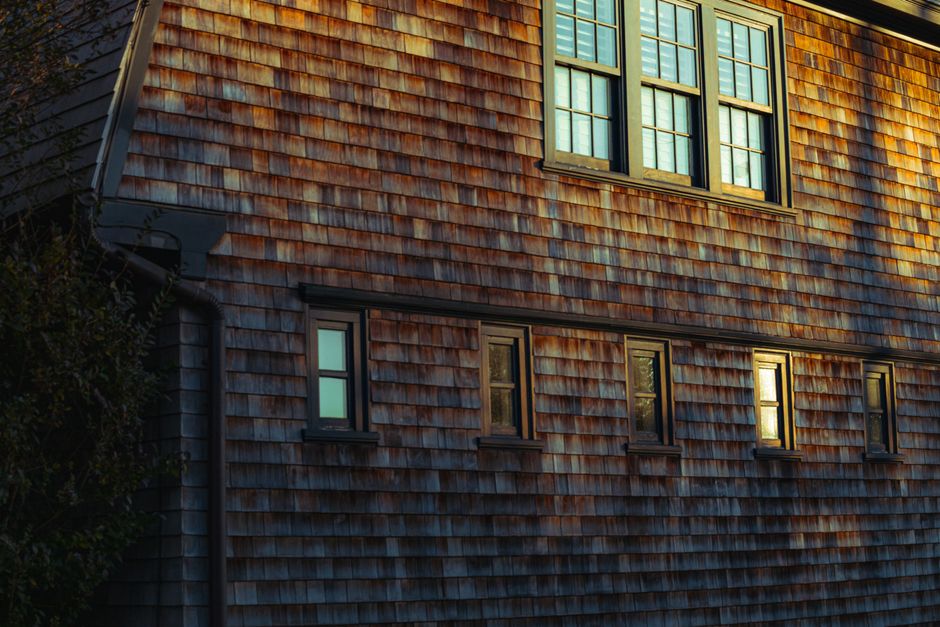
Boston’s weather is notoriously fickle. We deal with high humidity in the summer and bone-chilling salt air from the Atlantic year-round. This moisture is the primary enemy of any siding system. If you want to dive deep into specific styles, check out our guide Beyond the Boards: What You Need to Know About Cedar Shake Siding to see how traditional looks hold up today.
Popular Siding Types in Massachusetts
In our decades of experience serving Eastern MA and Southern NH, we see four main contenders:
- Vinyl Siding: The most popular choice for many in Lynn and Quincy. It’s cost-effective and low-maintenance.
- Fiber Cement (James Hardie): This is the “heavy hitter.” It mimics wood but is made of cement, sand, and cellulose fibers. It’s incredibly durable and fire-resistant.
- Cedar and Natural Wood: The gold standard for historical charm in places like Andover and Concord.
- Composite Materials: Newer options like Everlast use inorganic minerals and polymer resins to create a 100% waterproof plank that never needs painting.
Benefits of Cedar and Wood Siding
There is a reason cedar has been used in New England for centuries. It contains natural oils that act as a preservative, helping it resist decay and insect attacks. For homeowners involved in historical remodeling, wood is often the only choice that satisfies local historical commissions. Beyond the looks, wood provides excellent natural insulation, helping keep those drafty older homes in Cambridge or Arlington a bit warmer in January.
Durability of Fiber Cement and Vinyl
If you aren’t looking to paint your house every five to seven years, modern manufactured materials are your best friend. Fiber cement siding, like James Hardie, often comes with a 30-year limited warranty and is virtually immune to termites and rot.
Vinyl has also come a long way. Modern premium vinyl features higher “gauges” (thickness), which makes it more impact-resistant against hail or a stray baseball. Many manufacturers now offer limited lifetime warranties on vinyl products, making it a “set it and forget it” solution for many Waltham residents.
The Siding Installation Boston Process: What to Expect
A professional siding installation Boston project is a major operation. It’s not just about slapping new boards over the old ones (in fact, please don’t do that!).

The timeline usually spans from a few days for a small ranch to two weeks for a complex multi-story home. If you’re looking for vetted experts, you can browse Detailed Reviews of the Top 10 Siding Contractors MA to see how local crews handle these timelines.
Key Steps in Siding Installation Boston
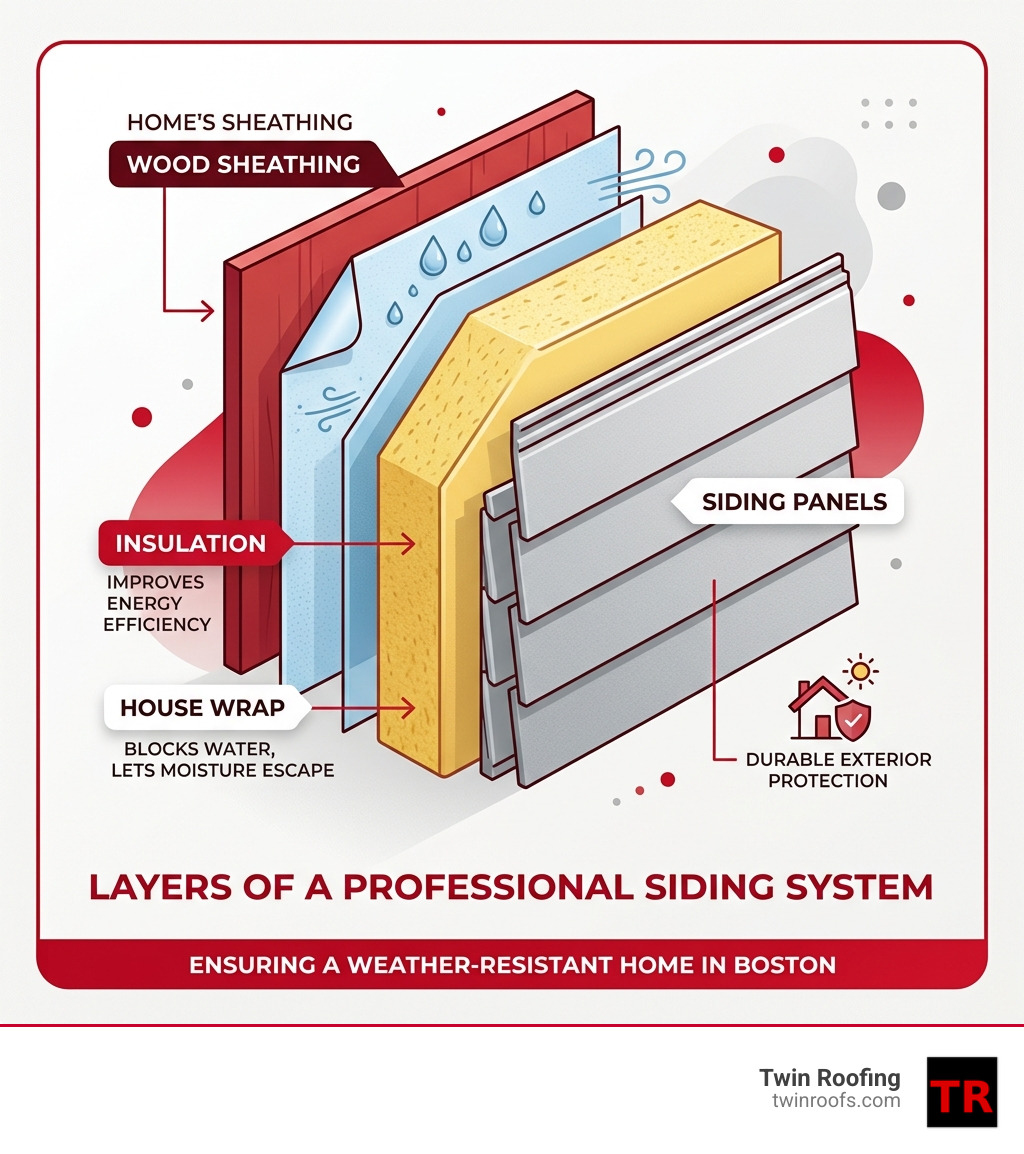
- Old Siding Removal: We always recommend stripping the house down to the original sheathing. This is the only way to find hidden rot or pest damage.
- Structural Inspection: Once the walls are bare, we check the plywood or OSB for soft spots.
- Waterproofing and House Wrap: This is the most critical step. A breathable barrier like Tyvek is applied to keep liquid water out while allowing moisture vapor to escape from inside.
- Flashing and Sealing: We apply specialized tape around windows and doors to ensure a watertight seal.
- Installation: The siding panels are hung, ensuring enough “play” for thermal expansion.
Finding the right team is half the battle, so start by searching for Siding Contractors Near Me to get local estimates.
Local Permits and Regulations
In Boston, you can’t just start hammering. Most municipalities require a “short-form” permit for siding replacement. If you live in a historical district like Beacon Hill or certain parts of Salem, you may need approval from a local board regarding the material and color. Furthermore, because many Boston homes were built before 1978, contractors must follow EPA Lead-Safe practices to protect your family from lead dust during the tear-off phase.
Common Mistakes to Avoid
The biggest mistake? The “go-over.” Some contractors will offer to save you money by installing new vinyl over your old wood siding. This is a recipe for disaster. It traps moisture, prevents a proper inspection of the structure, and often leads to “wavy” siding.
Another common error is improper nailing. Vinyl siding needs to “hang” on the nails—if a contractor nails it too tight, the siding will buckle and warp when the temperature changes. We’ve seen many homeowners get sidelined by bad siding in Natick because of these shortcuts.
Improving Home Value and Efficiency in New England
New siding is one of the few home improvements that pays for itself in both property value and monthly utility savings.
Maximizing ROI with Siding Installation Boston
In the Boston market, curb appeal is king. A fresh exterior can increase your home’s value significantly. But the real “hidden” ROI is in energy efficiency. By using insulated siding or adding a layer of rigid foam insulation under your new siding, you can combat “thermal bridging”—the process where heat escapes through the wooden studs of your walls. This is especially vital in Massachusetts, where electricity and heating costs are often much higher than the national average. For more on how these systems work together, see our guide on Gutters Siding Soffits.
Whether you are looking at exterior siding in Lowell or a coastal home in Beverly, upgrading your thermal envelope is a smart financial move.
The Role of Gutters and Soffits
Siding doesn’t work in a vacuum. Your gutters and soffits are the supporting cast that keeps the whole system healthy. Gutters move water away from your new siding to prevent staining and rot, while soffits allow your attic to breathe, preventing ice dams in the winter. We often recommend a full house soffit replacement during a siding job to ensure everything matches and functions perfectly. You can learn more about this synergy in our article The Ins and Outs of Gutters Siding Soffits.
Cost Guide for Siding and Gutter Replacement in Massachusetts
Let’s talk numbers. Please note that these are average costs based on publicly available internet data, not our actual pricing. Every home is unique, and factors like height, historical requirements, and the number of windows will change the final tally.
Average Investment for Boston Homeowners
For a typical 1,500 to 2,500 square foot home in the Greater Boston area, you can expect a wide range of investment levels.
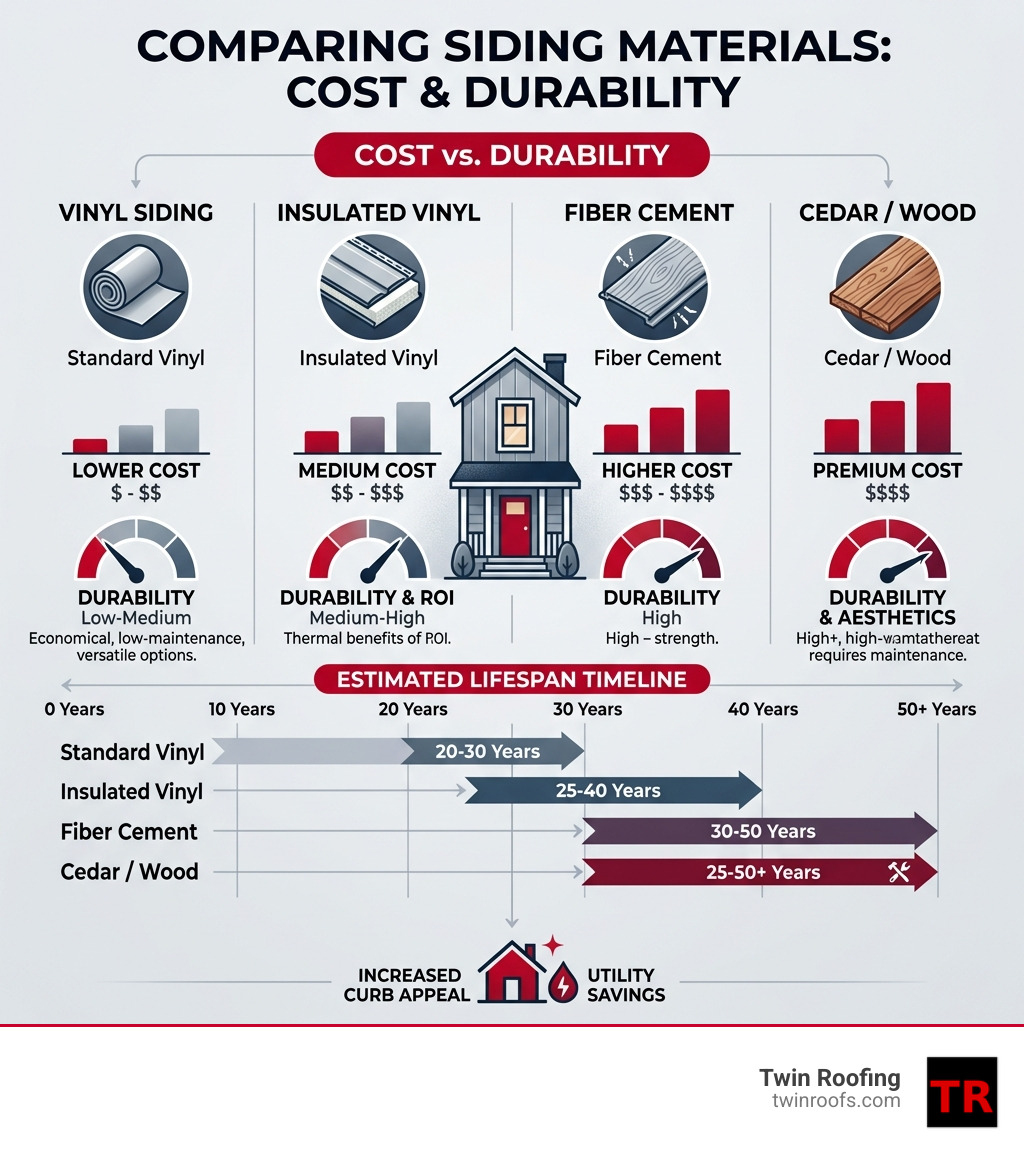
| Material Type | Estimated Total Project Range | Estimated Lifespan |
|---|---|---|
| Standard Vinyl | $5,000 – $30,000 | 20-30 Years |
| Insulated Vinyl | $8,000 – $45,000 | 25-40 Years |
| Fiber Cement | $12,000 – $65,000 | 30-50 Years |
| Cedar / Wood | $15,000 – $85,000 | 25-50+ Years (with maintenance) |
Financing and Promotions
A new exterior is a significant investment. Many top-tier contractors in the Boston area offer financing options to help bridge the gap. It is common to find 15-year financing terms or “no-interest/no-payment” promotions for the first 12 to 18 months. Always ask your contractor about seasonal promotions, especially during the late fall or early spring.
How to Select a Reliable Exterior Contractor
With thousands of contractors serving the Boston area, how do you pick the right one?
Evaluating Reviews and Credentials
Don’t just look at the star rating. Read the comments. Look for mentions of “cleanliness,” “communication,” and “on-time completion.”
- Houzz & Google: Check for recent reviews from homeowners in your specific town, like Belmont or Sharon.
- Certifications: Look for “Preferred Installer” status from brands like James Hardie or CertainTeed. This means the manufacturer trusts them to install the product correctly.
- BBB Rating: An A+ rating with the Better Business Bureau is a good sign of long-term stability.
- Insurance: Never hire a crew that can’t produce a current certificate of insurance for both General Liability and Workers’ Comp.
To narrow your search, we’ve compiled a list of the Top Siding Contractors MA: Find the Best.
Frequently Asked Questions about Siding in Boston
How long does siding installation typically take?
Most residential projects in areas like Norwood or Bedford take between 7 and 14 days. Weather is the biggest variable; we can’t install house wrap or siding during heavy rain or high winds without risking moisture being trapped behind the panels.
Can I install new siding over my old siding?
While it’s physically possible, we strongly advise against it. Removing the old siding allows us to inspect for rot and properly waterproof the home. A “go-over” is a short-term savings that leads to long-term headaches.
How does Boston weather affect my siding choice?
In Boston, you need a material that can handle “freeze-thaw” cycles. Materials like vinyl and fiber cement are engineered to expand and contract without cracking. If you live near the coast in Beverly or Lynn, you also need to consider salt air resistance—composite and vinyl are excellent here as they won’t corrode or require constant repainting.
Conclusion
Siding installation Boston projects are a major undertaking, but with the right material and a qualified team, you can transform your home’s look and efficiency for decades. Whether you choose the timeless beauty of cedar or the rugged durability of fiber cement, the key is in the details: the waterproofing, the flashing, and the professional touch.
Twin Roofing, a division of Twin Metals, Inc., specializes in professional exterior solutions. While choosing the right siding is vital for your home’s protection, ensuring your roof is in peak condition is equally important. Twin Roofing installs asphalt roofs in MA and NH. We service Eastern Massachusetts and Southern New Hampshire.
Follow us on Facebook — https://www.facebook.com/twinmetalsroofing Follow us on Instagram – https://www.instagram.com/twinmetals/